So here’s where we’re at with trying to plan a trip in the year 2026: both my Lonely Planet and DK guides extol the virtues of the Shanghai Museum, the iconic museum shaped like the famous bronze cauldron in its collection. Neither of them (their newest editions, mind you) even mention the existence of the Shanghai Museum East, their new building on the other side of town, which opened its doors in 2023. Therefore, they also do not mention that the Shanghai Museum transferred its entire collection to the Shanghai Museum East and now houses only temporary exhibitions! I found out last night while I was looking up itineraries online. I would have been so mad if I had tried to visit the People’s Square location only to find my brand new 2026 guidebooks were three years out of date!
So anyway, at least today I knew better and went straight to the new location. I mean, I say straight, but it’s actually quite a ways off in Pudong beyond the skyscrapers, next to the Science and Technology Museum and the AP Plaza knockoff mall with its insufferable and persistent touts.
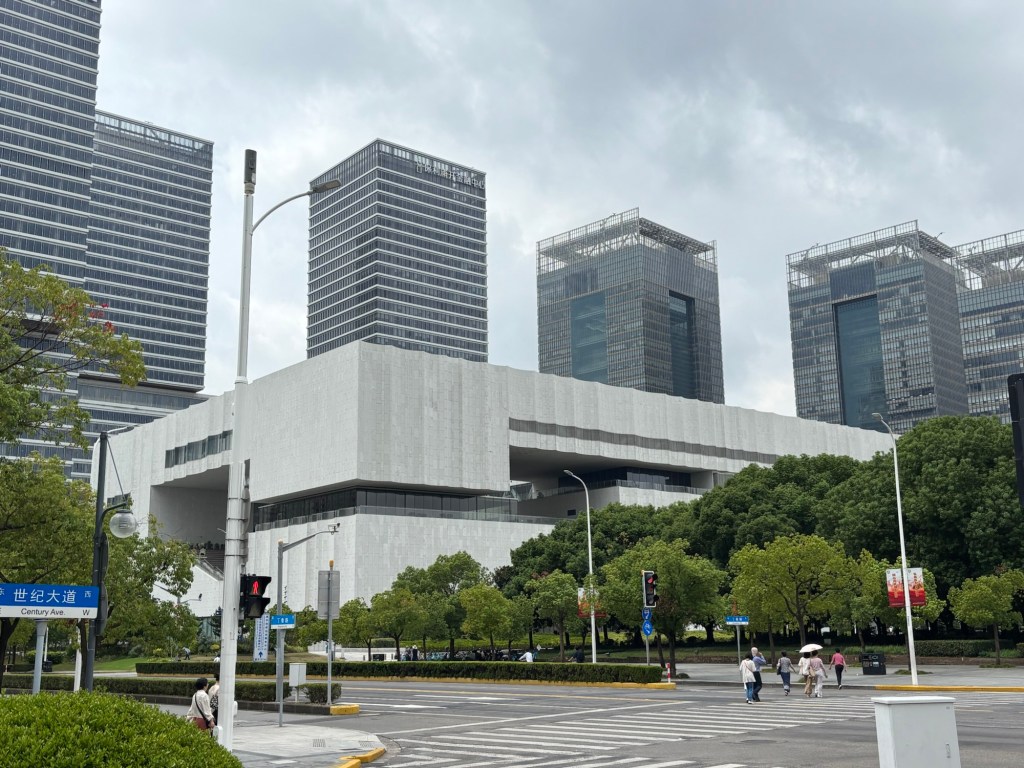
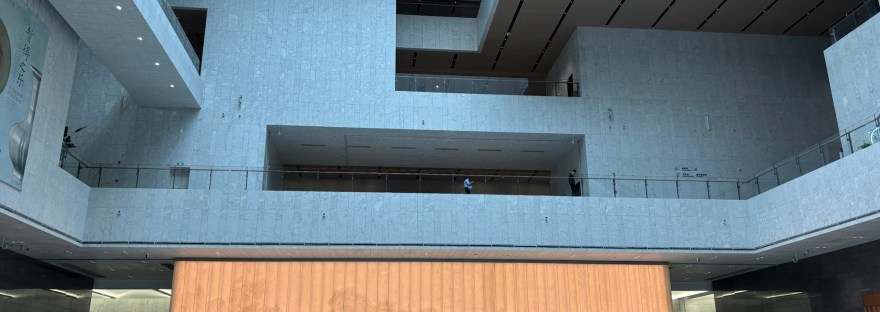
On the outside, the building didn’t catch my eye: it’s certainly enormous, but in a big concrete box kind of way, it doesn’t look as new as it really is. On the inside, however, the design is wonderfully modern, structured around a diaphanous, square central atrium that distributes natural light throughout the entire building, with a remarkable backlit installation that mimics traditional Chinese landscape paintings.
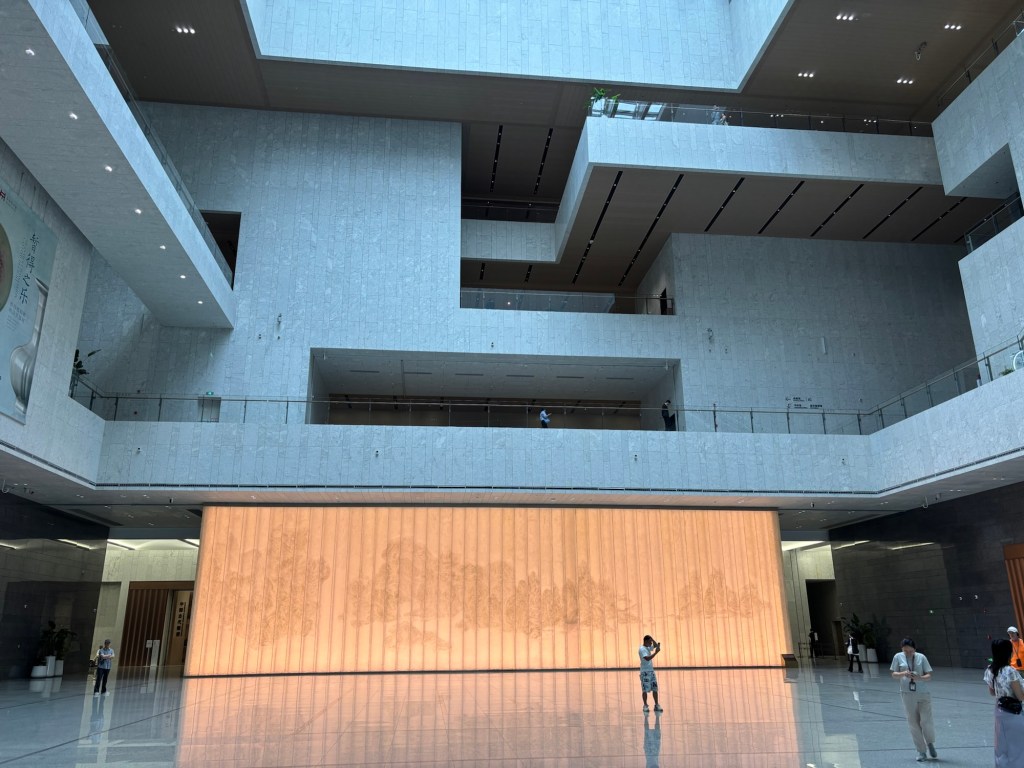
It has six floors, four for the collection and two for events and workshops and stuff, and every floor is large enough to be its own museum. There are different galleries dedicated to different disciplines, like calligraphy, painting, or sculpture, and every space has its own design, best suited to highlight its archive.
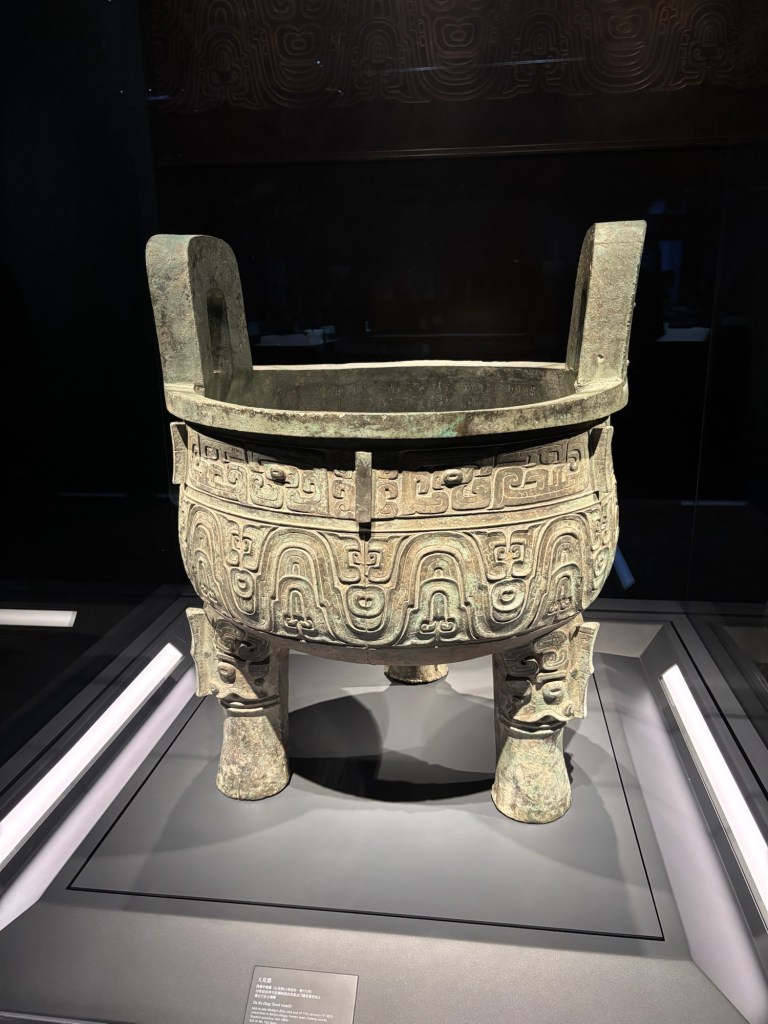
The most notable one is the Bronze Gallery, for starters because this might be the most unique type of artefacts to this museum. They have a ton of ancient bronze vessels that were used to store food, and by looking at them you would think they are relatively modern but they are in fact from the 10th century BCE, i.e. over three thousand years old! The cultural wealth on display is staggering. There were some sculptures with exquisite, intricate details like dragons with each scale still defined.
(They also have a display for the famous urn the People’s Square building is shaped after, which is a bit awkward now, right? To have the building be in the shape of an object it no longer holds?)
The painting and calligraphy sections were less impressive, although the gallery itself was pleasant with its wood paneling and earth tones.
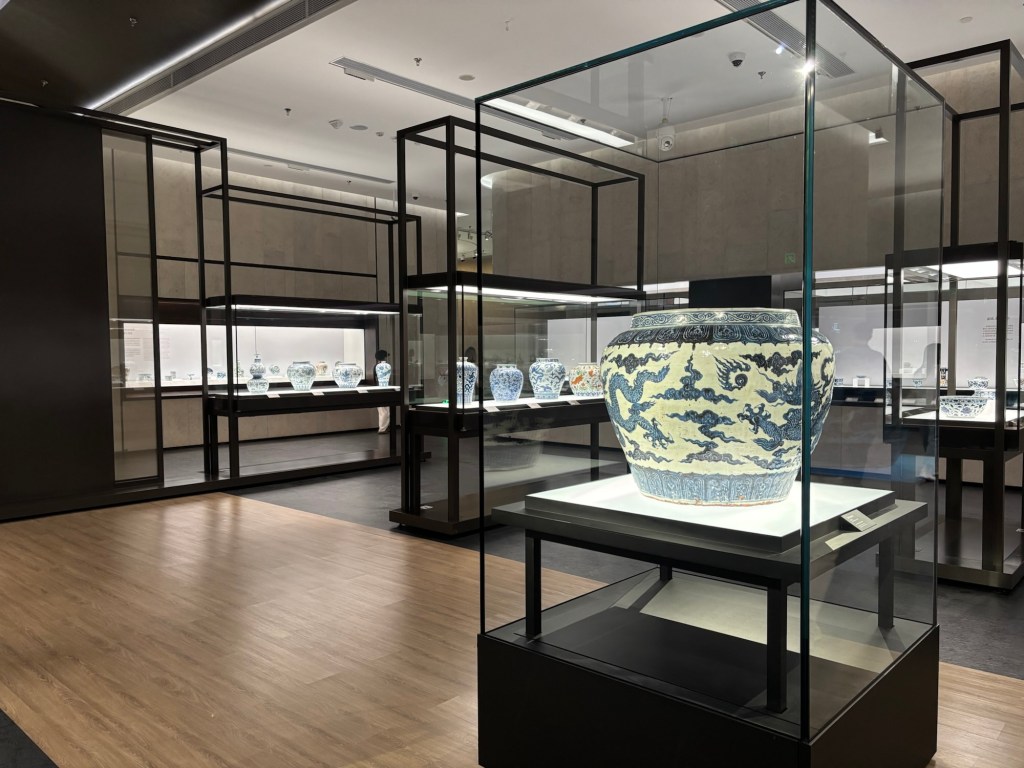
The ceramics wing, on the other hand, is another highlight. Unlike the bronze collection, I have obviously seen Chinese porcelain before, but never this varied and this ancient. You can really see the transition from green glazing in the earliest objects to the white and blue colors that we would end up associating with the art form.
I was particularly touched by a temporary exhibition of Korean artefacts from the Silla dynasty, because they come from Gyeongju, where I was able to see them myself not so long ago, so I immediately recognized the golden crowns with the hanging pendants on the sides like long earrings. This is one of the most gratifying aspects of traveling: each trip informs the next ones. Going to Korea gave me knowledge and context to understand this exhibition; coming to China is giving me knowledge and context that I will use in the future.
Another thing to recommend the museum: the shop! Finally I found one nice shop where I could buy my own souvenirs. I’ve been on the market for a mug and chopsticks since I landed and this was the first time I found tasteful ones. (I guess I bought a ceramic cup yesterday. But who’s counting)
A thorough -and thoroughly exhausting- visit to the museum took all morning, so by lunchtime we walked out into the mall right in front of the museum and had a quick lunch before going back to the metro.
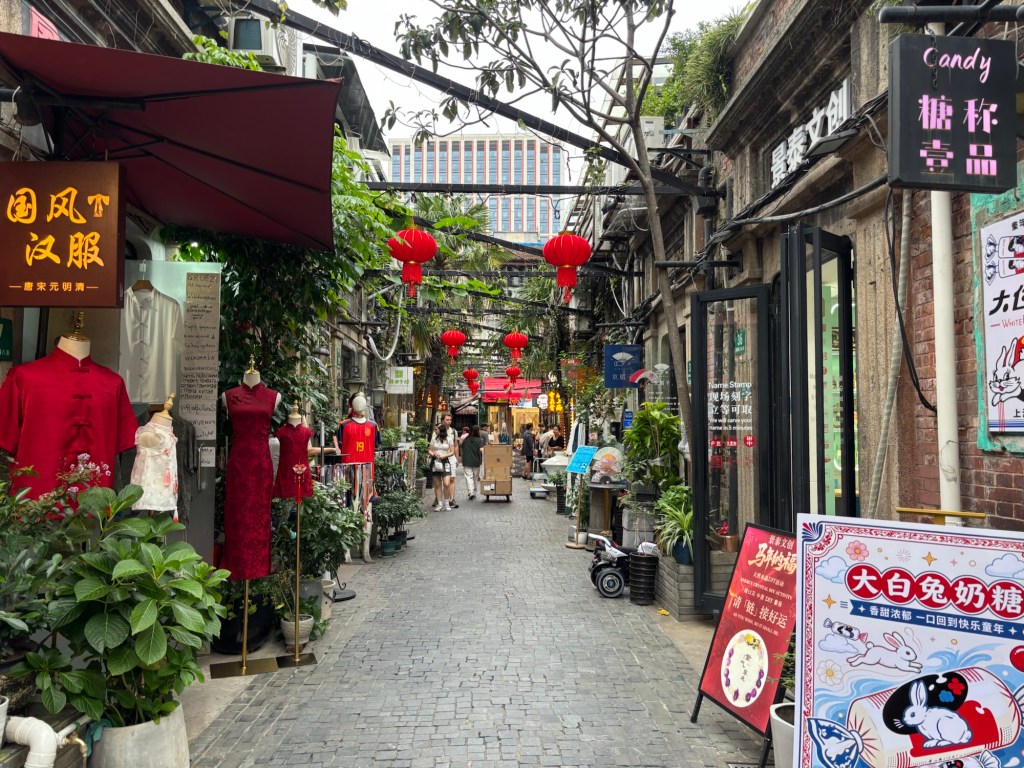
For the afternoon, I thought to check out the shopping blocks of Tianzifang, which occupies one of the old Shanghai style housing neighborhoods, but found it filled with ghastly tourist knockoff shops only frequented by white people.
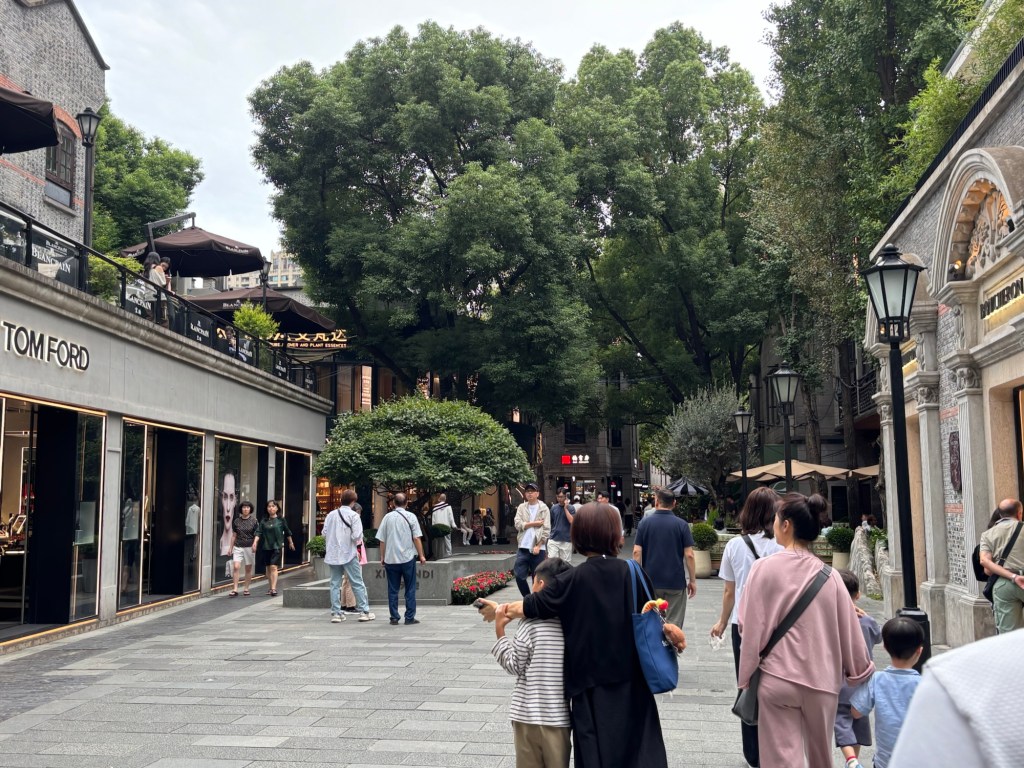
Then I took a peek at Xintiandi, which is sort of a similar concept but extremely upscale, so think luxury brands. It looks nicer, but it’s as unsuited to our style as the previous one, so both are a skip from me!
After a good rest back at the hotel, the only thing left in the agenda was to return to the Bund to see the Pudong skyline at night! The difference with our morning walk was stark from the very beginning, as we joined a real march of people migrating towards the river, all with the same intention as us.
When we eventually got to the riverside, the whole place was truly packed -the biggest concentration of people we were yet to encounter in China- but once again it was oddly unstressful. The metro, the crossings, and the streets themselves had all been rearranged with signs and fences to manage flow, so no matter how crowded it got, we were never blocked in one place.
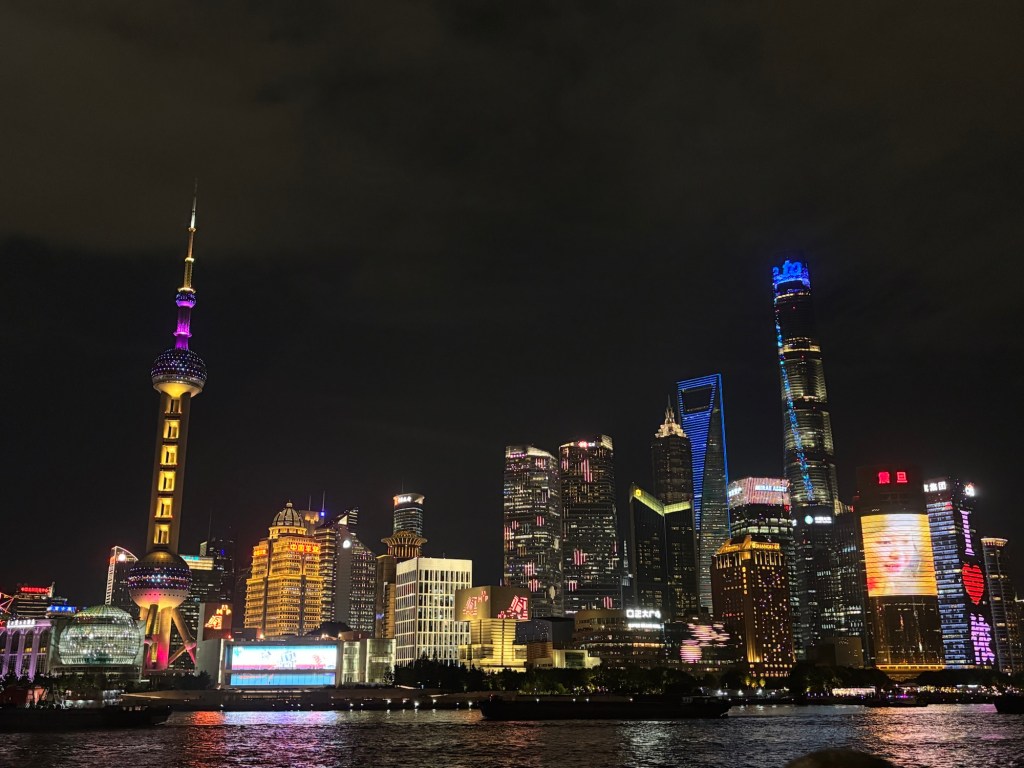
Either way, the nighttime views are worth the multitudes! It’s like being inside a scene from Blade Runner, all the skyscrapers lit up each in their own design, while the tour ships go up and down the river, themselves gaudily lit. The Oriental Pearl Tower continues to stand out, gradually changing colors, while the Jinmao tower has a somewhat subtler approach. Proof of how cool the view was in the warm evening is that we had a blast taking a million pictures and videos despite the huge crowds coming and going in all directions.
The walk back to the hotel felt shorter, perhaps thanks to the dinner break along the way. Now, to plan for tomorrow’s excursion to Suzhou!


