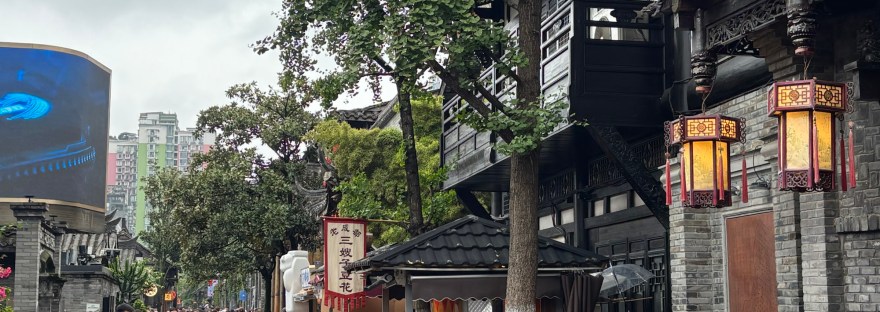
Our first full day in Chengdu began, surprisingly, with rain! A gloomy, misty rain that seemed imported from the Basque Country.
That didn’t bother me in the slightest, not just because nostalgia and climate change have made me appreciate rain when it comes, but because my plan for the morning was to hop on a Didi and visit Chengdu museum.
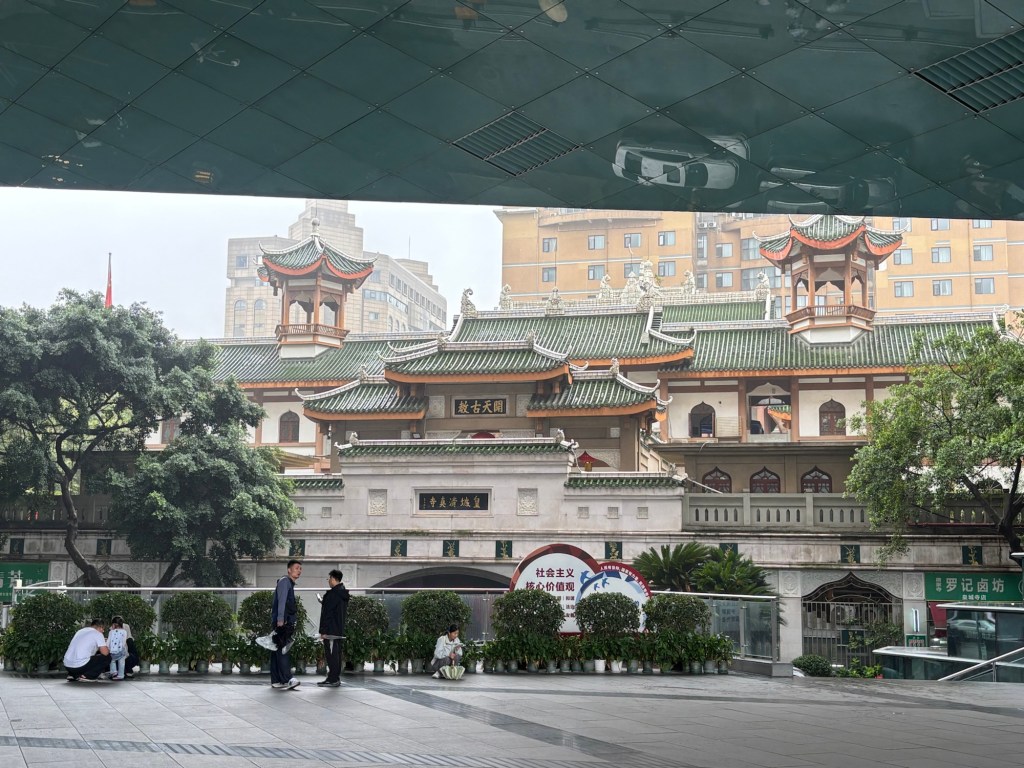
When it comes to museums in Chengdu, my guidebook recommends the Sanxingdui Museum first and the Jinsha Site Museum second, because they apparently have their own dig sites like the Terracotta Warriors, but they are way out of the city and with only two days I wanted to maximize my time, so I opted for the third choice, Chengdu Museum, smack-dab in the middle of the city center.
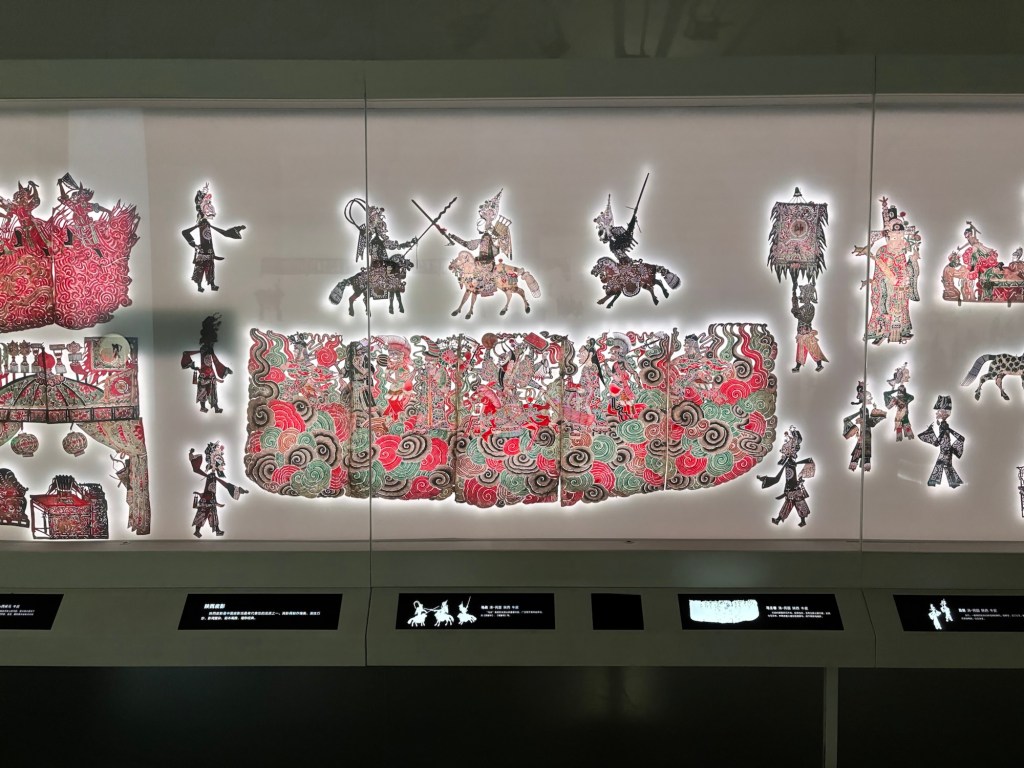
It is housed in a striking polygonal building with a brushed golden cover, and spans six floors of various exhibitions. Taking it from the top, the sixth floor was dedicated to shadow puppets, and the fifth floor was about 20th century records -neither of these held much interest for me.
The rest of the floors were much better, with some incredible earthen statues that give an idea of the age and importance of Chinese culture. Some vivid, dynamic statues dated back to the year 900; others, remarkably intricate, have withstood the passage of time since 200 BCE!
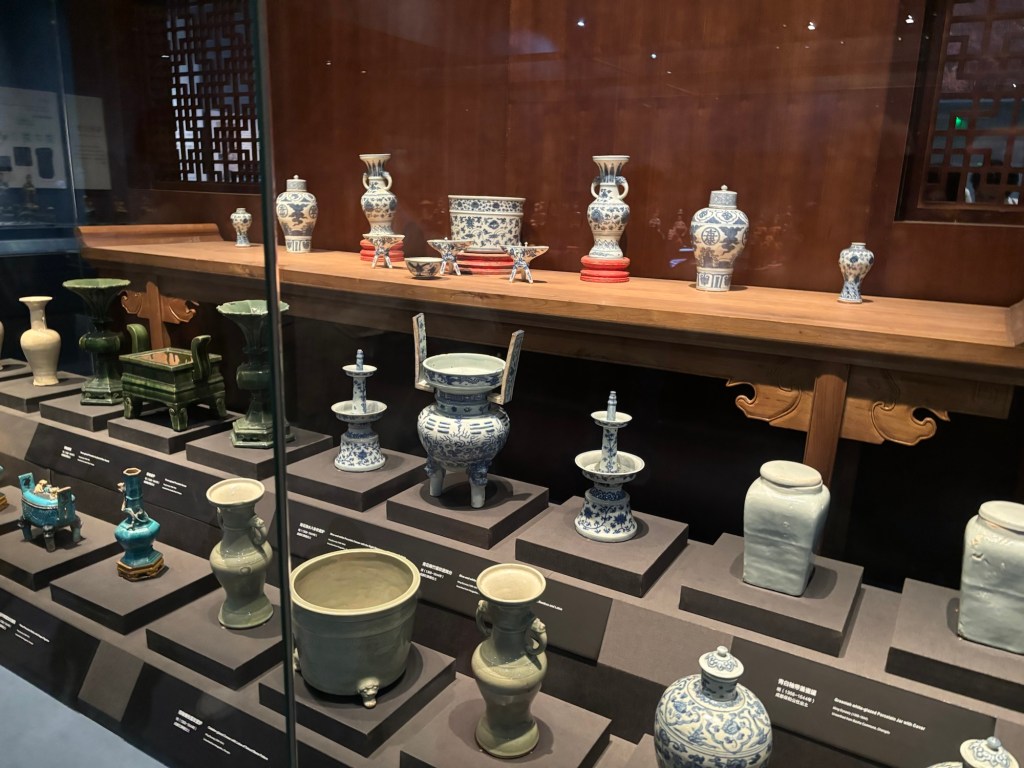
There are even some masks that look more Mesoamerican than anything else; this is apparently the main collection of the two other aforementioned museums, but the ones here are enough to gain some understanding that there must have been an entirely different civilization in what is now Sichuan than the Han, because the aesthetics are so radically different.
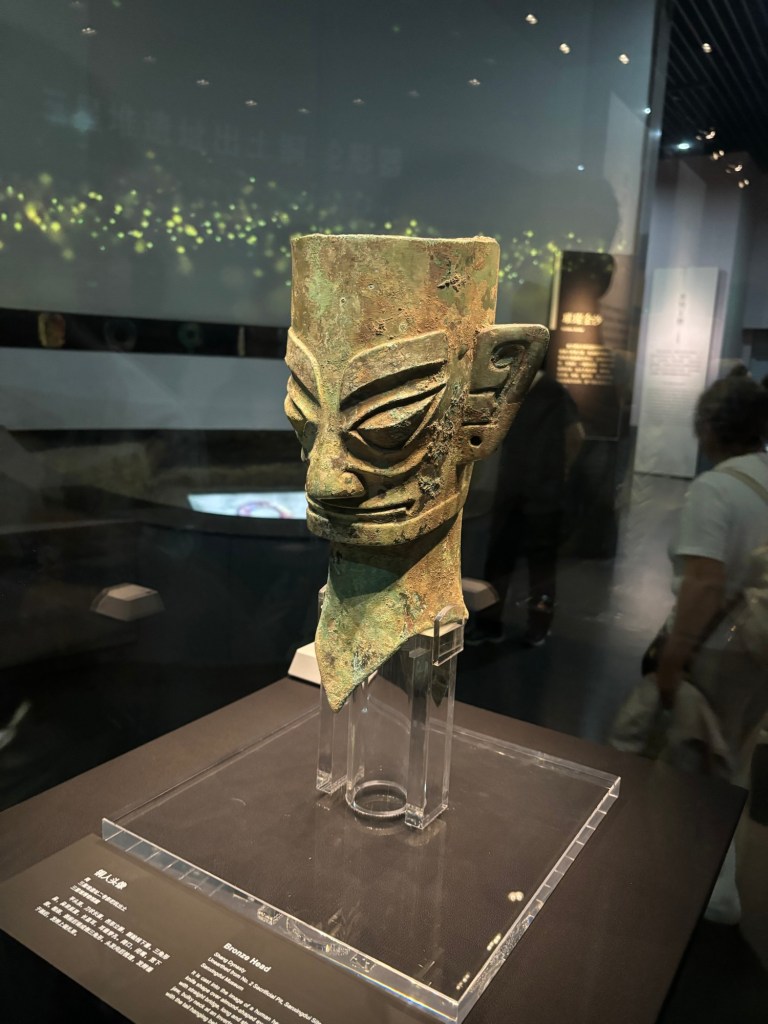
One fun things about the Chengdu Museum is that each floor has its own shop, so it breaks things up a little to go down the stairs and check out new stuff before continuing with the next exhibit.
Eventually the museum ran out of floors, so we walked out at around one o’clock, just as the rain was stopping. Perfect timing!
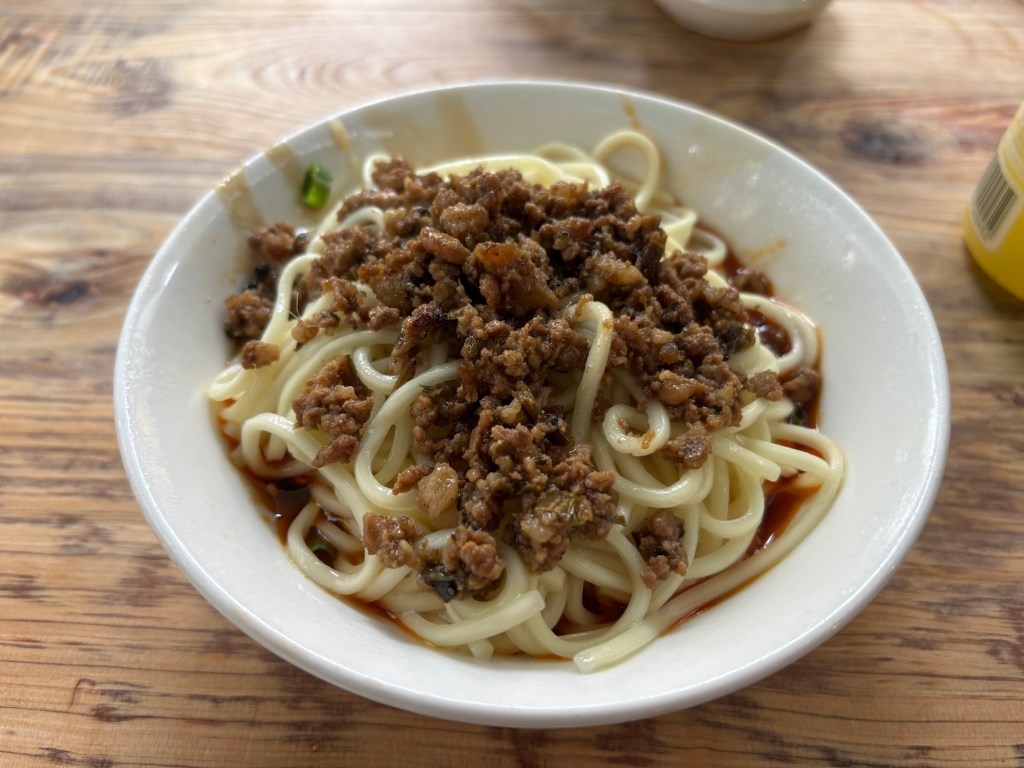
My plan for the afternoon was to head towards Kuanzhai, so for lunch I had shortlisted some restaurants nearby. I ended up going to Chunyang Guanyuxiang, a small place that only makes noodles and wonton -but famously good ones! When I arrived, the man tending to the customers asked me to sit at a small table where two girls were eating their lunch and said “Here okay?” I said, “Well are THEY okay?” The two girls looked at me stone-faced and said something to the effect of “Sure”, so I sat down, apologized for intruding, and again with no reaction they were like “No problem”. Anyway it turns out they weren’t even together, at one point one of the girls finished and left without a word.
I knew I wanted the Dan Dan mian, but as I was struggling to order a soft drink, a girl behind me turned and enthusiastically exclaimed in English “I can help you!”. She interpreted for me and set me up with a lemonade, much better than the soda I would have been saddled with otherwise. I thanked her profusely! Thank you, angel of the noodles!
The Dan Dan mian, which were served to me seemingly within seconds, were absolutely delicious, although it has to be said, indistinguishable from spaghetti bolognese except with chili instead of tomato sauce. But so yummy! The bowl they served me looked pretty small, at least compared to the fishbowls I’ve been served elsewhere on this trip, but A) I paid like 13 RMB for it (€1.70), so can’t complain, and B) I finished the meal fully satisfied so I REALLY can’t complain!
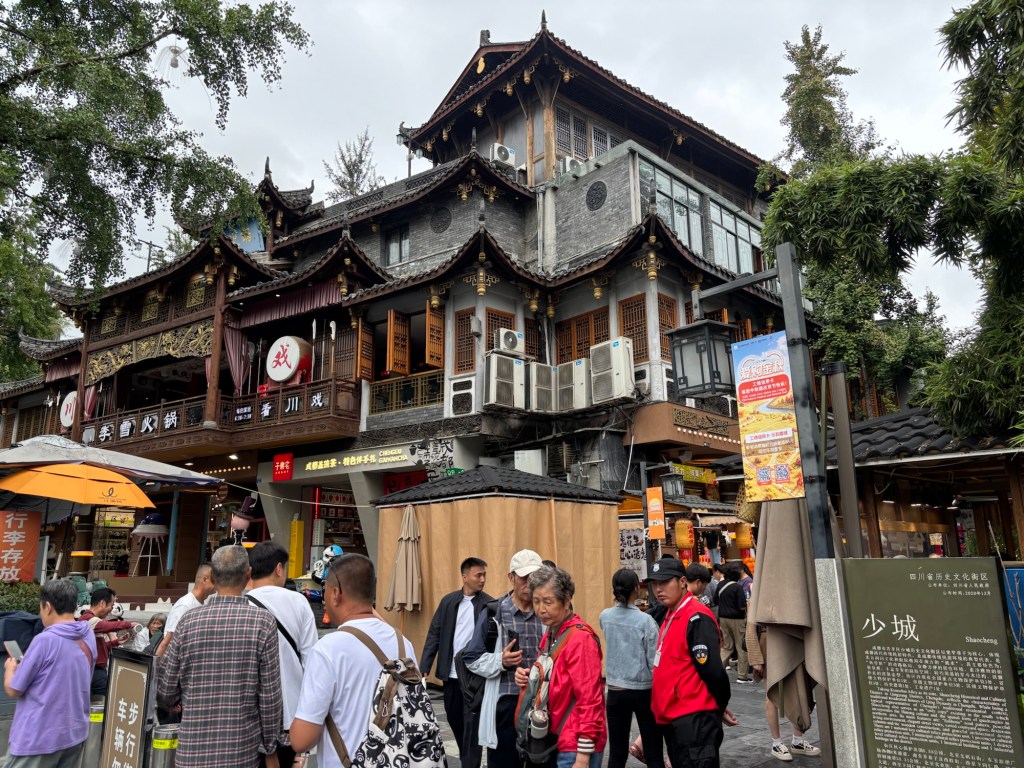
After lunch, it was just a short walk from that quiet, mundane street to the hustle and bustle of the Wide and Narrow Alleys, or Kuan and Zhai, or Kuanzhai, which is a touristy commercial area much like the ones we’ve seen in Beijing and Xian. Once again, while the shops are not very appealing, the fun is in the people-watching, the atmosphere of the old Chinese courtyard houses now open to the public, and in the sheer spectacle of sounds, sights and smells of the whole thing.
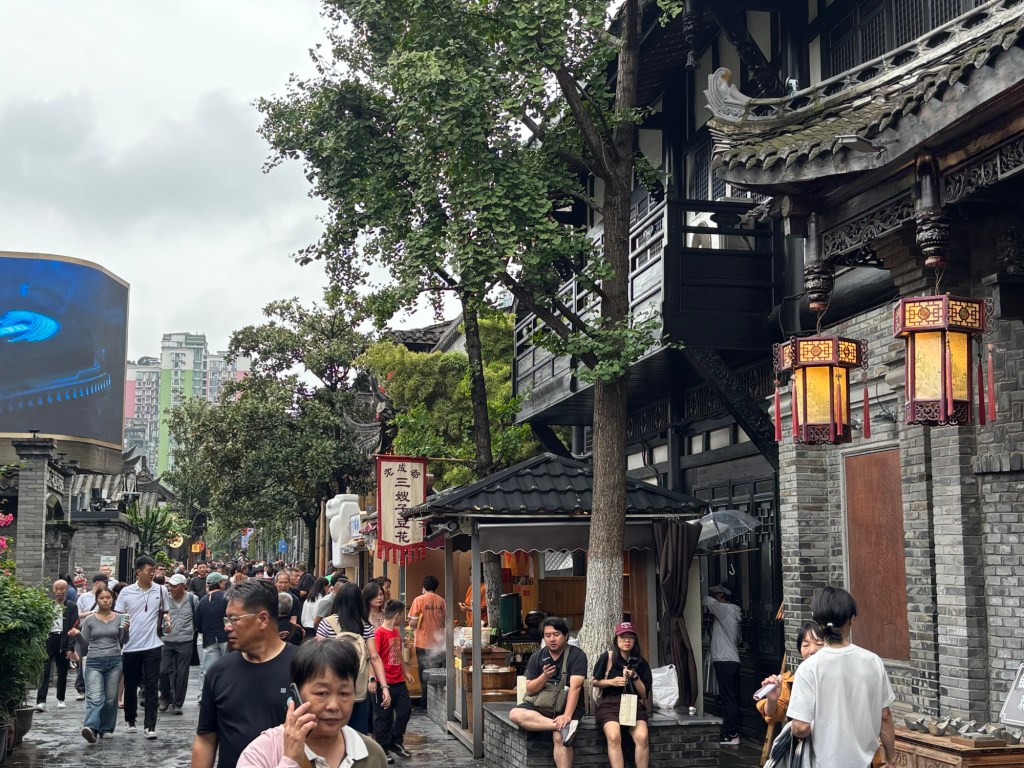
What’s unique to Chengdu: more panda merch than you can shake a stick at, plus ear-cleaning parlors! The insides of my ears are doctor-only spaces, and I’ll look for panda merch tomorrow, so I passed on both kinds of establishments.
Then, my last item for the day was to see Sichuan opera, more specifically the famous face-changing. I built my itinerary in a way that we would finish the day within just a 15 minute walk from Shufeng Yayun theater, which much like Liyuan theater in Beijing, puts on a “best of” opera show mainly for tourists.
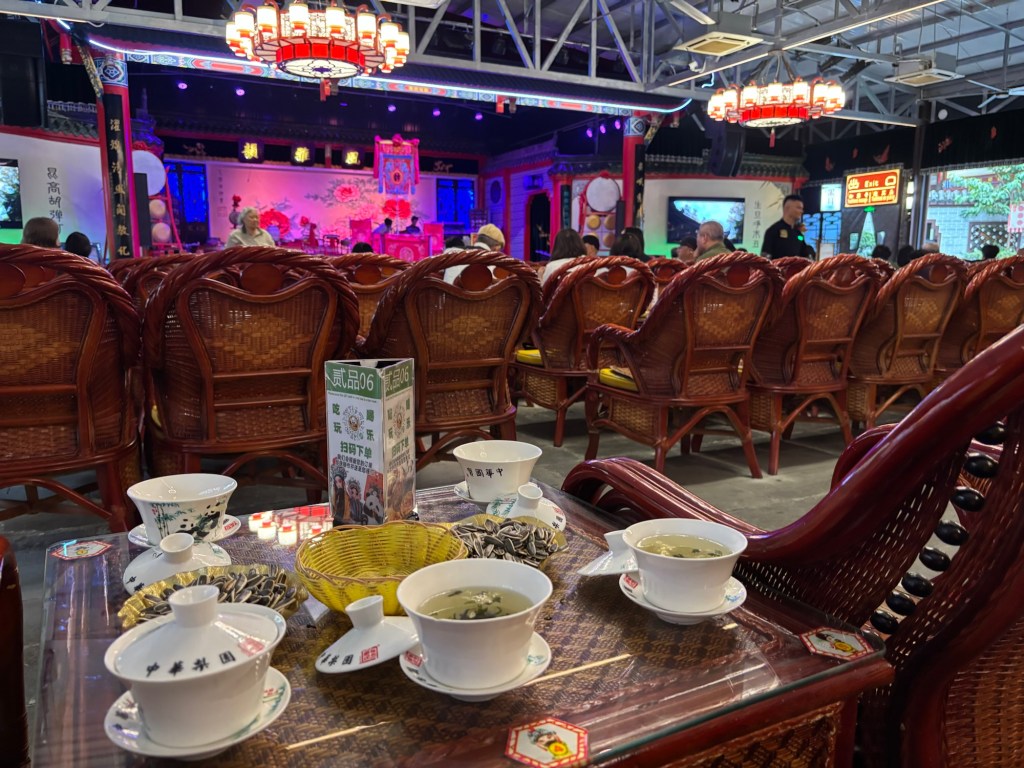
This endeavor is even more touristy than Liyuan, which is held at an actual hotel, and Sichuan opera itself is more lowbrow than Beijing opera: it includes fire breathing, acrobatics, comedy, plus singing and playing instruments. It was more of a circus than an opera, which made me think that hundreds of years ago this art form must have been intended for common folk in public spaces such as tea houses or parks, emphasizing showmanship and entertainment.
Unfortunately, the informal nature of the art form is reflected in the show as well, which is played at a covered semi-open air area where people came and went all the time, they offered ear cleaning and back massages right on the wings during the performance, waiters made the rounds constantly filling up people’s teacups, and the guests themselves kept talking throughout… this made it difficult to focus on the performance, but it was still enjoyable, especially for the finale where the face changing artists came out. They wear elaborate costumes and painted masks, and their trick of the trade is that they can change masks in the blink of an eye: just a head turn or a wave of their hand is enough to obscure the instant change. It’s impressive in and of itself, tu it’s made even cooler by the theatrics of the performers’ body language.
So yeah, I would rank this lower than the opera we saw in Beijing, but it’s fun, and if you come to Chengdu you have to see face changing in some way, so all in all it was a good way to finish the day!


