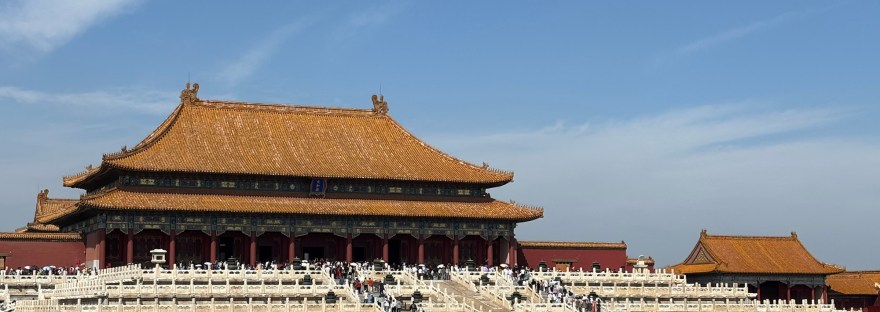
Our first full day in Beijing, and it was intense! I feel like I’ve been here at least four days already.
The main item in today’s itinerary was to visit the Forbidden City, and I usually start the day with the most important visit first, to make sure I’ll have time for everything and to account for any surprises, BUT: the Forbidden City puts 40,000 tickets on sale for every day it opens, and they always sell out, meaning it gets CROWDED crowded. Getting the tickets themselves is a bit of work, because they don’t sell them at the gate (allegedly; people online say they do) and they only become available on the official website one week in advance, at 20:00 Beijing time to be precise.
Every guide and vlog and blog post will tell you that all the tour groups converge at 11, so you have to be there at 7 to beat the crowds, but 1) I am absolutely not going to get up at 5 on holiday (I already did that a lot in Egypt and I’m not looking to recreate the experience) and 2) if all the groups are there at 11 and all the tourists who do research online are there at 7… what’s the afternoon like? (I won’t spoil it, read on to find out)
So I got afternoon tickets for the Forbidden City (which are valid from 11:00 onwards) and decided to spend the morning at the Lama Temple, the most famous Tibetan Buddhist monastery in Beijing, dating back to the 18th century.
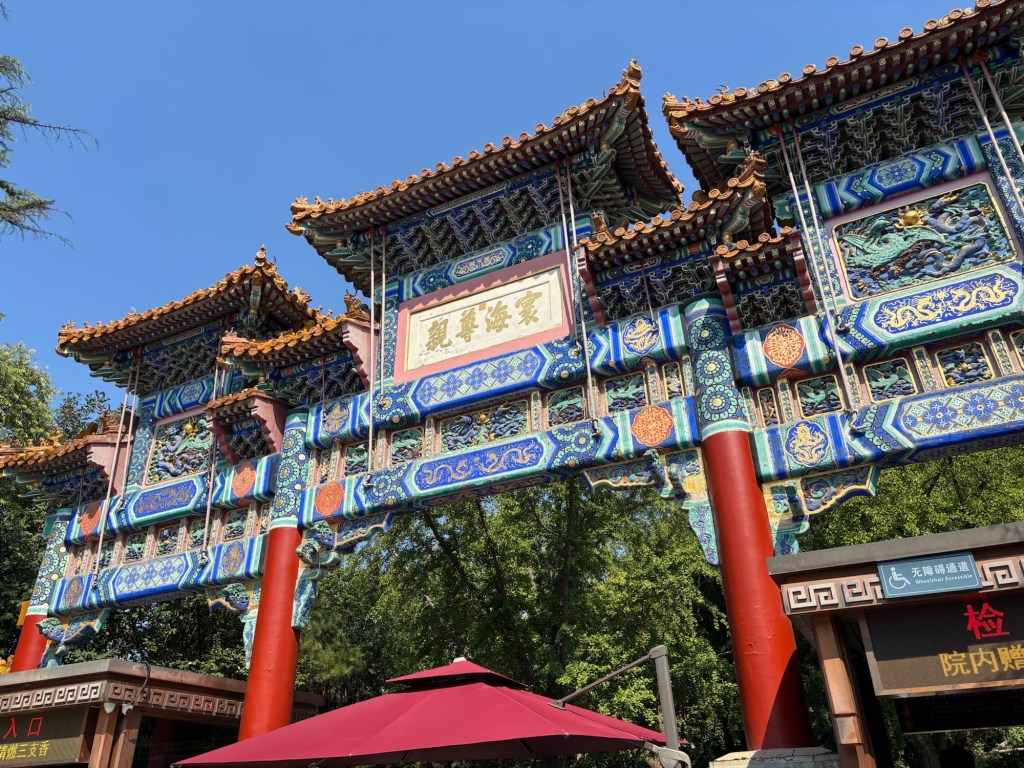
It’s very easily reachable by metro, as it has a station under its own name that’s a very short but packed walk to the entrance. This was my first experience with the sightseeing crowds in China, which confirmed what I’d been reading beforehand: places are crowded to a level that anywhere in Europe would render any tourist attraction inoperable, but because this is the normal level here, places are fully structured around huge crowds and optimized to keep them moving. Sure enough, as soon as we crossed the gate from the street, we were put in a sort of human conveyor belt, where people moved steadily through a delineated route around a first courtyard (with lots of spillover room in case more people show up), onto the ticket sales, then into the temple grounds themselves.
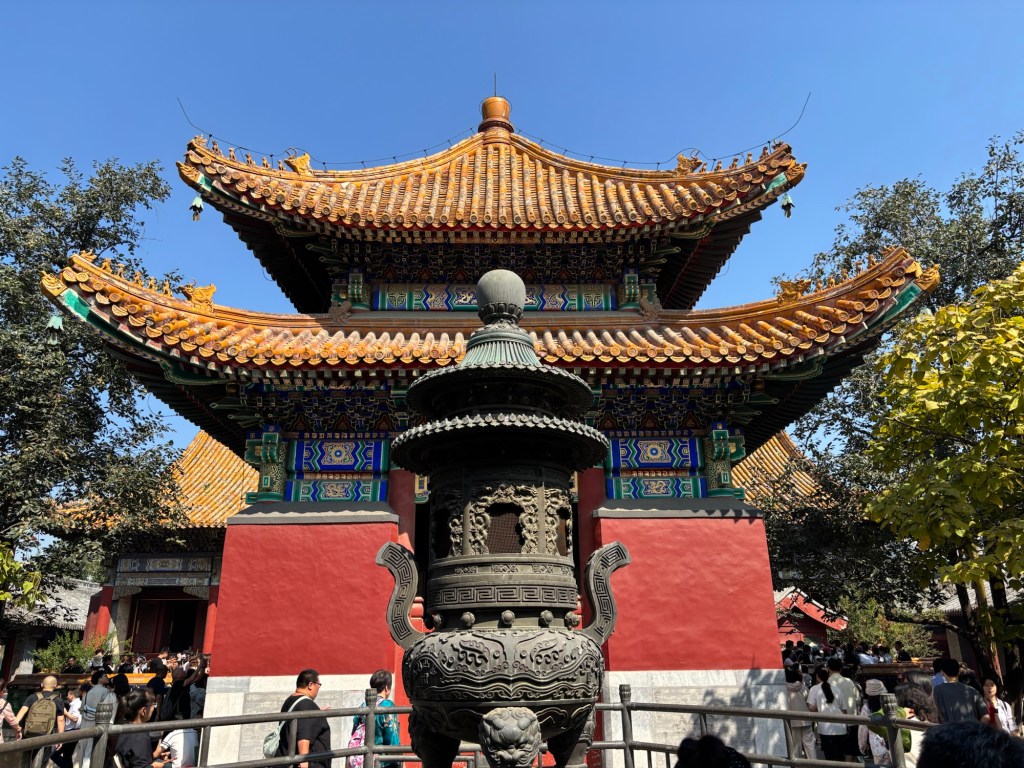
I had correctly assumed that, like most Buddhist temples, the Lama Temple would be a complex with multiple halls and pavilions rather than one singular building, but I still wasn’t prepared for how extensive it actually is. There is one hall after another, and one courtyard between each, and smaller shrines on either side, and bells and incense burners and all other kinds of religious items wherever there was any free space.
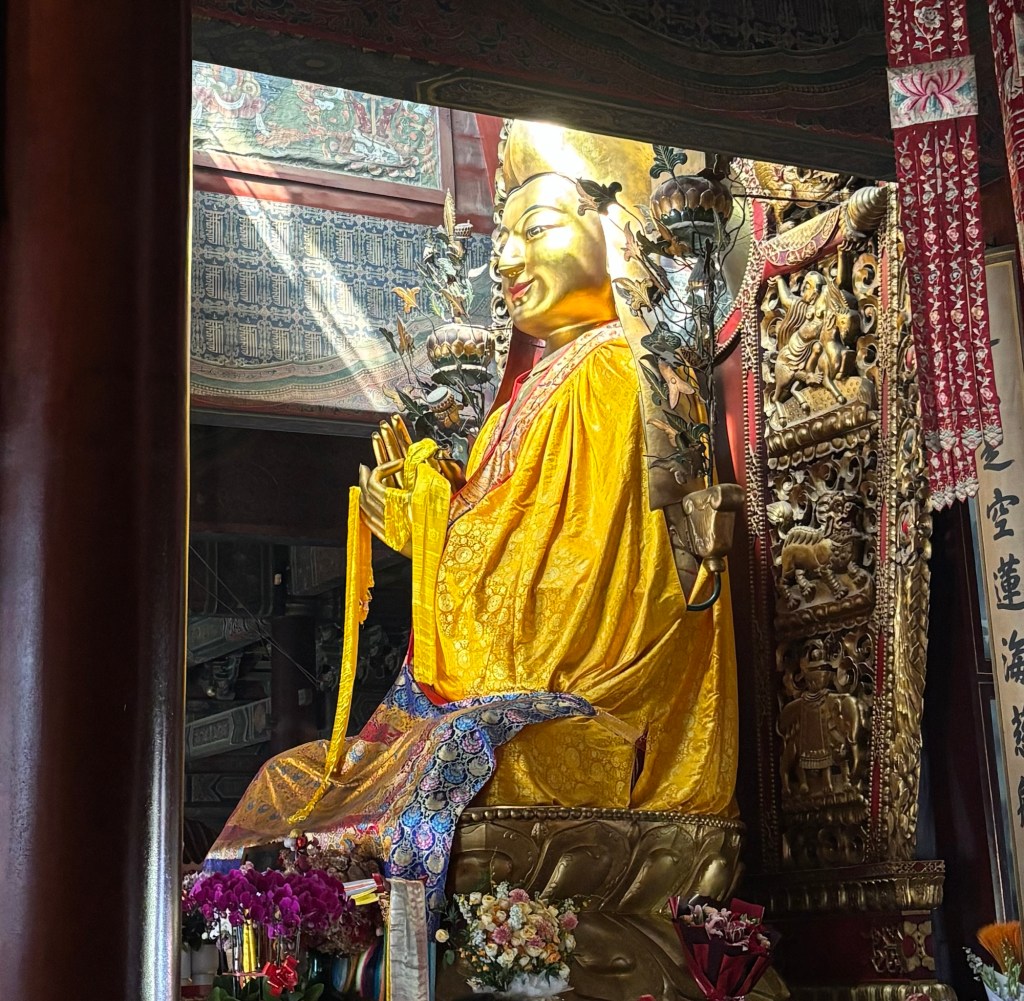
Every single hall has one if not more noteworthy statue of Buddha or a bodhisattva (an individual who has attained enlightenment but chooses to remain in our world to help others), but there are two that are particularly impressive: one is a large, gold statue that I couldn’t quite tell the identity of (it had a headpiece, so maybe not Buddha?). It was bathed in the sunlight from an opening in the roof, creating a very dramatic -dare I say mystical- experience in the dim interior of the temple.
The other is a gigantic standing statue of Buddha, which was apparently a gift from the Dalai Lama… not the current one, one in the 18th century -although I guess some people would argue that IS the current one- and is carved from a single solid block of sandalwood. It is encased in a very narrow building, such that you really have to be within arm’s reach of its feet to be able to even see its face, which might contribute to the sense of awe that I felt in its presence.
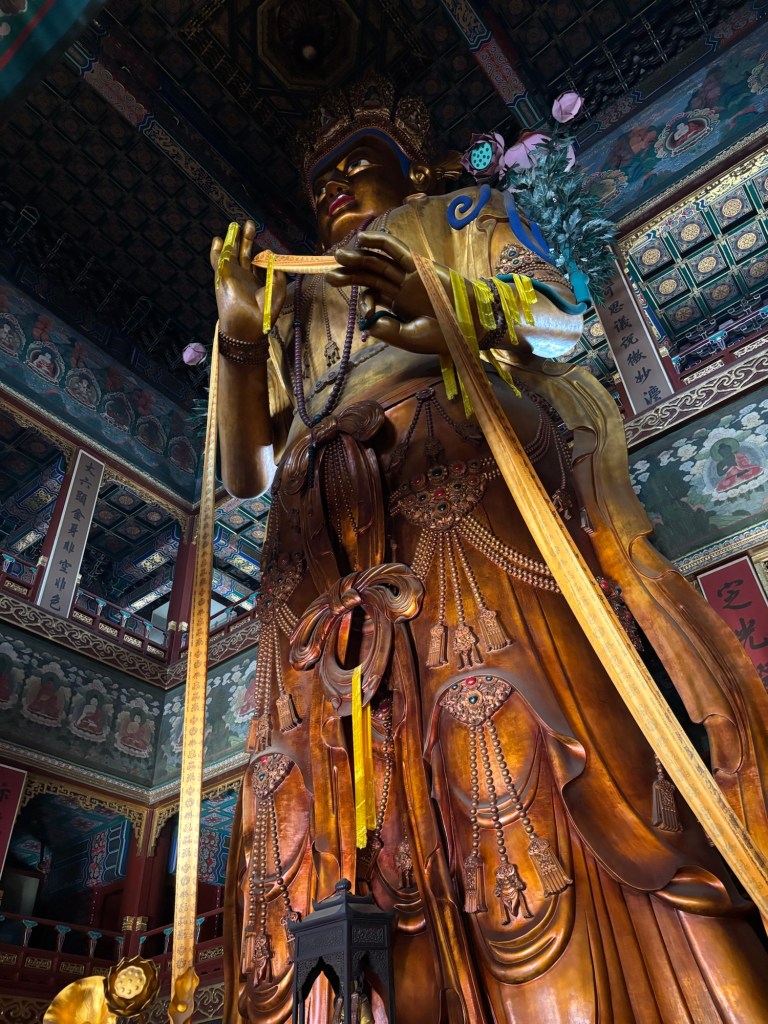
The whole temple was packed throughout, interestingly mostly by Buddhist faithful who lit sticks of incense, held them to the forehead, and bowed three times in front of every shrine (they hand out free incense at the entrance, and my guidebook points out that non-Buddhists are welcome to participate as well). This created some crowding on the front side of the shrines, but still, the fact that traffic only goes in one direction helps prevent bottlenecks. And, well, it is a temple, so it’s good to remind ourselves that the faithful are entitled to worship in it more than the rest of us who are only visiting.
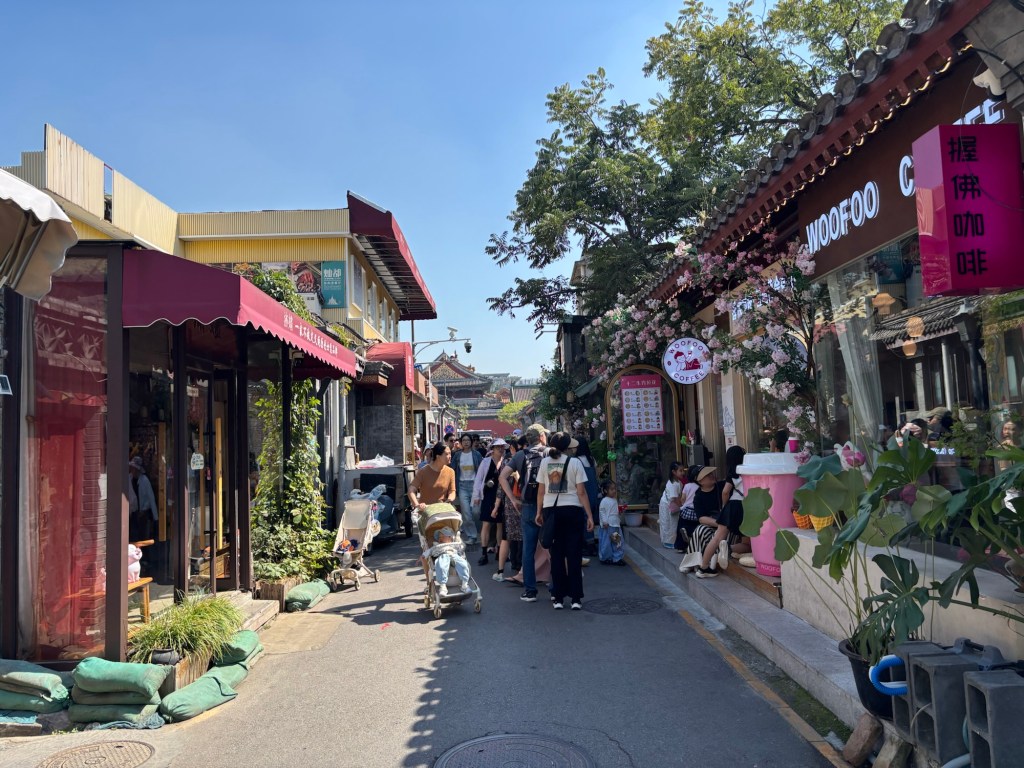
After exiting the temple, we crossed the street to walk down the length of Wudaoying, a hutong (traditional Chinese neighborhood) that seems to be trendier than touristy Nanluogu Xiang, which I haven’t visited yet. Wudaoying was touristy enough, that’s for sure, even though the shops weren’t quite as industrialized as the ones in Qianmen, and there were multiple cafes that looked pretty good -we stopped at one for a pick me up, and to make time before hopping on a Didi (the Chinese rideshare app) to Donghuamen, the Eastern gate of the Forbidden City, the limit of where cars can reach.
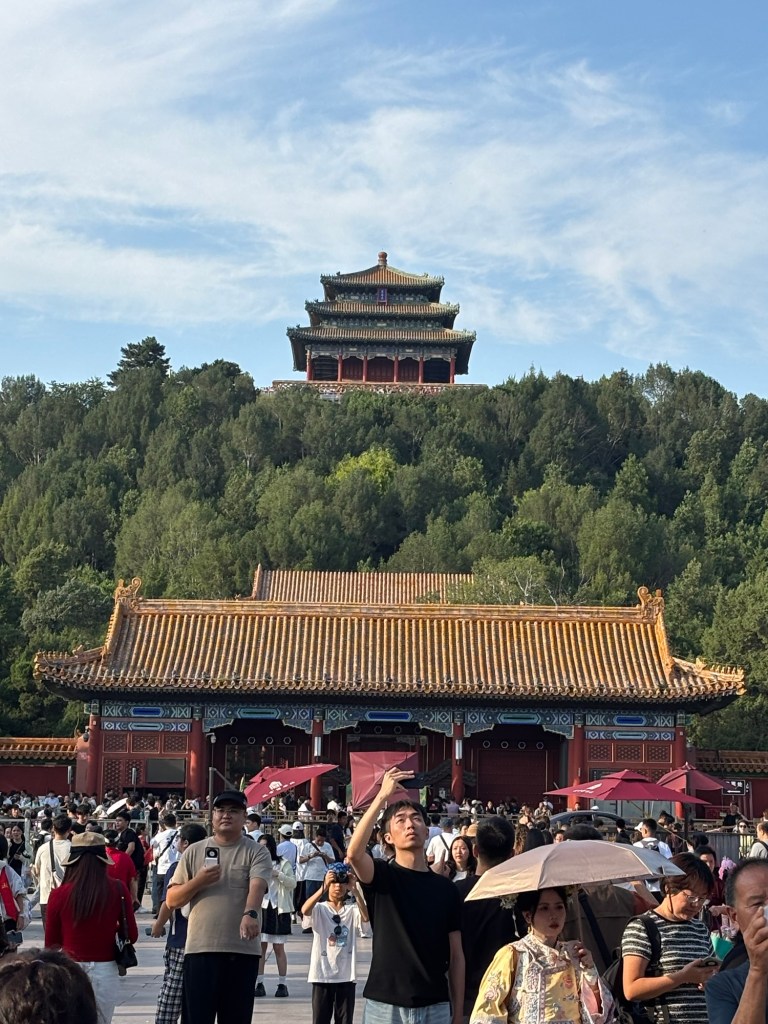
Okay, so this was the final test for my theory: as we walked along the moat that separates the citadel from the city, among a throng of likeminded people on the way to the Meridian Gate (the only actual entrance to the Forbidden City, which can also be accessed through the much more crowded and scrutinized Tiananmen Square) I kept wondering: will this plan of arriving here at one o’clock work? Or will I find that the morning and afternoon crowds have merged and find hours’ worth of lines in the scorching sun?
To my surprise, what I found was… nothing! Just… no line. Look:
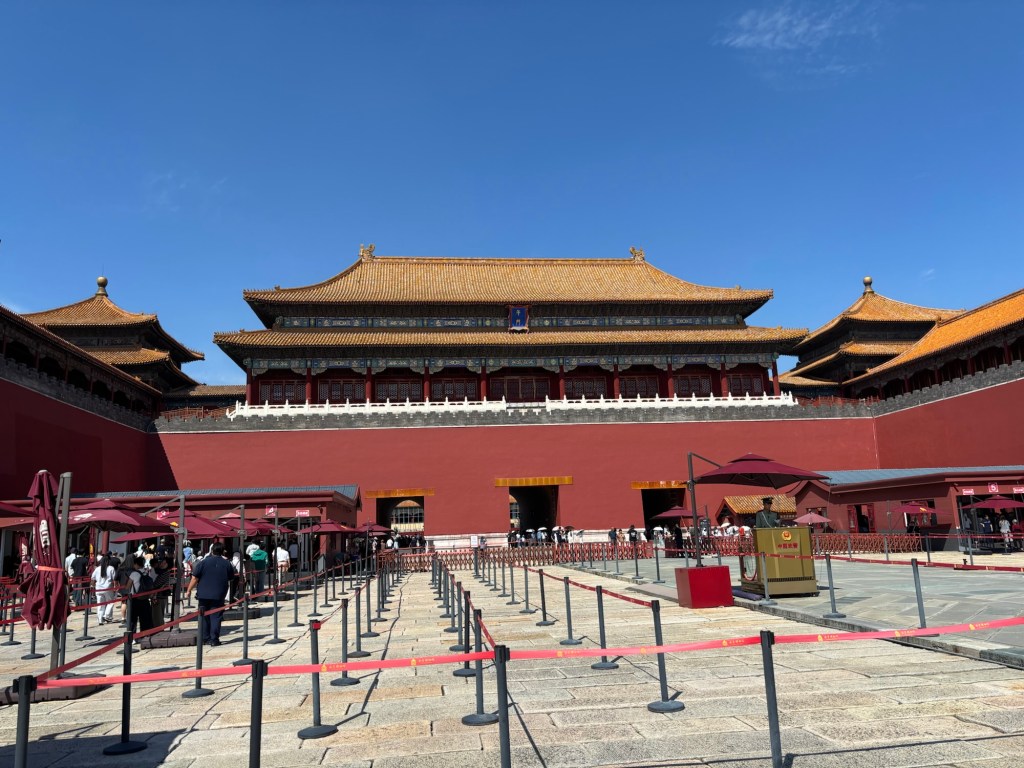
I’ve seen pictures of that entire waiting area packed with people end to end. Today, we just walked right in, passed the security check, then showed our passports at the turnstile, and I kid you not within like five minutes we were walking out into the splendid first courtyard. I felt prouder than when I got into college!
In preparation for this visit, I had watch Bertolucci’s The Last Emperor, which I recommend to anyone who’s thinking of coming here, because I was able to recognize so many iconic locations. This courtyard is one, with its curved canal in the middle, and the stairs with carvings in the middle is another.
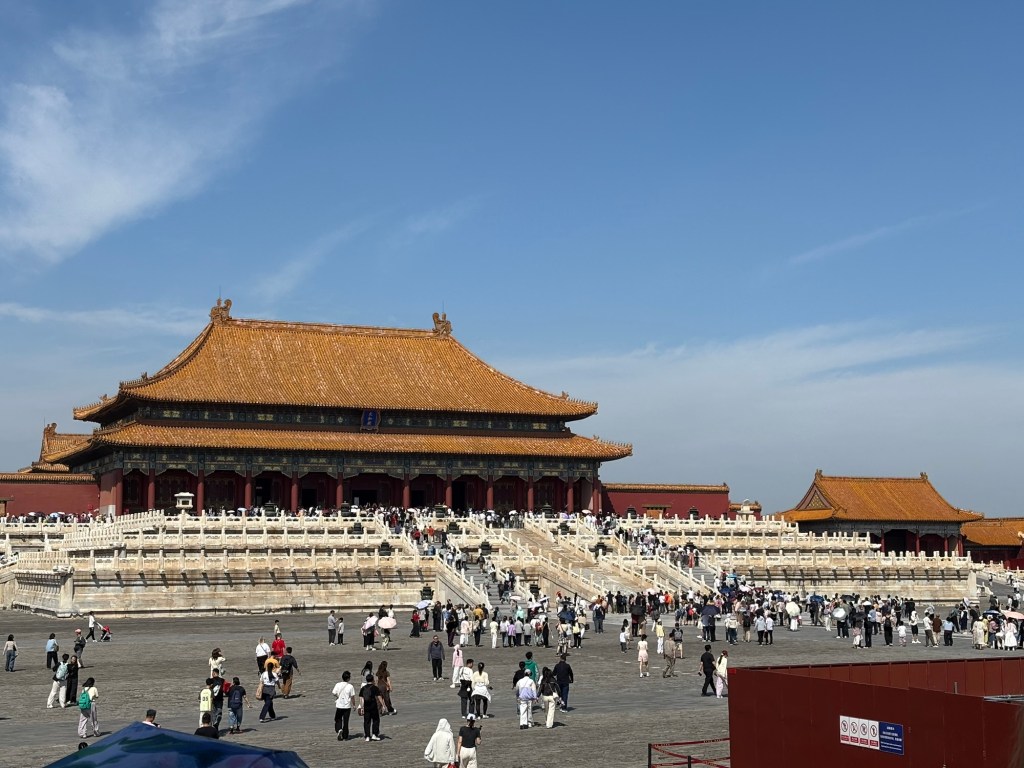
My next piece of advice is: do not get distracted with the three outer courtyards, because as impressive as they are, they are only the entrance to the citadel (whose official name, by the way, is The Palace Museum)! It is impossible to overstate just how vast the place is; it really was an actual city, with its streets, squares, districts, everything.
The first thing we did after crossing the outer courts was to find a place to eat. From my guidebook, I’d made a note of The Royal Icehouse, a restaurant inside the underground vaulted cellars where they stored the blocks of ice that they carved out of the frozen moat in the winter. I will say outright that the restaurant isn’t amazing (the Beijing black bean noodles I had were fine) but it’s cheap, the options inside the city are limited, and most of all it’s a pretty cool location!
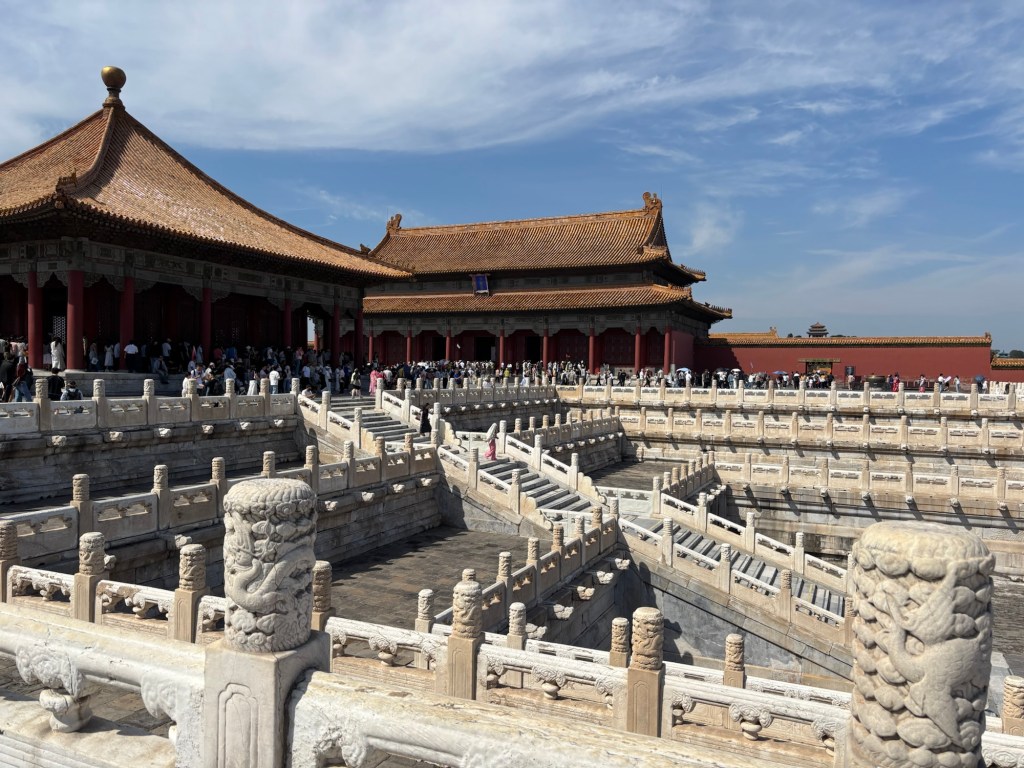
Having achieved the double goal of eating and sitting down for a bit, there were two places I wanted to make sure to hit. The first was the Treasure Gallery, which is an Eastern section that is not a gallery but a series of buildings that have differently themed exhibits inside. There’s one for gold and silver, another for jewelry, others for jade and gemstones… The items on display are spectacular, but the visit is somewhat hampered by the fact that the narrow corridors make it feel crowded even if there are only three or four people around a display, so we mostly kept it moving and admired the objects from a distance as we walked along.
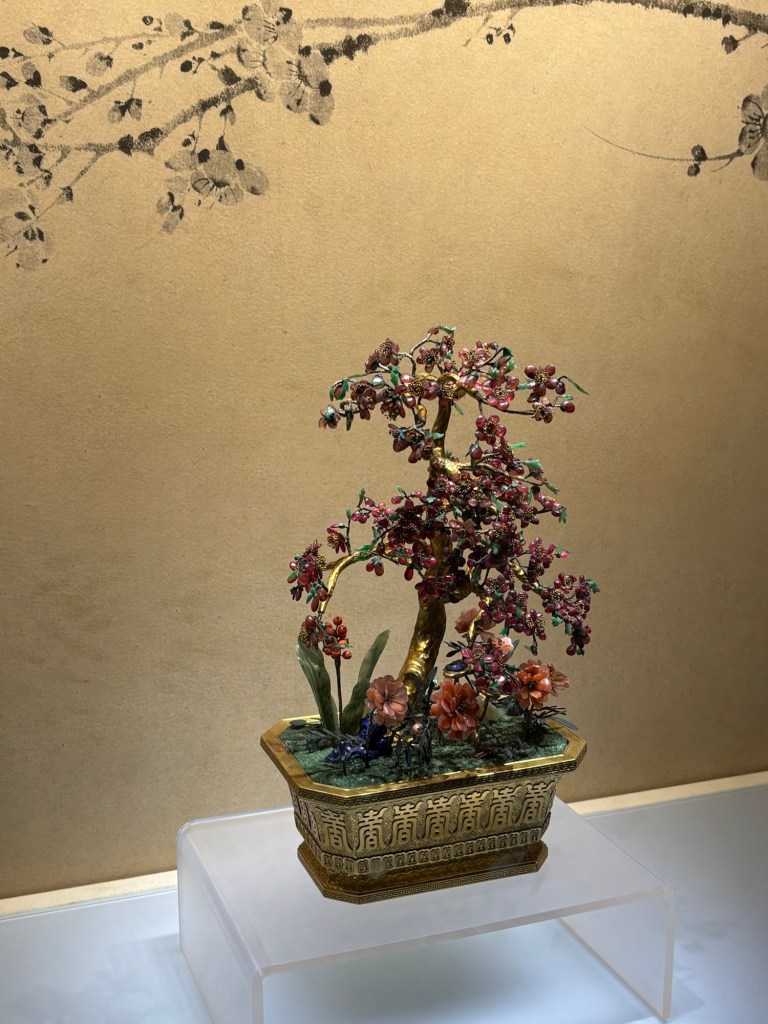
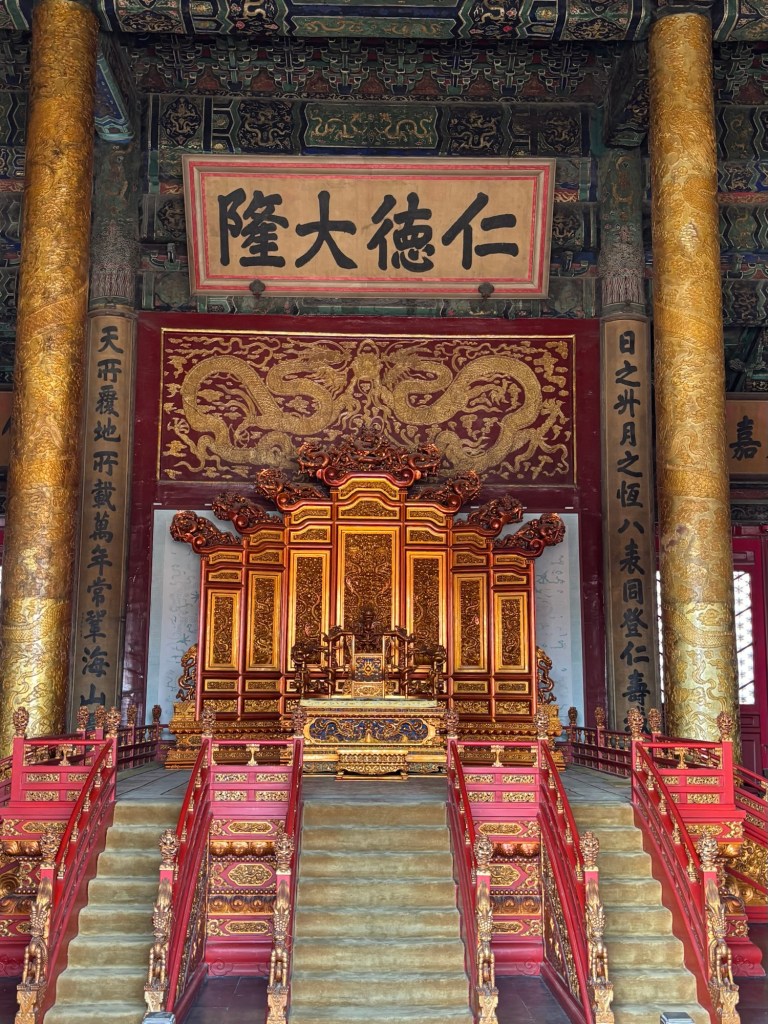
Even at a brisk pace, it felt like the various exhibits went on forever! Every time I thought we were done with a section there would be another courtyard with another set of halls around it. I think I’ve seen like seven different throne rooms today! Just how many thrones does a man need?!
The next place was the Imperial Garden, which is at the North end of the compound, right before the final exit out to Jingshan, but it was somewhat hard to find from the Treasure Gallery and we ended up fighting the current of people on their way out to enter from the opposite direction.
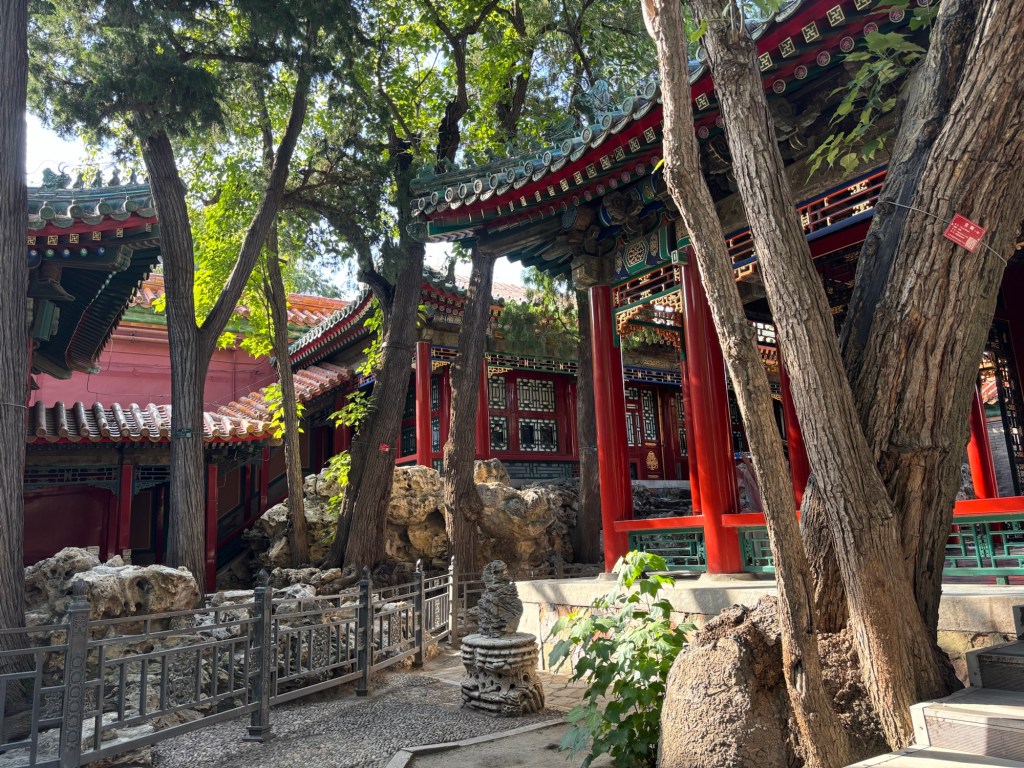
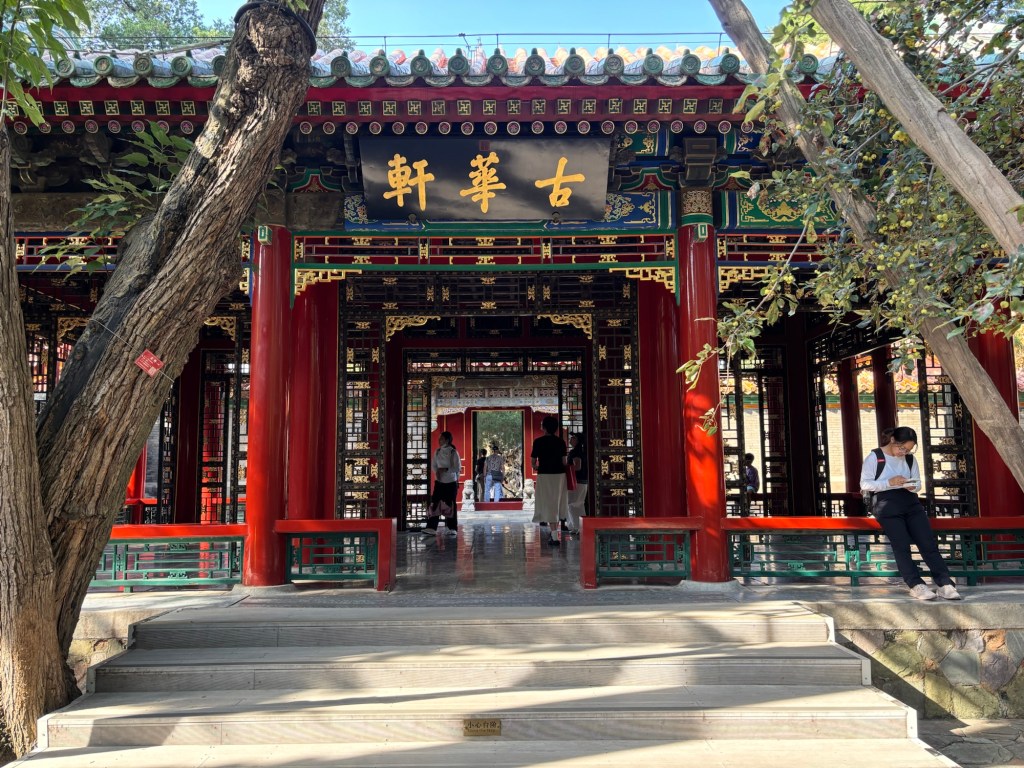
The garden was a bit of a letdown, partly because it was so crowded at the end of the day as the entire population of the Forbidden City headed out before closing time at 17:00, partly because they were doing some construction… but it just wasn’t much of a garden, more of a square with trees and one small pavilion over a tiny pond of green water which didn’t even have koi!
So, closing thoughts… does arriving past noon to beat the crowds leave enough time to visit the Forbidden City properly? Well… yes and no. The place is so huge that I definitely could have continued visiting halls and shrines and exhibits all day long. With more time I might not have minded checking out the Gallery of Timepieces, or the Western section which I barely set foot in. But a side effect of it being such a massive place is that it’s as exhausting as it is time consuming to walk around, so it’s possible that if I’d been there bright and early in the morning my visit may have been the exact same length just because I couldn’t take another step. So, up to you on whether you want to sacrifice some sightseeing time to avoid long lines.
A nice idea after you leave is to cross the street and climb up Jingshan Park, the artificial hill that they built from the dirt dug out from constructing the moat, and which is said to have amazing views of the sprawling Forbidden City under it, but at this point in the day the very idea of taking another step -let alone uphill- was unbearable, so instead we called a Didi to go back to the hotel (this is how I learned that when Didi says cars are 2 min away this could be true or it could be a FILTHY LIE and be a 20 min wait, you guess which one it was).
But I’m not done yet! After an all too short rest at the hotel, we went out again to watch Chinese opera at the Liyuan Theater! The Didi on the way there was a zero minute wait (the car was literally already in our hotel parking lot when I booked it) but a 40 minute ride, mostly due to the rush hour. We were in the car on long, wide highways for so long that I was sure we were going to come out in Shenzhen at the end.
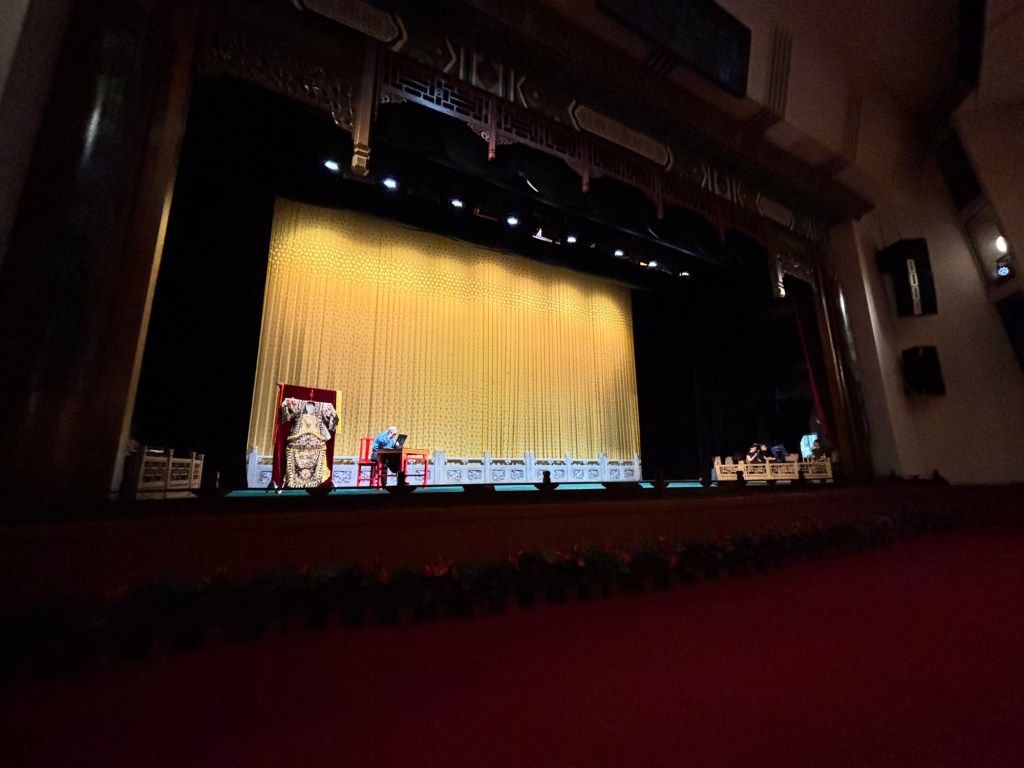
The Liyuan Theater is inside a hotel, but it was very straightforward to retrieve our tickets and be shown to our seats at a table right in front of the stage, decked out with tea and snacks.
The theater’s repertoire is a bit of a “greatest hits” of Chinese opera, aimed squarely at tourists such as ourselves (there are subtitles in English and Chinese shown on either side of the stage. Today there were two acts: one was “The Heavenly Maiden Scatters Flowers”, where a goddess in long, flowing sleeves dances while reflecting on the ephemeral nature of the mortal world, and the other one was about folk hero Wu Song and his fight against a corrupt priest to rescue a kidnapped woman. The first was song and dance, highlighting the artist’s expert control over every gesture and every hand movement, while the second one was mostly about martial arts, with highly stylized fights between the hero and the villain, dotted with some comedic asides that definitely have not stood the test of time.
Clocking in at just over an hour, it’s a great introduction to Chinese opera, which admittedly can be quite obscure -just like European opera, or ballet, or kabuki, but the whole point of traveling is to broaden our horizons, so I always love to make time for cultural activities when I’m visiting a place.
My one disappointment is that I watched Farewell My Concubine in preparation for this, and had selected this show because (I thought) I saw on the website Farewell My Concubine was one of the shows… but it wasn’t? Even though there was a guy on stage literally putting on the Emperor’s makeup and costume from that opera? We never saw him again, what’s up with that? Well, the movie is a classic of cinema, so time well spent either way.
And now, finally, that is it for my first day in Beijing! The Lama Temple, the Forbidden City, and opera all together: one could not ask for a more iconic first day in China!


