
Remember how I said at the beginning that I did a lot of research only to come to the conclusion that all basic Egypt package itineraries are the same? The one thing they differ in is whether or not they include a visit to Abu Simbel. The temple of Ramses II at Abu Simbel is one of Egypt’s most famous sights, but it’s also a good three and a half hours by car, south of Aswan, deep into the desert, just on the border with Sudan, so some tourists choose to skip it.
I knew I didn’t want to leave without seeing Abu Simbel even if it was grueling, and it was: we had to get up extremely early once again, have breakfast in a catatonic state, then board a tour bus where the seven of us in my trip joined a bigger group from a different agency. This, by the way, is the reason why all the travel agencies back home offer the exact same itineraries: it’s because they all subcontract the same handful of Egyptian agencies, so for example in my group we all ended up in the same tour but we came from three different agencies back in Spain.
This was the organized tour experience that I thought (feared) the whole trip was going to be like: thirty people crammed in a bus, one guide to shepherd them all and give explanations to, watching out for the group that’s noisy, the one that’s late… I’m really lucky that I got paired with a reduced group! Or, come to think of it, maybe it’s because I got the expensive package and there’s fewer people in it…
Anyway, that was three and a half hours in a bus driving through the desert, trying to doze off and alternatively peeking out the window. For most of the ride the desert was rocky and craggy, but there was a stretch where it resembled the archetypical sand deserts that we see in movies, with nothing in the horizon except blurry mirages from the heat (the reflections really do make it look like there’s water in the distance) and the road itself.
Eventually we got off at Abu Simbel, where the sun was already beaming down at full force at nine in the morning. We walked around a big mound to turn a corner and find ourselves with the imposing façade of the Temple of Ramses II and its four colossi.

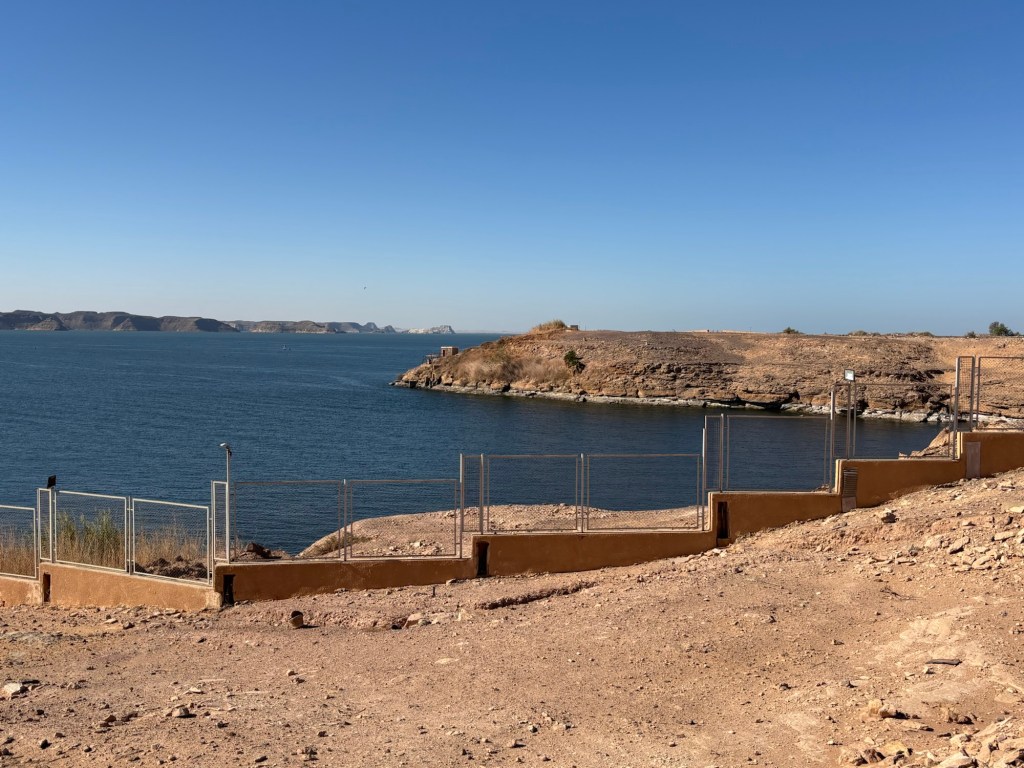
Just like Philae, this temple was built over three thousand years ago but dismantled and transported in the 20th century. It used to be carved into the mountain in what is now the depths of the artificial Lake Nasser, which formed when the Nile dams were erected. But unlike Philae, it seems that the temple of Ramses was extracted before the flooding, meaning it is much better preserved.
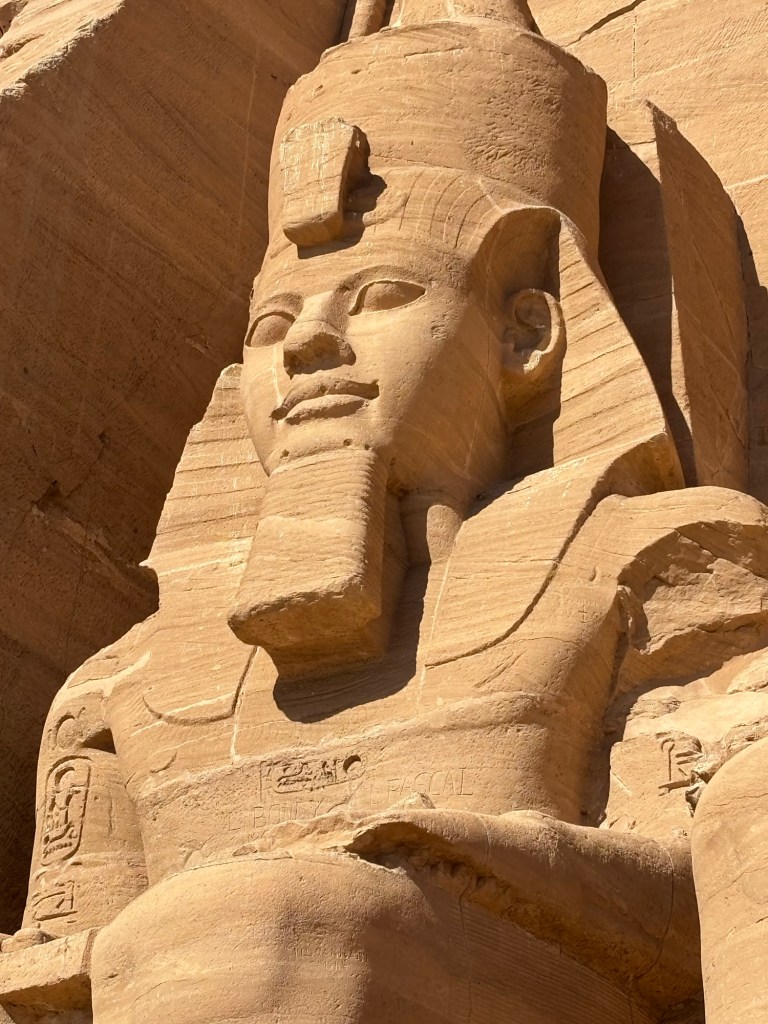
I have been talking about the weight of history a lot this trip, but that’s really the main emotion I felt when gazing at the serene stone faces looking out towards the water. It boggles the mind to think that something so monumental could be built so long ago and still stand to our day, and that I am lucky enough to be able to see it with my own eyes.
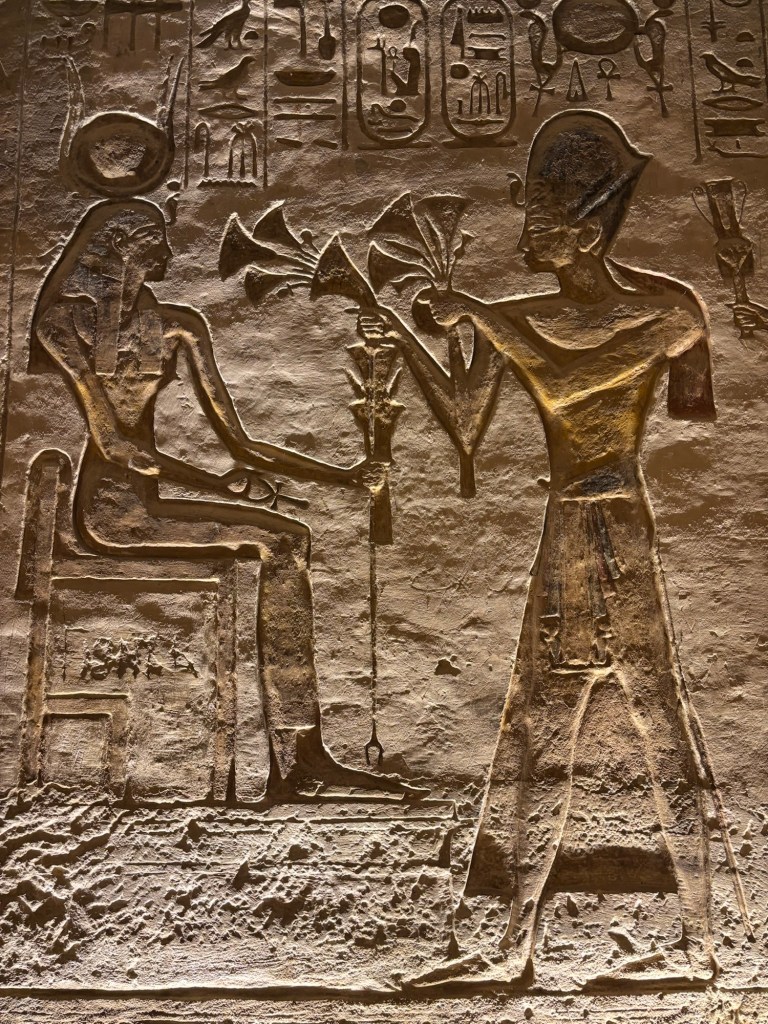
Inside, the temple is smaller than I expected, with one main nave flanked by stern-looking statues and only a few small chambers leading off from it. That said, the bas-reliefs and friezes inside are wonderfully preserved, so that you can still appreciate not just the carvings but even the colors therein. Our guide explained that over two thousand engineers from multiple countries collaborated in the transportation and reassembly, through UNESCO, and that is why Egypt gifted small temples, obelisks and other treasures to countries like France, in recognition of their help.
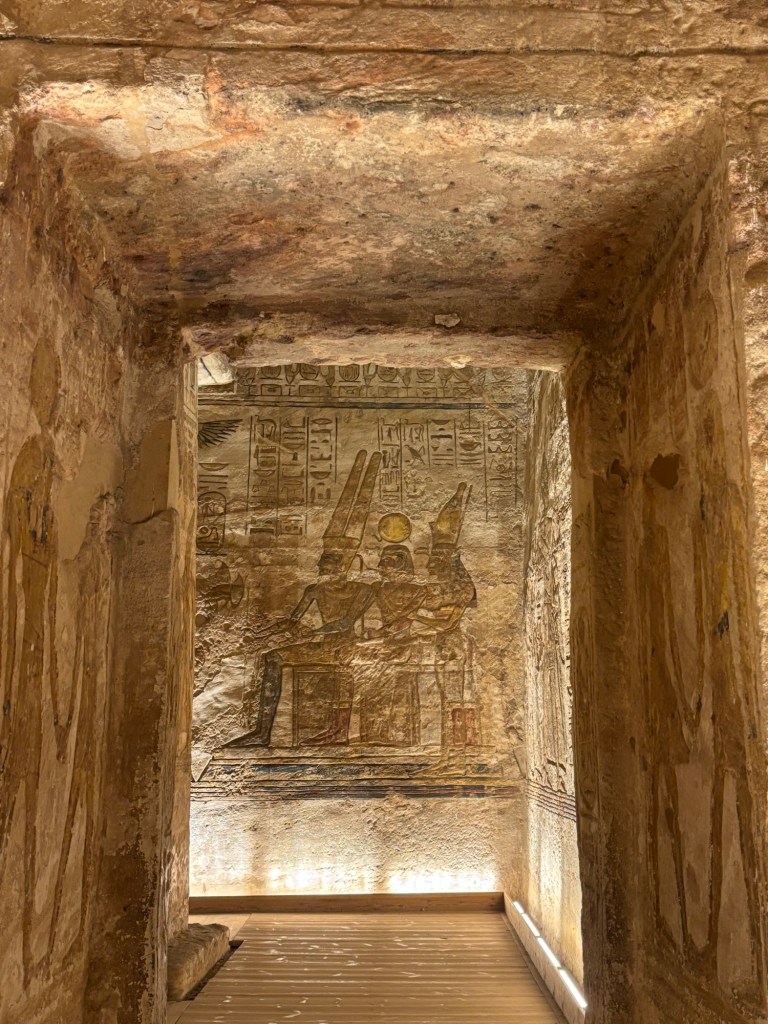
Next to the temple of Ramses II lies the temple of Nefertari, the most beloved of his many wives. This one is even smaller, but just as well kept. It features depictions of Nefertari herself but also Hathor, whom you’ll remember is the goddess with cow ears.
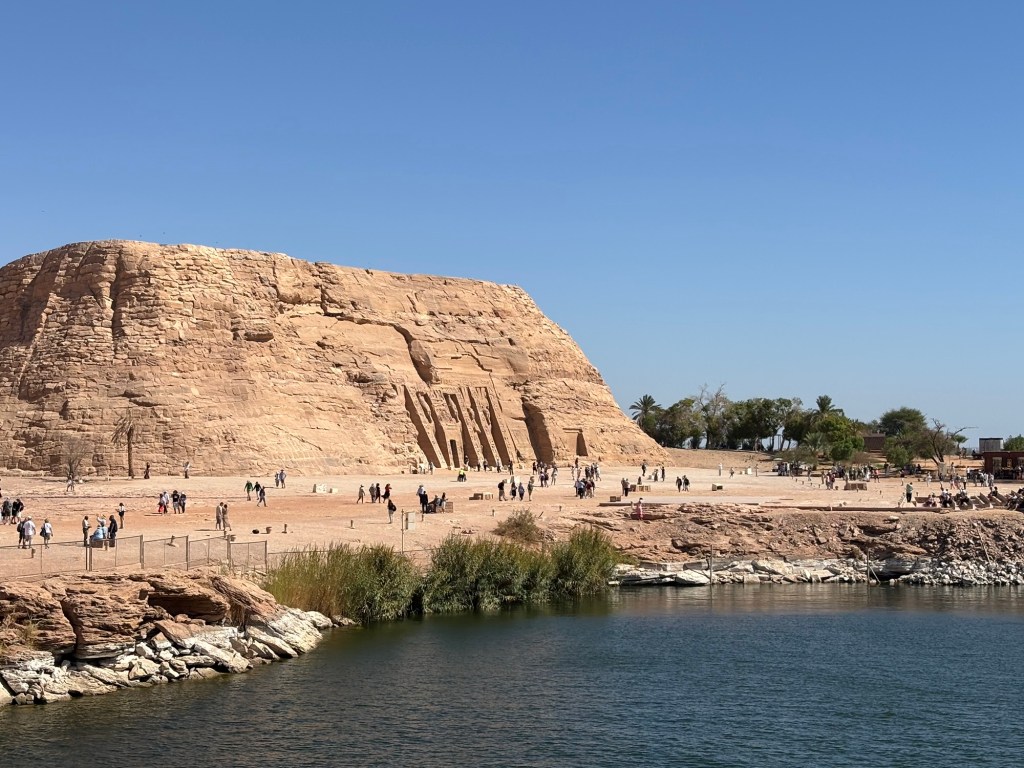
It’s hard to justify a total seven hours of bus travel time to enjoy a visit of less than two hours, but all I can say is I am glad I did it! It’s a once in a lifetime experience, and even if the place itself is small, the grandeur of the view and the rush of standing on the cliff side taking in the lake and the statues is humbling,
After I became satisfied that I had seen everything and taking pictures from every possible angle -I was holding my umbrella the whole time I was outside so sometimes I just took a lot of pictures in the general direction of a statue and hoped for the best- I made my way out through a surprisingly long succession of souvenir shops. The touts here, like my guidebook said, are much less insistent than in our previous destinations, either because they already get enough business or because they don’t have a high success rate?
After that, the drive back to Aswan took a whole four hours, although it felt shorter because the landscape was so different and interesting to look at. We stopped at a rest station in the middle of the desert and I couldn’t help wondering what would happen if we got a flat tire there?

We arrived back at the hotel at three, a Spanish lunchtime, and not for the first time I wished the connections were better organized: our flight north to Cairo doesn’t leave until 21:30, so first we have a bunch of hours to kill while we’re already tired, and second we’ll be arriving in Cairo really late when we have a full schedule tomorrow. Oh, how cool it would have been to fly out now and arrive early enough to have dinner at one of our hotel’s seven restaurants! Our hotel, which is mentioned in The Yacoubian Building as I was reading it during this trip! But, I’m not running this, so alas. We’ll make the most of it!

 This Is A Lake