
Okay, so a bunch of my predictions from yesterday came true right off the bat: they did run us ragged (I can barely stand and it’s only 2PM of the first day), and we did have to get up very early (so early that I won’t even say how early, in the hopes that when I re-read this in the future I will have repressed the memory and live in ignorant bliss). But the good ones also came true!
Our first stop, at the very crack of dawn, was the Temple of Hatshepsut; and I do mean the very crack of dawn, because when we got off the car it was dead at night, and by the time our guide had finished his introductory talk the sky was already blue, the sun threatening to climb over the jagged cliffs that bought us a few extra minutes of shade.
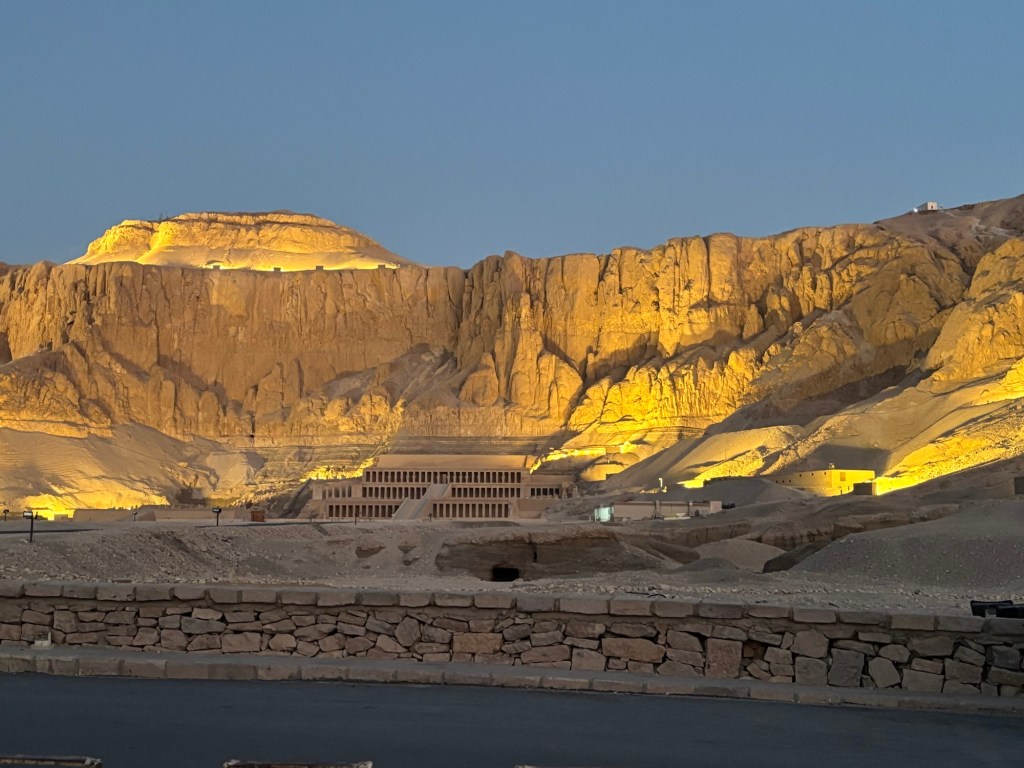
It is true that, however exhausting, getting to the temple this early in the morning allowed us to have the place almost entirely to ourselves -in the end we are a group of only seven people, against my expectations of being 20+ people being ferried around on a bus- and especially to buy some time before the heat became unbearable.
What’s unique about this temple, built in memory of queen Hatshepsut almost 3,500 years ago, is that it was excavated into the slope of the mountain, carved rather than constructed. It features three grand terraces, and although in its heyday it would have featured many more structures and even botanical gardens, today it still preserves original columns, murals and hieroglyphs. Our guide mischievously pointed out the brand new explanatory signs that were added for the official visit by the King of Spain just last week.
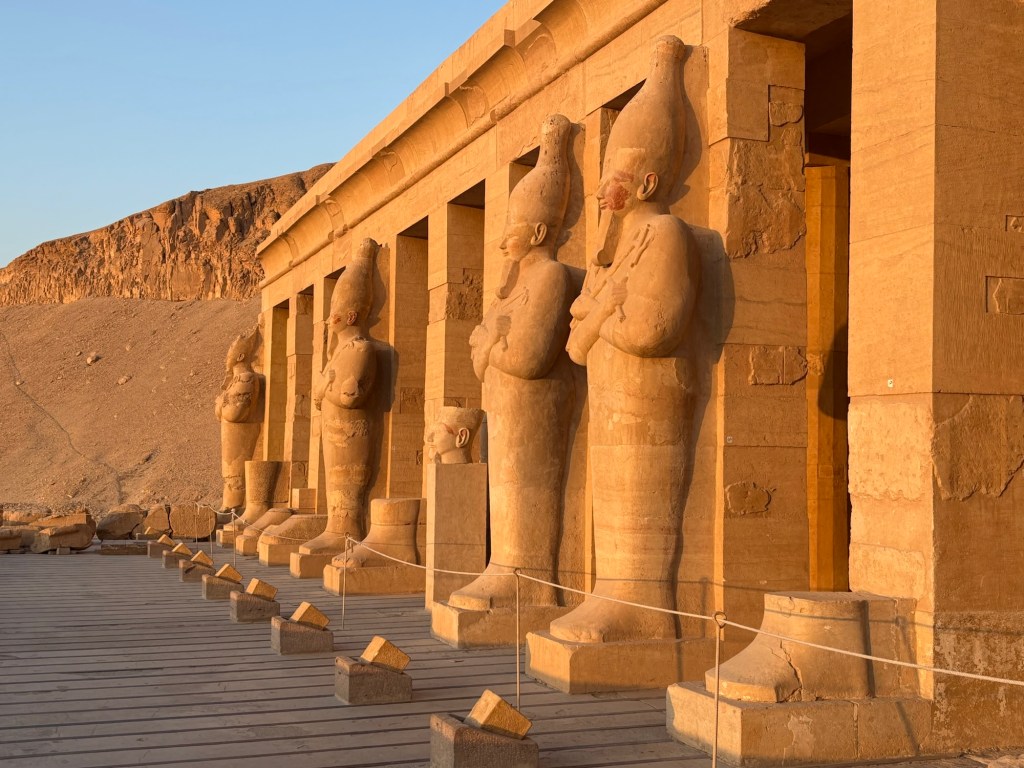
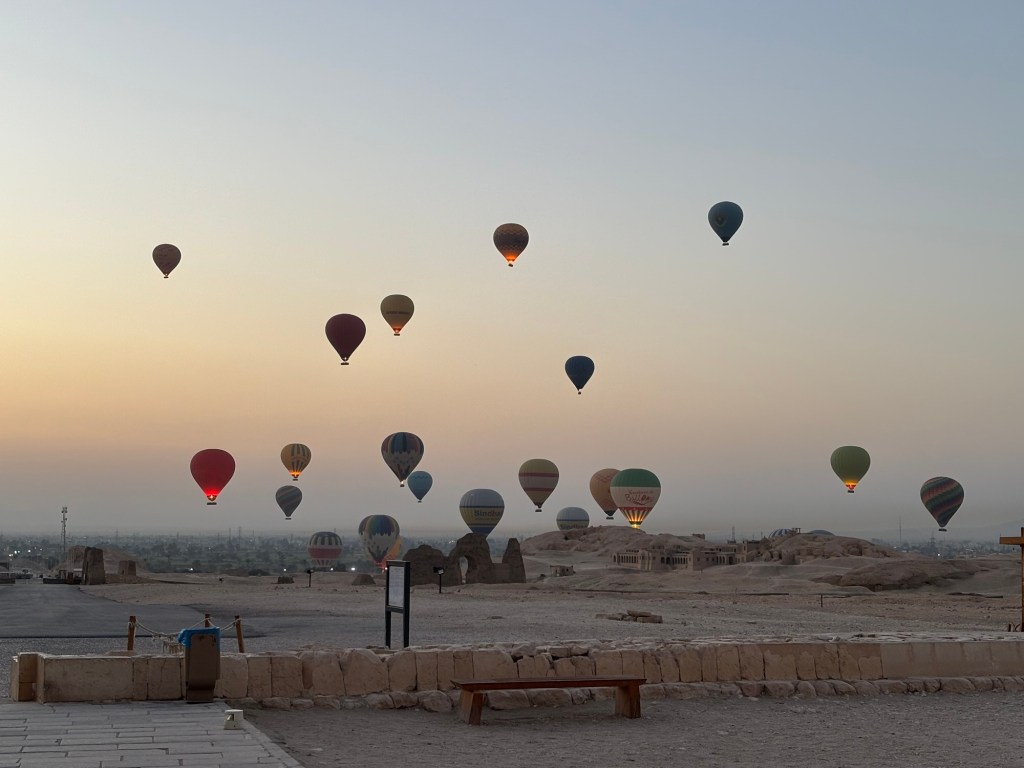
As if the amazing views needed even more spectacle, as we made our way through, a dozen or so hot air balloons took to the air and spread out across the sky.
From here our next stop was the Valley of Kings, an archaeological site where many pharaohs excavated their tombs. It is not visually very meaningful on the ground level, because it’s just mounds of gravel and dirt everywhere, but underneath the tumuli lie deep passages with intricately carved walls.
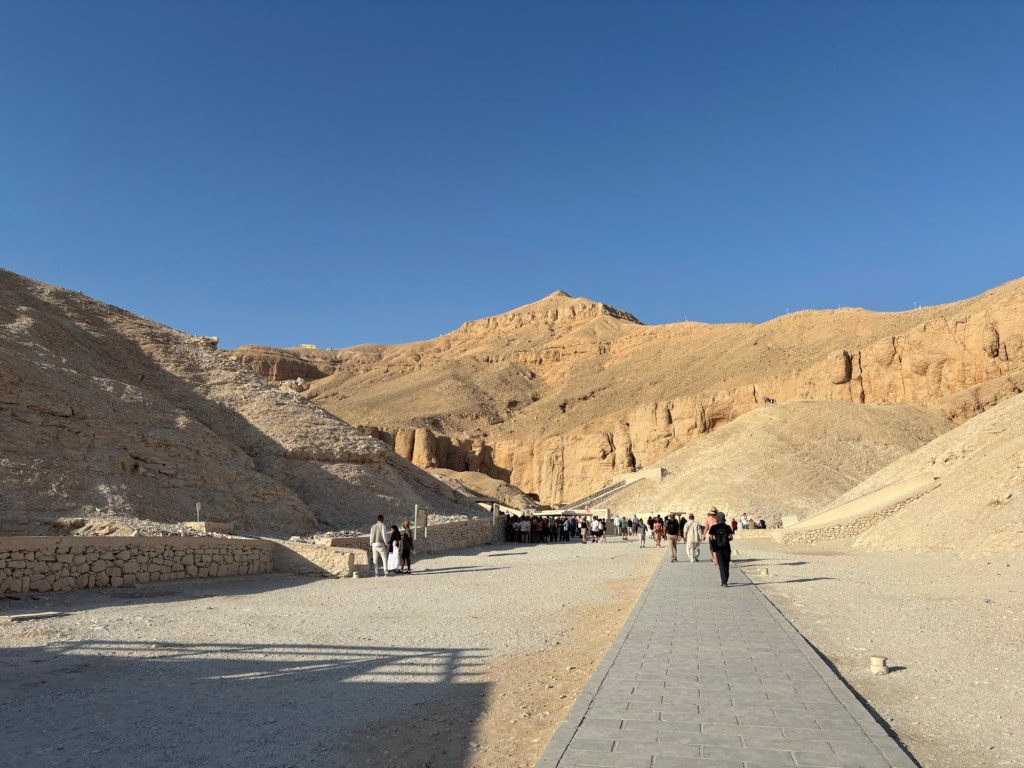
When we arrived to the Valley it may not yet have been 8AM and it was already crowded and hot, certain to get even more so as the day progressed. I really don’t know how I would have managed to do this trip on my own: even if you solve the problem of getting someone to drive you here, you still have to fight tour guides and agencies for spots on the shuttle carts that cover the long walk between the entrance and the actual tombs, and everything is so far apart…
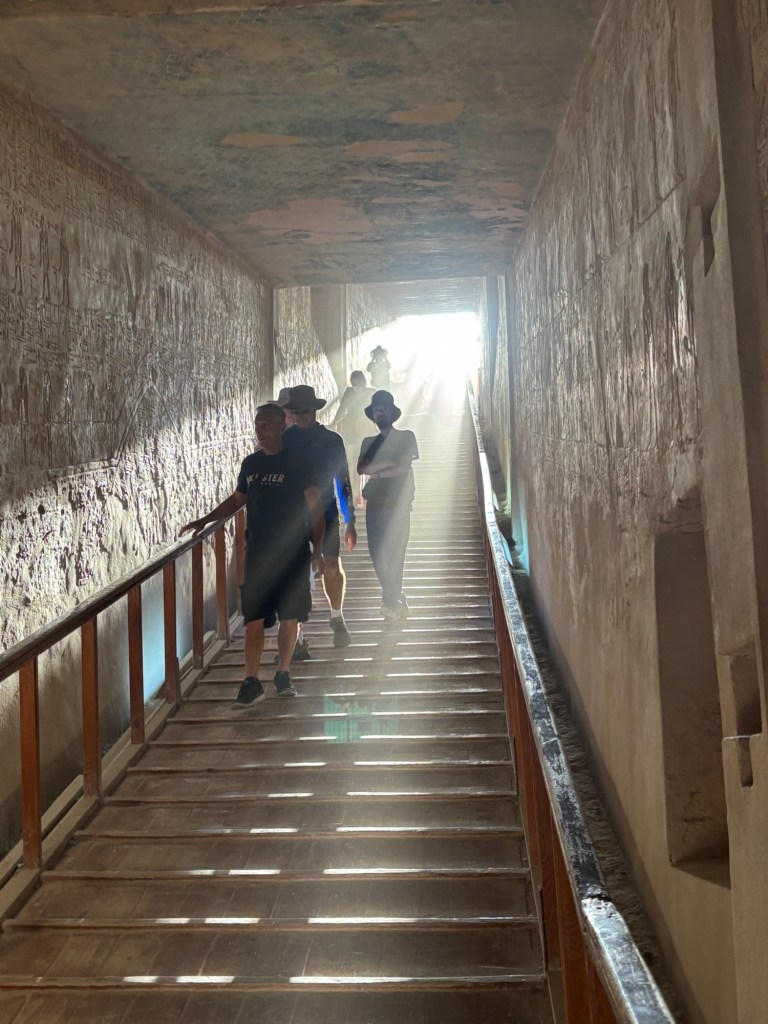
The main ticket gives you access to any three tombs of your choice, from about 18 that are open to the public. We visited the tombs of Merenptah, Ramses II, and Ramses IX, due to them being the biggest ones with the best preserved paintings. Apparently, because pharaohs continued building and upgrading their eventual tombs all throughout their reign, the size and complexity of each tomb is directly proportional to the lifespan of its monarch. This is why Tutankhamun’s tomb is so small, because he died very young.
(Speaking of, Tutankhamun’s tomb requires a separate ticket to visit. Our guide recommended against it, arguing that it’s been emptied of all its treasures and it’s really small; its fame comes more from the tale of its discovery by Howard Carter than from the place itself. I was so tired already that I didn’t mind skipping a stop.)
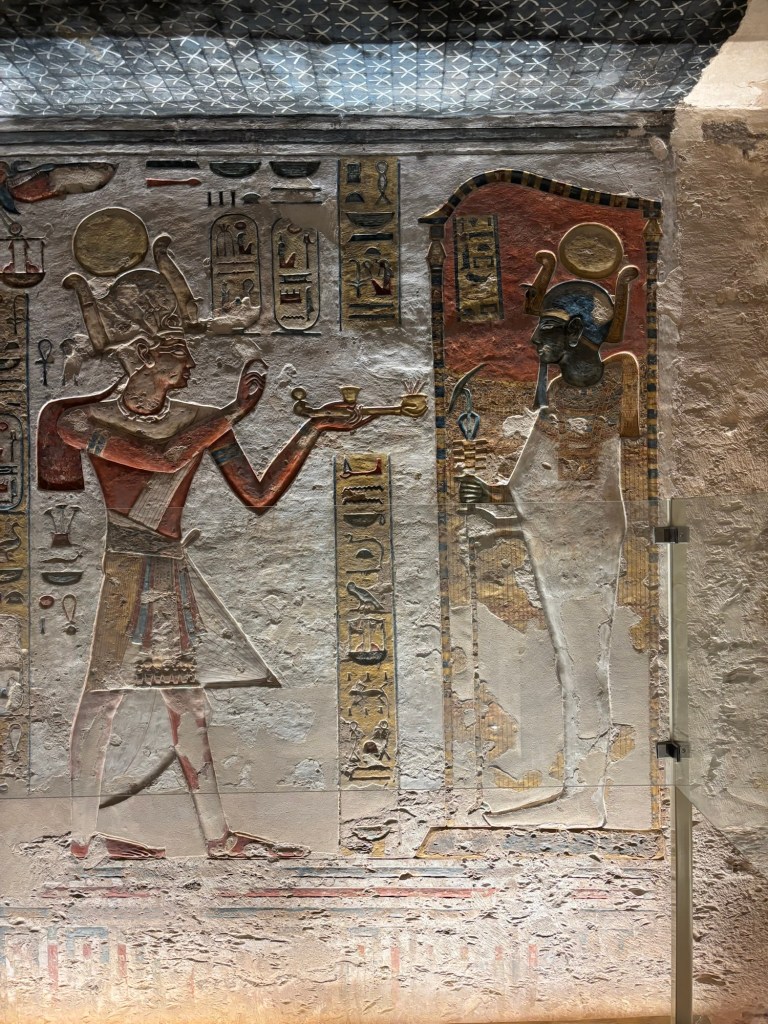
Against all expectations, the inside of the underground tombs was suffocatingly hot and humid; maybe it’s a European thing to expect a cellar to be cooler than the surface? But the discomfort is definitely worth it: it is an otherworldly experience to walk down the length of a 200 meter long hallway still displaying the vibrant colors and beautiful depictions it did three millennia ago. It’s like time travel, bridging a chasm that spans centuries, countries, cultures…
By the time we made it out of the valley the sun shone in full force, the temperature was around 30ºC, I felt my steps growing heavier, and it wasn’t even 10AM.
(On the way out we visited an alabaster shop, for what I like to call “the shakedown” part of the tour, but the shop owners didn’t give so hard a sell and mostly left us to our own devices.)
We made a stop at the Colossi of Memnon, which are historically significant (apparently they are carved out of a solid block of stone and they are the biggest standing statues in Egypt?) but as a tourist sight they are a bit of a letdown. The temple they used to guard is long gone and an earthquake caused so much damage that the statues are barely recognizable as such.
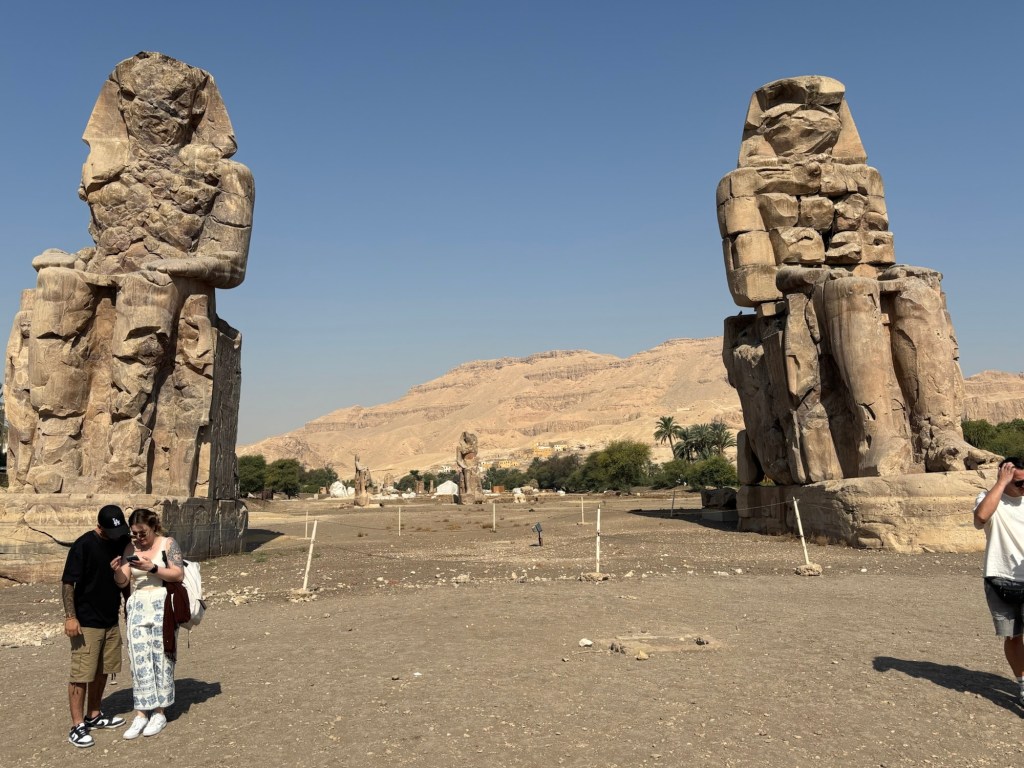
After a quick picture or two we made our way to the Temple of Karnak, one of the top sights in Luxor, rivaled only by the Pyramids in popularity. It is a truly massive temple complex, originated four thousand years ago but expanded progressively for thousands of years after that until it became almost a city of its own.
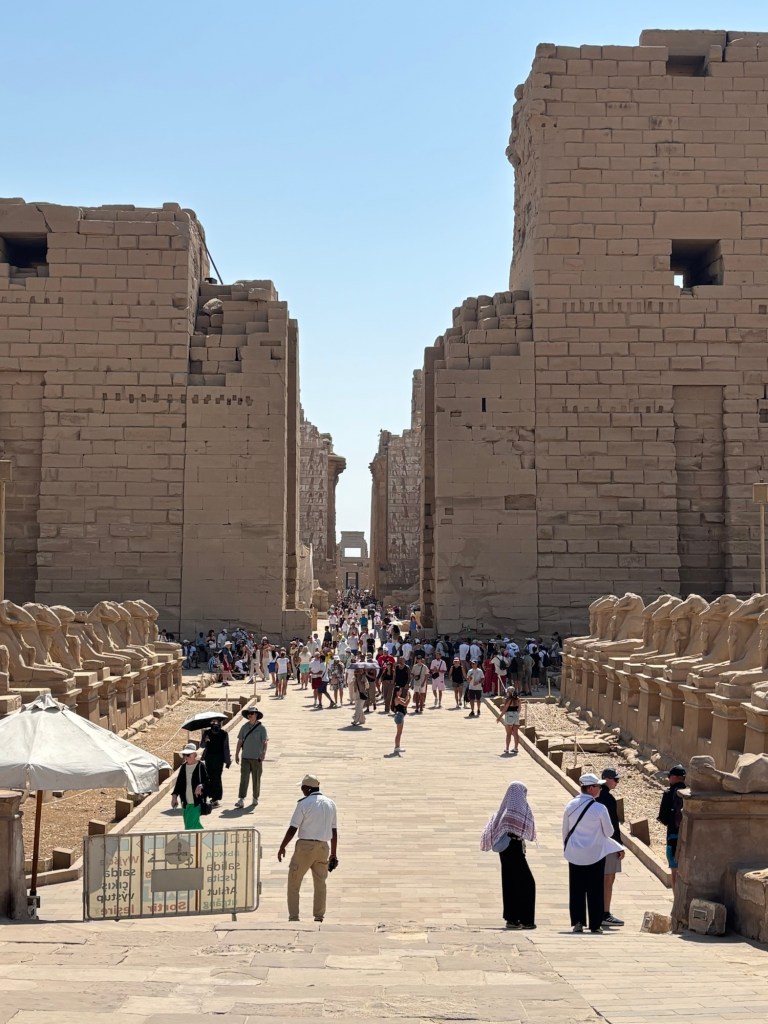
The temple’s massive walls, covered in hieroglyphs and mythical figures so sharp they could well have been carved yesterday, or its tall inscribed obelisks are all impressive on their own, but the real draw is its famous Hypostyle Hall, which you have no doubt seen in pictures many times: a previously closed hall, now open to the elements, where over a hundred enormous columns are tightly packed together, each with its own inscriptions and stories.
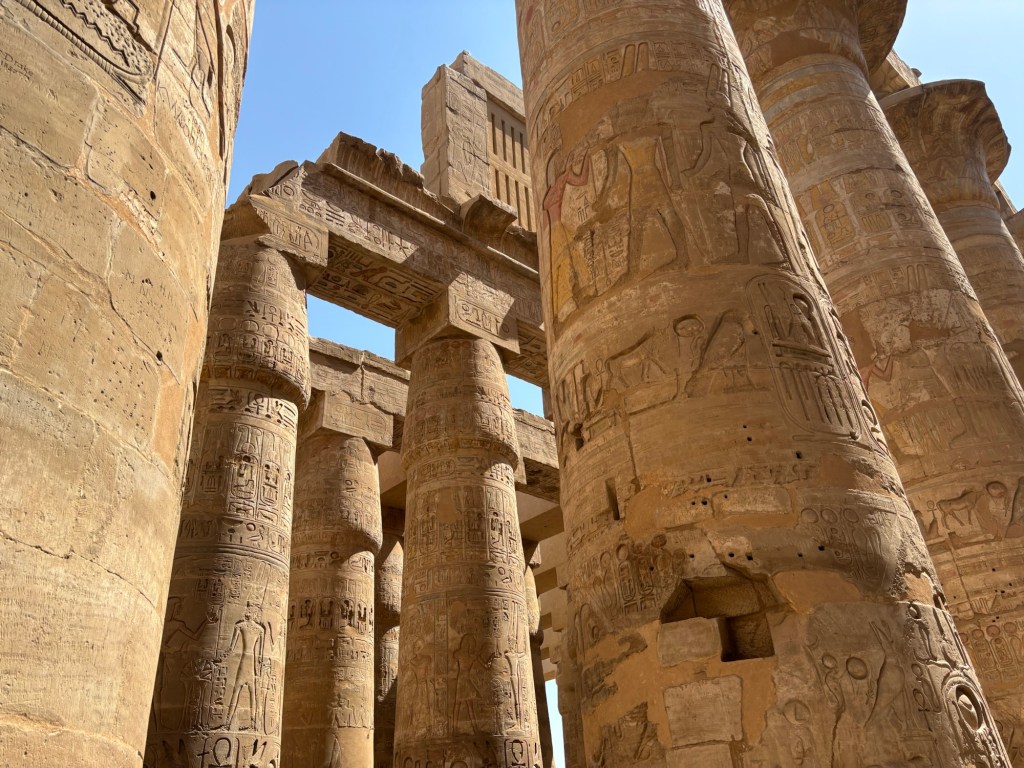
If the ruins are impressive today, it boggles the mind to imagine them at the height of their splendor, when the walls were brightly painted, colorful drapes hung from the rafters, and the breeze carried the scent of flowers and incense through the halls.
The only downside is, well, the practicalities: I was exhausted, sleep-deprived, thirsty, hungry, and hot all at the same time. I didn’t even mind the throngs of people that much, except for when we had to compete for a patch of shade, and I tried to be part of the solution by drinking water and having a snack and whipping out my trusty Japanese folding umbrella to avoid sunburn, but even then it was becoming increasingly difficult to focus on our tour guide’s otherwise interesting history lessons.
Even though Karnak rendered me practically incoherent, we still had one last stop in our itinerary, and that was the Temple of Luxor (my guidebook says the name, by the way, is a corruption of the Arabic “al-uqsur” which is a word for fortress?), a smaller temple that is still recognizable from its characteristic front façade, the sloped wall of its pylon guarded by four giant statues and originally two obelisks, of which now only one remains. Do you know where the other one is? Well it turns out I have walked past it many times, in Place de la Concorde in Paris, where it was sent as a diplomatic gift.

What’s interesting about Luxor, in addition obviously to its marvelous inner courtyard also lined with massive columns, is that it contains religious architecture from four different religions: it was built by Egyptians for their gods, but then the Romans added a Roman style section to worship their emperors, the Coptics built a Christian chapel, and finally the Muslims built a mosque right on top of it. This is what I mean about the weight of so many different chapters of world history!

If I was tired and incoherent before, now, finally approaching one in the afternoon, I had practically entered a fugue state just in time to be driven back to our cruise for lunch. No sooner had I finished a buffet lunch and hopped into the shower than I felt the room lurch: the boat was moving! We have now set sail for Esna, where a channel lock connects different heights of the Nile river, and from there to Edfu, our stop for tomorrow. The guide promised that we will get a little bit more sleep this time, so crossing my fingers!
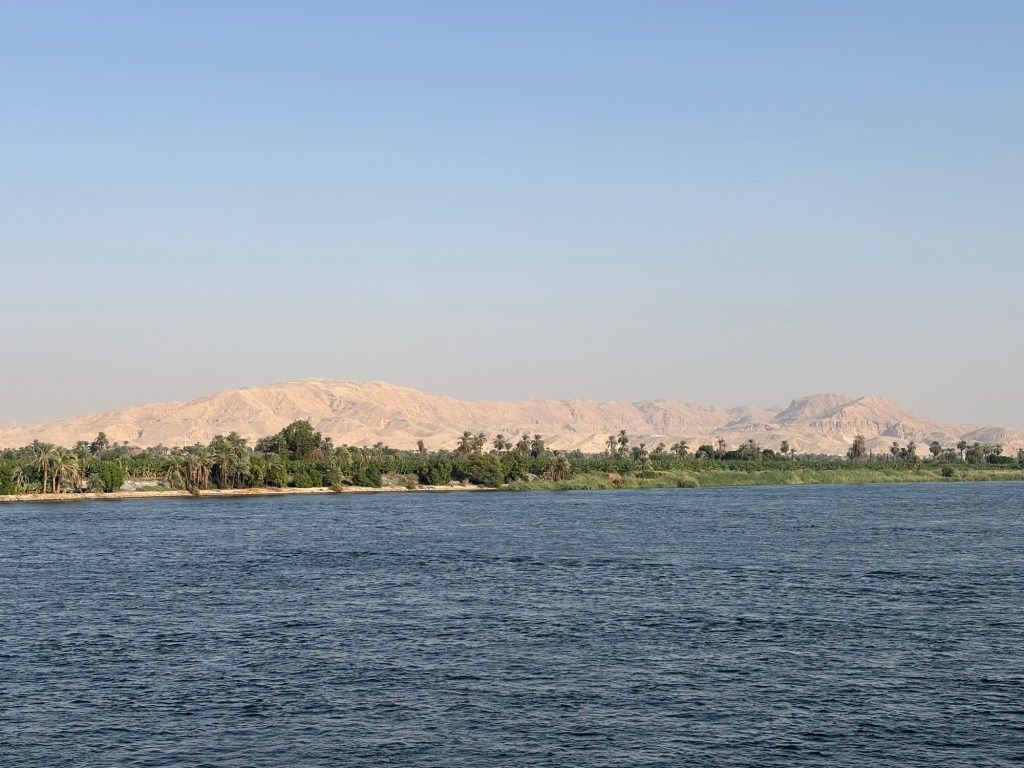
As a debrief of my first day, I do wish it had been a little less grueling: we slept like four hours and then had a non-stop six hour marathon of sightseeing only to be completely done by lunchtime. I guess it has no easy solution if the boat has to cover ground and the heat won’t abate until sundown… Well, the plunge into Egyptian history is worth the effort!

 This Is A Lake