Okay, I cannot take another step! But on the upside, I got to see a lot of stuff today!
Today I took things a bit slower in the morning, after the time pressure yesterday, with the side effect that the buffet breakfast at the hotel was a true gauntlet -I had to wait for a table to clear!
Eventually I walked out to another bright, sunny morning, this time headed to Santa Chiara, a 14th century compound that includes a basilica and a monastery. The ticket gives access to the entire site, but the museum collection looked really boring and I knew I had a lot of steps ahead of me today so I skipped it and devoted my time to the gorgeous cloister in the middle.
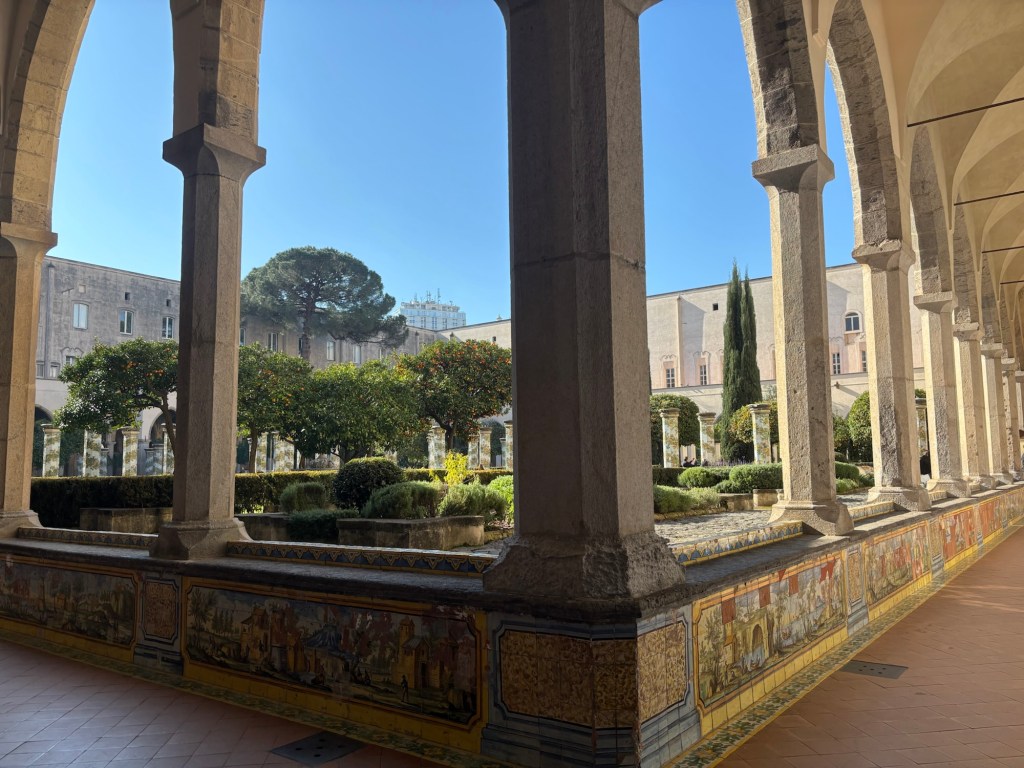
It is the most Mediterranean enclosure you’ve ever seen, with orange trees interspersed with colorfully tiled columns and benches, surrounded by a gallery covered in frescoed vaults. Imagine how peaceful it must be to sit in the shade of a citrus tree with a book, hearing only the murmur of a nearby fountain!

After the monastery, I kept walking north to the Museo Archeologico Nazionale di Napoli, or MANN, a giant building undergoing some construction. At €20 a ticket, it is expensive compared to everything else I’ve been doing in Naples, but certainly not compared to the highway robbery of the Pacific Northwest museums!
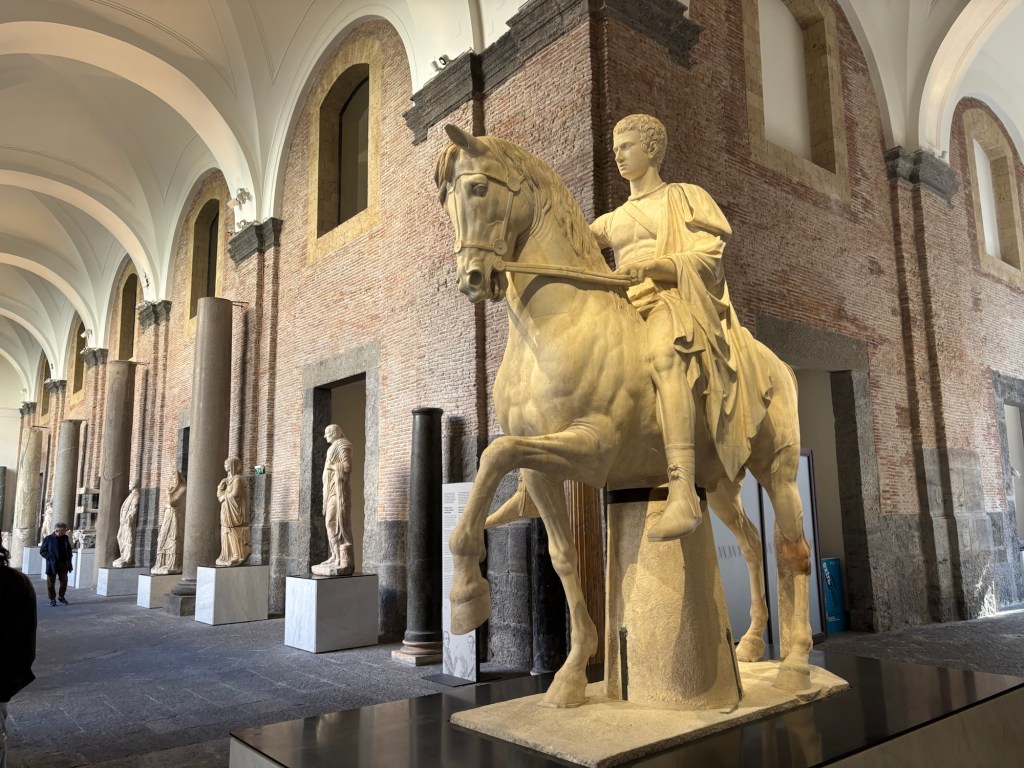
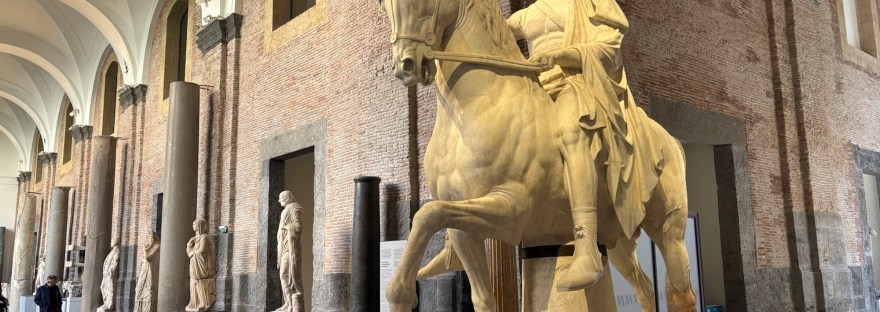
The main attraction of the MANN -certainly for me, a sucker for Greco-Roman mythology- is its vast collection of ancient statues rescued from Pompeii, Herculaneum, and other similar settlements around Campania. Once again I cannot overstate the size of this collection: the British Museum in London and other museums worldwide have extensive collections of Greek and Roman statues, but here there are hundreds of ancient, priceless works of art: representations of gods, of rulers, of regular men and women, of fictional characters; full bodies and busts; people and animals; colossal giants for temples and small figures for houses… really every combination you can think of, and most of them around two thousand years old. It’s hard to conceive the artistic and historical wealth that this represents.

What most impresses me of these works of art is the combination of skill and emotion. Each fold of fabric is painstakingly carved with incredible realism, and at the same time the faces often reflect complex, unmistakably human expressions that make me think of the person who sat for the piece or the artist who sculpted it.
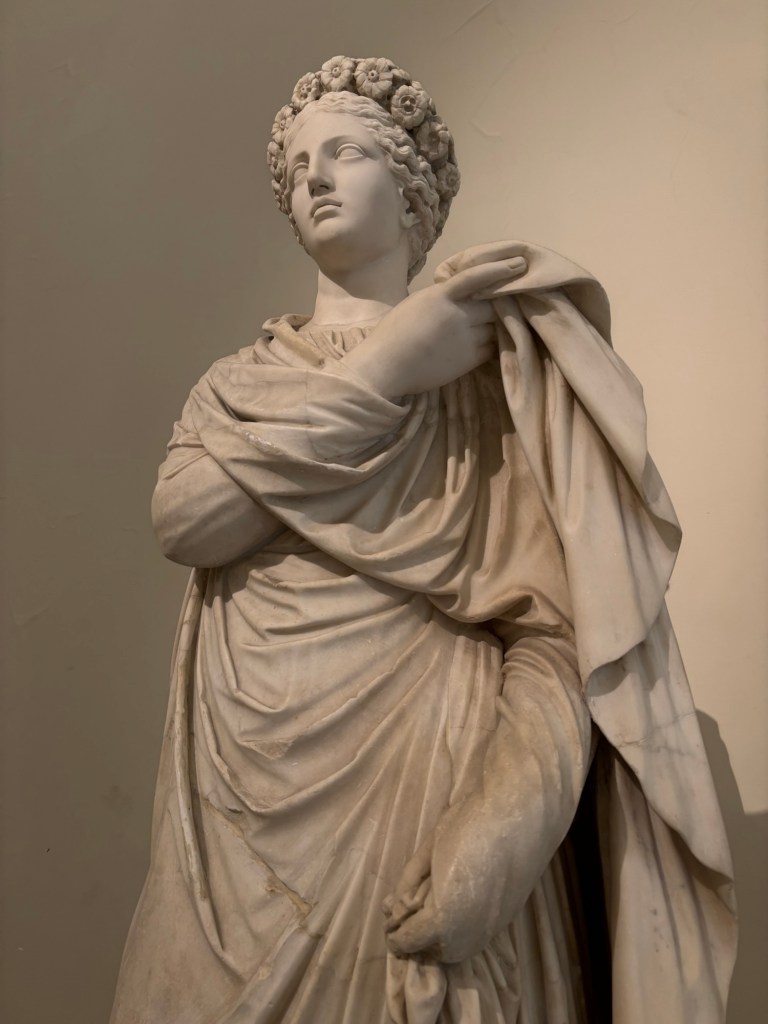
I will say that seeing all of these sculptures here made me a bit sad that Pompeii and Herculaneum were left bare. How grandiose would it be if we could see these magnificent statues in their original location, adorning the ancient temples and public spaces? I understand the need for preservation, but why not make reproductions on site and keep the originals at the museum?
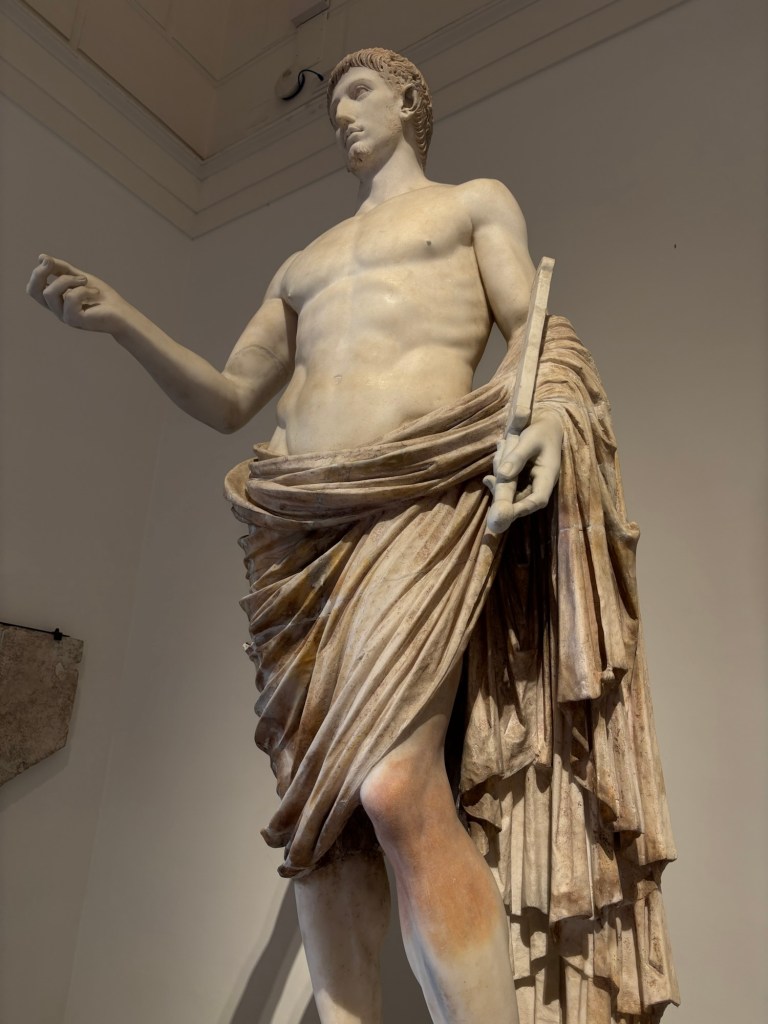
The Campanian and Farnese collections occupy most of the large first floor, although unfortunately there is apparently a gem collection that is currently closed for renovation. I do like a jewelry collection, like the exclusive diamond room at the Hermitage (you can read about it on this very blog). On the second floor there was a collection of frescoes, also taken from the surrounding ruins; here I wanted to see the famous Flora, which is almost hidden in a small frame on a table in one of the rooms. I first encountered this beautiful painting (misidentified as the nymph Flora but actually of Persephone) in London, when I got to see the British Museum’s temporary exhibition on Pompeii, so it’s been a bit of a full circle moment for me.
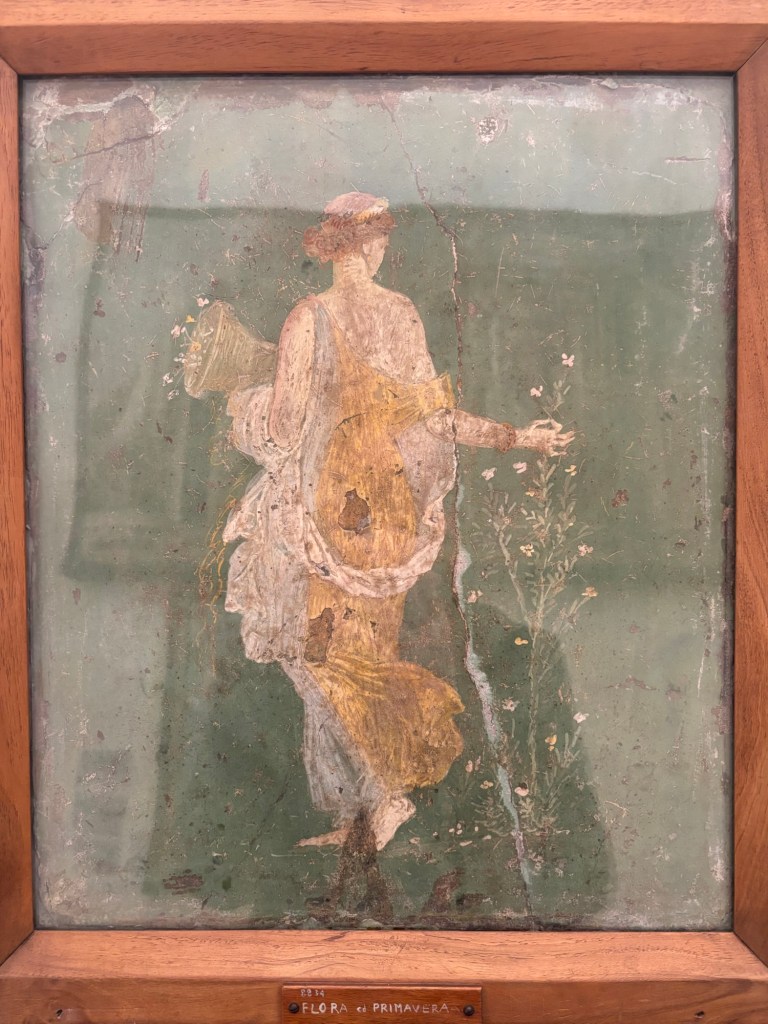
The frescoes, and the adjoining section for mosaics, are also spectacular, both aesthetically and historically. They are less refined than the statues -you can see the proportions are a bit off sometimes, the postures less natural- but the colors are gorgeous and the faces of the portraits seem almost alive. It’s astonishing that two thousand years ago people looked so… normal!
(By contrast, there was a section on Prehistory and I so did not want to waste time on it that I practically sprinted through the gallery until I found a way out)
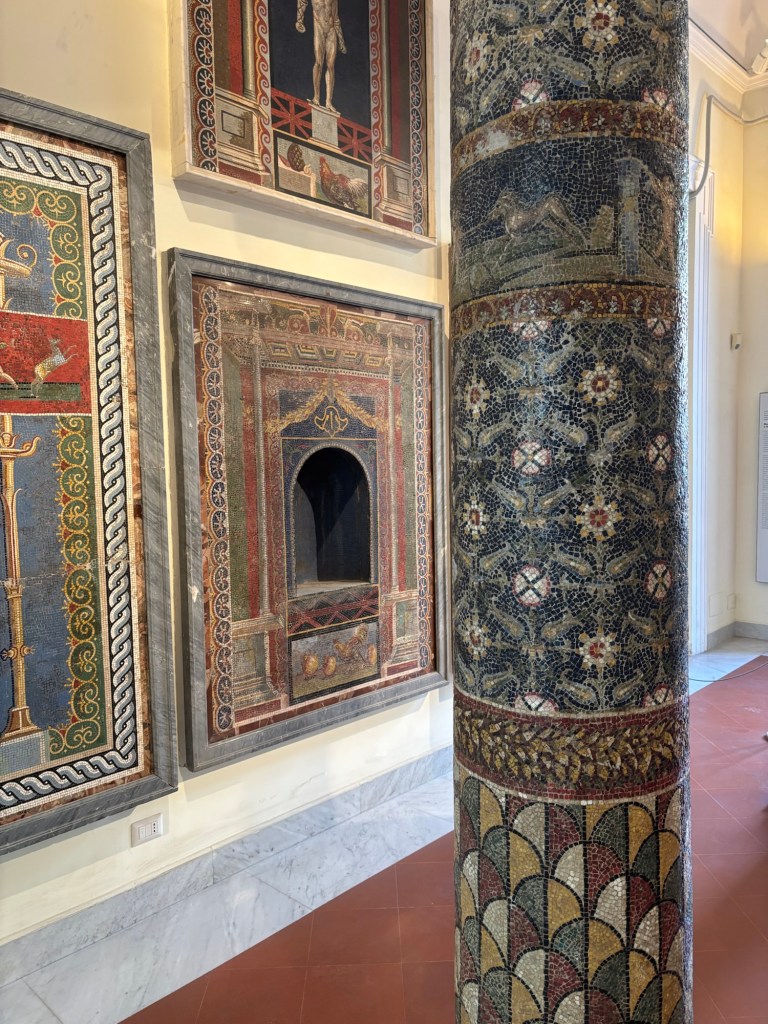
After a good two hours of walking around, admiring antiquity, I was well and truly knackered, so I rested my feet a little at the museum cafe before checking out the frankly disappointing shop and then taking off for the metro.

My next target was the Palazzo Reale, but first I went to look for a lunch spot, strategically chosen to give me the rest and energy I would need to do more sightseeing. I settled on Da Ettore, a small trattoria recommended by my guidebook, where a man who looked like he owned the place sat me down in a corner and told me (in English) that I could choose “pasta with clams, gnocchi with tomato, or pasta with tomato”, verbatim. I chose the gnocchi, and off he went without another word. I was only the second customer inside, but soon enough the six other tables were filled with Italians. I was amused when, to the Italian customers, the host explained the three dishes in much more detail than he did to me, but at least they were the same options! And the gnocchi were indeed delicious, with a savory sorrentino sauce. It all came down to €16, water and bread included.

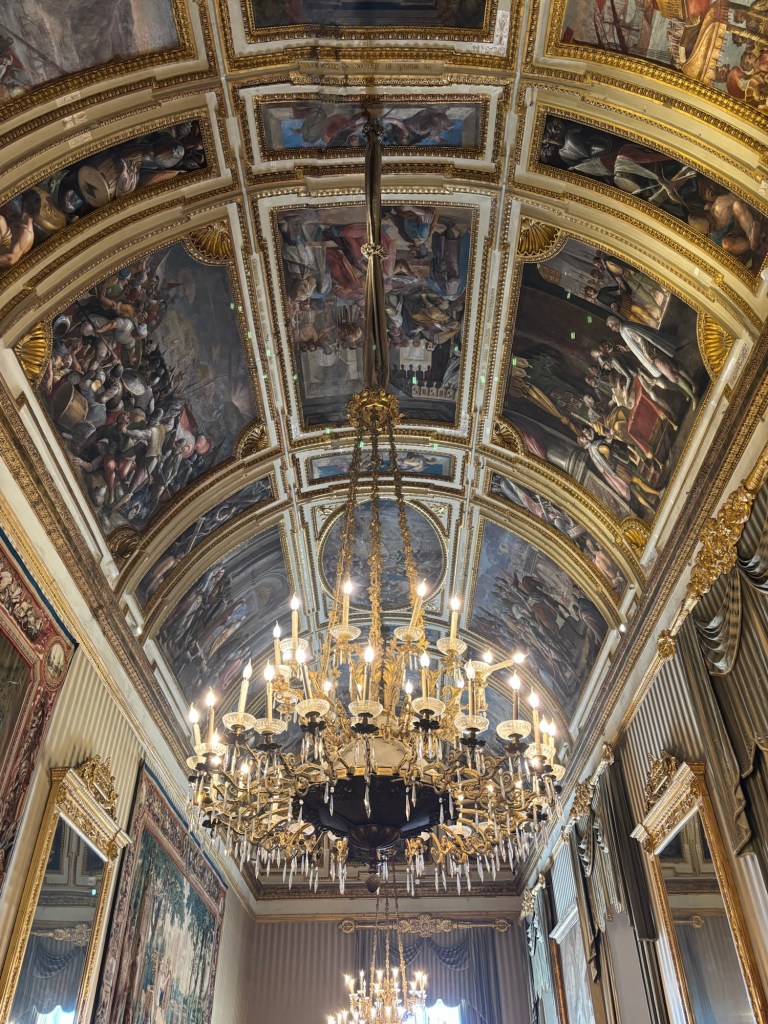
Eventually I walked back to Piazza del Plebiscito, presided by the impressive Royal Palace, built in the 17th century for the Spanish viceroys and the Bourbons. It is a place certainly fit for a royal family: after buying a ticket, the entrance is through a majestic marble staircase leading up to a labyrinthine network of reading rooms, ballrooms, boudoirs, galleries, corridors, offices, and drawing rooms, each more sumptuous and over decorated than the last.

I love a good palace or mansion museum, and this one did not disappoint! Everything has been meticulously preserved or restored, to the point where even all the ancient clocks are still on time and ticking! The ceilings are all either gilded or painted, paintings or tapestries hand from every wall, and there is furniture in every room. The one thing that I found lackluster is the information, because only a handful of rooms have an explanatory panel detailing what they were used for or what is notable about them.
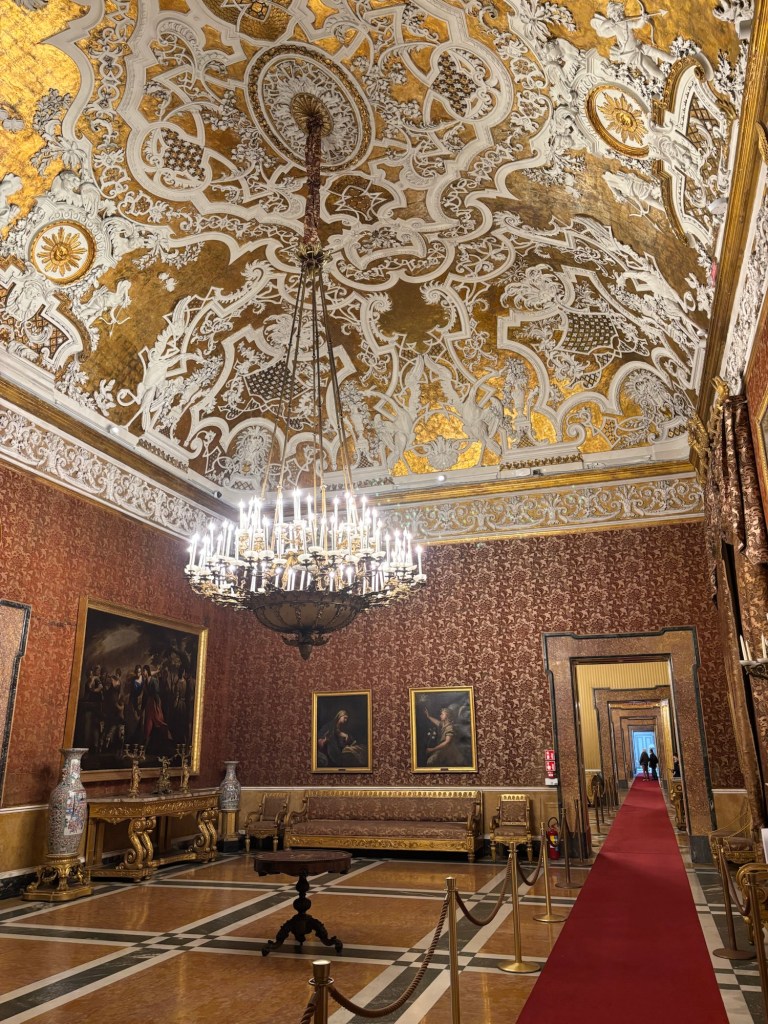
What’s better is that, it being more or less still lunchtime, I had the place pretty much all to myself, only sporadically running into other visitors. I saw centuries of Neapolitan history pass, as the route took me from the older rooms to the newer ones, ending with 19th century paintings that looked surprisingly modern in comparison with the earlier ones. Of note, in some ceiling frescoes there are annotations entirely in Spanish, a reminder of who owned the palace.
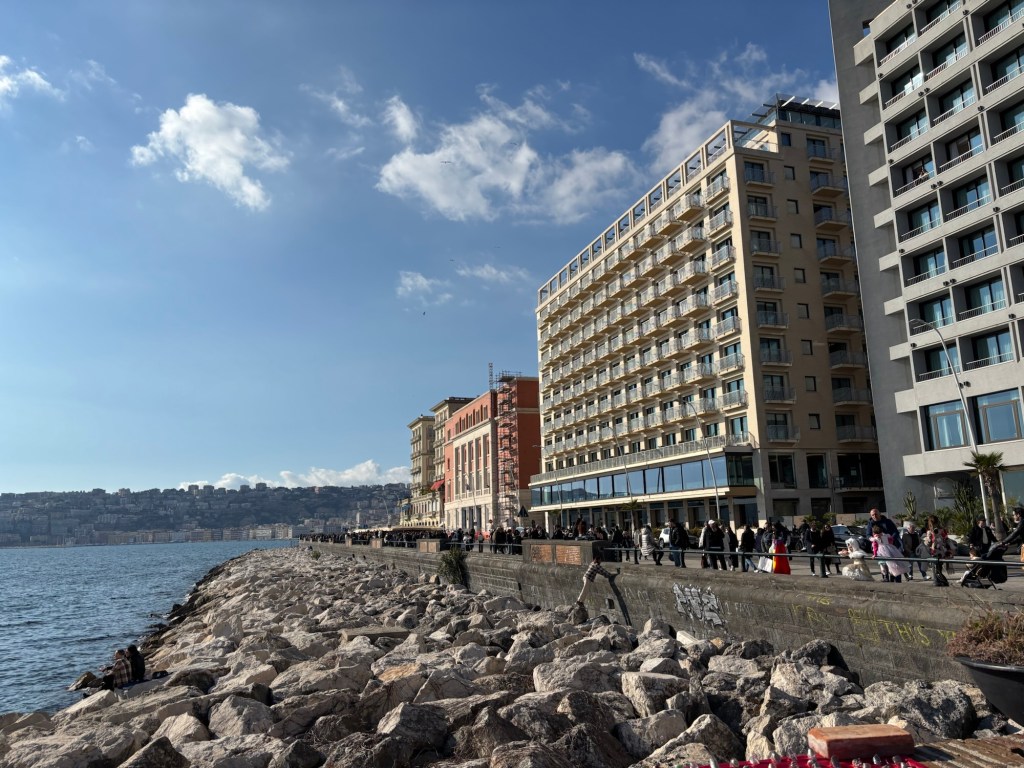
This was it for my cultural plan for the afternoon. When I left, I simply walked south to the sea, and around the bend to Via Partenope, where I was equal parts happy to see the beautiful blue sea and horrified to find untold throngs of people, locals and tourists alike, occupying every square inch of the wide seaside avenue. Turns out this is the real touristy thoroughfare in the city, making Via dei Tribunali look like a side alley!
I was relieved to step away from the avenue to check out Piazza dei Martiri, a small square with high-end fashion boutiques that I wanted to see with my own eyes for also being heavily featured in Elena Ferrante’s novel (this is where Lila’s shoe store would have been).
And that’s about as far as my feet would take me, so I made it back to the hotel to rest, write all of this down, and plan what to do with my morning tomorrow before I have to leave for the airport. It’s been a cultural whirlwind of a weekend, combining fascinating history with mouth-watering food, both surpassing my already high expectations for this trip!
(I suppose I will come out for dinner, it’s just a matter of how far! Yesterday I went to Tandem and had amazing ragù, don’t miss it if you visit!)

 This Is A Lake
No se me había ocurrido la idea de colocar réplicas de las estatuas en Pompeya, allí donde fueron encontradas, pero es muy buena.
LikeLiked by 1 person