
I woke up to a beautiful, sunny morning, had a plentiful buffet breakfast -after having sworn off food last night- then set out for my ambitious double feature plan for today: the ancient ruins of Pompeii and Herculaneum!
If the Naples metro was pretty quiet on this Friday morning, the train to Pompeii was absolutely packed! I barely managed to squeeze into one remaining seat in the junction between two cars, with a group of about eight or ten French people who were utterly, inexplicably, befuddled by the very concept of trains: they spent the whole 40 min of the route nervously double checking what the right stop was (it’s the one called Pompeii… the only one with Pompeii in the name!).
I got off in Pompeii shortly before 10:00, having already bought my ticket online. Right outside the station there were touts warning people that if you bought a ticket online, you have to redeem it at their offices, but my Traveler’s Scam Detection Instinct kicked in, so I ignored them, and sure enough I was able to scan my PDF ticket without issues and finally walk into the archaeological site!
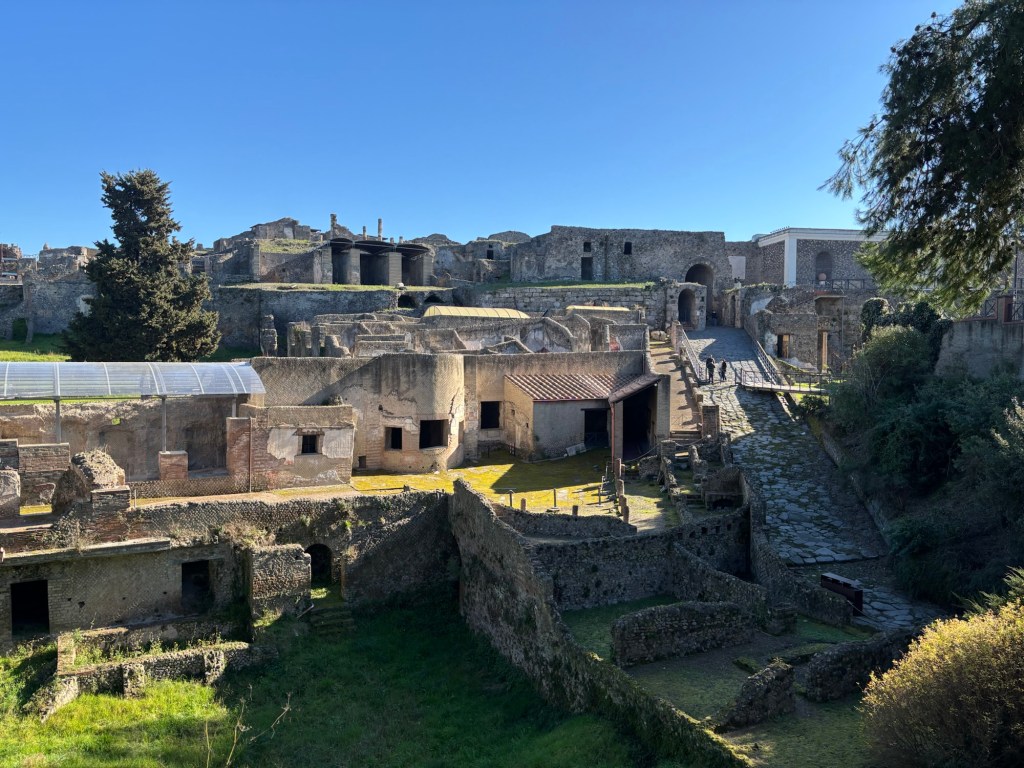
It’s difficult to summarize a place as massive and as historic as Pompeii. First thing you need to bear in mind if you’re planning to visit, I guess: no matter how big you imagine it to be, it is bigger still! Not for nothing, it was a prosperous Roman city until an earthquake destroyed part of it two thousand years ago, only a few years before the famous eruption of Mount Vesuvius finished the job and sank the whole city under a mountain of ash and debris, until it was rediscovered and excavated only in the 18th and 19th centuries.
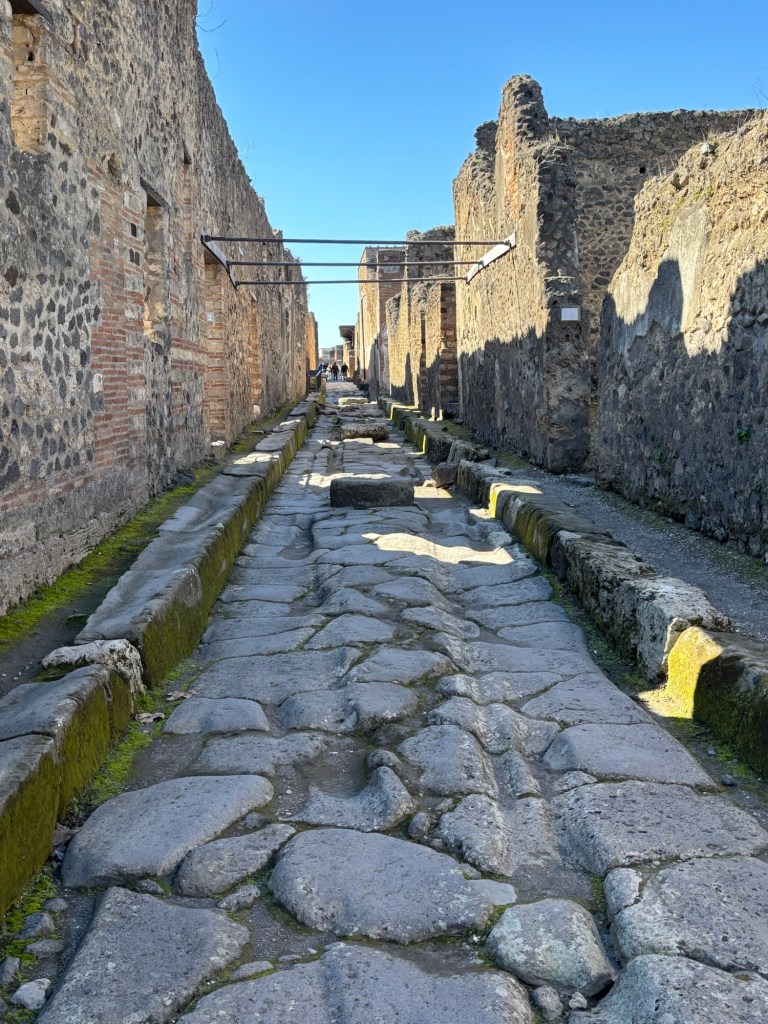
Because it is so expansive, with its own network of streets and avenues laid out in a grid, I didn’t much mind the crowds (many French and Korean tour groups!); it only got annoying in the most famous houses, where I had to elbow my way through the groups as they blocked every passageway they could find.

There is precious little in the way of signals and explanatory materials once inside, so it helps to already have an idea of which houses you want to visit to make an itinerary of sorts. That being said, I found that often the most beautiful or interesting places were the ones I found by accident while going from one famous location to another, so do allow time to just wander the streets and peek into every open doorway.
Aside from the practical details… I can’t overstate how much walking through these streets feels like time traveling. In a way, when temples or monuments like the Coliseum or the Parthenon last to our days, it’s more normal: they were very deliberately built to last and to impress, and so they have and so they do, but to see a humble tavern’s amphorae or a home’s entrance mosaic or a handwritten name on a wall after two millennia filled me with awe.
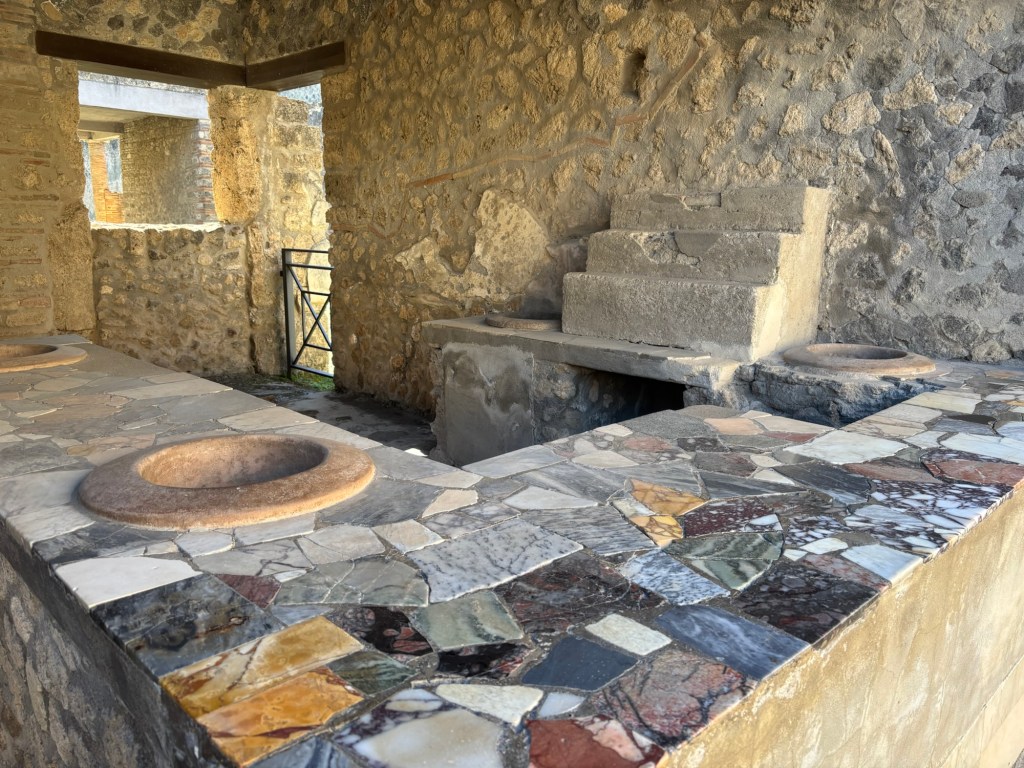
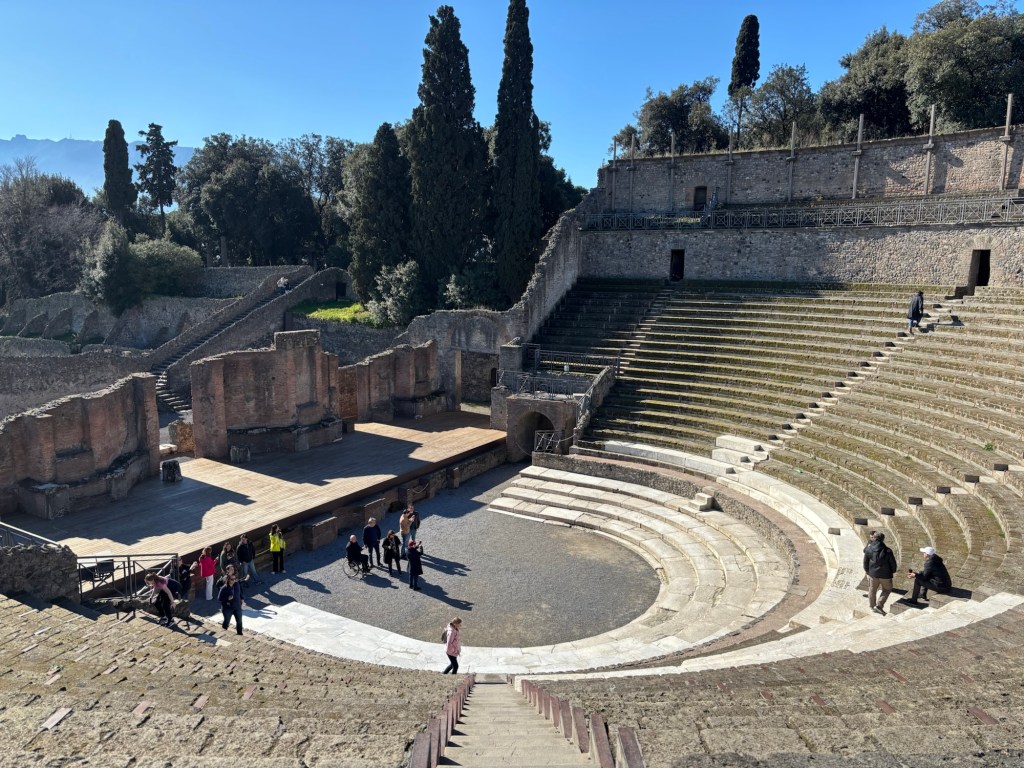
All areas of Roman culture are preserved, including two theaters and one big amphitheater (the oldest to still exist), many shops and taverns, a brothel, public baths, temples (even one to the Egyptian goddess Isis), and an extensive forum where people would gather. Many of these are stunning (my eyes watered when I walked into the theater, imagining what it must have been like when 5,000 people took their seats to watch a tragedy), but the most beautiful remains of all are the private residences of Pompeians, each with their small atrium, some with cozy courtyards, mosaics, and frescoes on the walls.
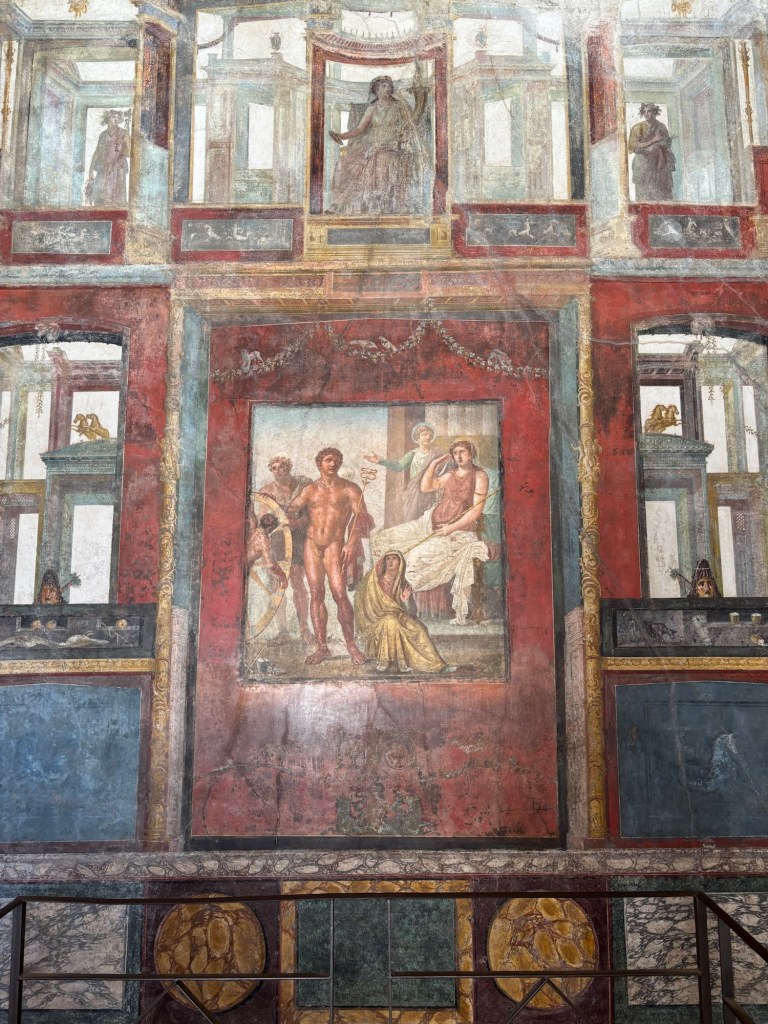
I was happy to wander around wherever the streets took me, but when I realized it had been two hours, I began to pick up the pace and seek out the sites pointed out in my guidebook I hadn’t naturally found yet. Even making a beeline for them at a brisk pace, over the uneven stones of the avenues, I still needed almost an entire hour more to find them all!
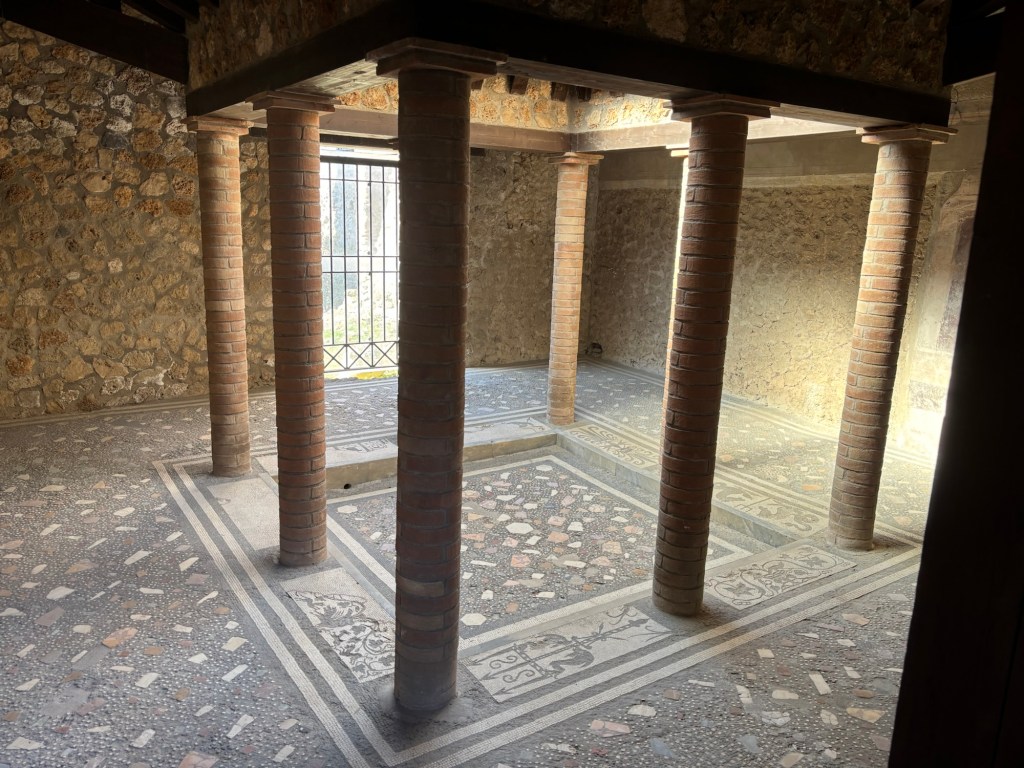
Part of the reason why I wanted to finish before lunchtime is that I also really wanted to visit Herculaneum, another famous archaeological site, which in the winter months closes at 15:30!

I left Pompeii, not before taking a look back at the forum to say goodbye, and went back to the station, where I boarded a train bound for Naples. Ercolano is on the same route, so it’s a convenient stop on the way back, except… my train didn’t stop! Either something was wrong or I boarded a direct train by mistake (even though I specifically checked it didn’t say “express” on the timetable…), because this one took us all the way back to Naples, over 25 minutes, while I anxiously recalculated multiple potential itineraries to compensate.
Back in Naples Garibaldi, I hurriedly transferred to another train making the opposite trip and luckily was able to make it to Ercolano at 14:10. I stopped at the first restaurant I saw to have a quick lunch (another pizza, after having sworn off pizza forever last night, this time a proper margherita), then blasted down the street like the road runner to make sure I got to the archaeological site in time. I was so relieved when I finally scanned my ticket inside!

If Pompeii was a busy, bustling city, Herculaneum was a residential spot for affluent Romans. It is much, much smaller than Pompeii, but also better preserved: instead of being leveled by the volcanic explosion, this place was covered by 16 meters of mud, which protected the remains once it dried.

It is a very different vibe: for one thing, the site is in the middle of the modern city of Ercolano, so right next to the two-thousand-year-old walls you can see apartment buildings with someone’s laundry hanging out. For another, while in Pompeii most houses only preserve their first floor, here many houses have two and even three floors, giving a shocking but accurate impression of how prosperous these residences would have been.
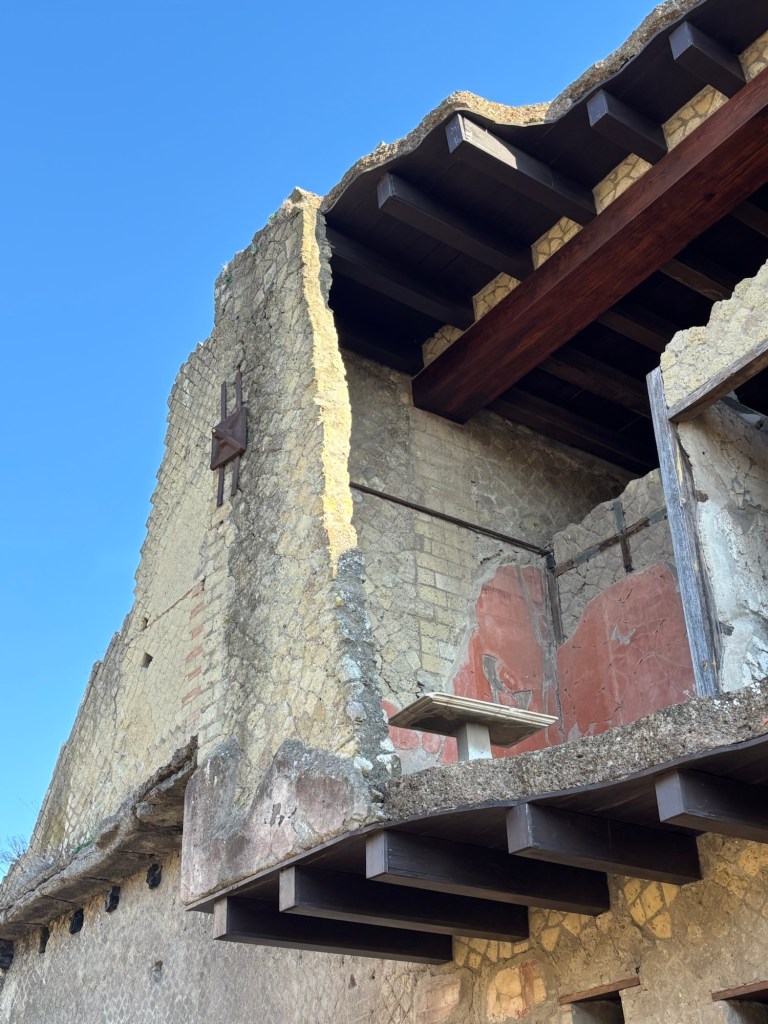
By this time I was already exhausted, but I got a second wind to do at least one lap around the practically empty place and peeked inside all the houses I could see. Even after a full day of seeing wonders I was still awed by mosaics so colorful and so vivid that they could well have been installed yesterday.

Over time it has become easier to see beyond the ruins as they are today and imagine what they must have looked like when they were whole and inhabited by the people who decorated them. Seeing a balcony, a fountain, a veranda made me feel closer to antiquity than the more impersonal monuments. The baths, too, still had shelves where people would have stored their clothes.

The site only has three major thoroughfares, plus I was positively exhausted, so my visit was quick and efficient, but I still went inside the small museum building to gawk at a few jewels and home ornaments recovered from the excavations. I’ve said this before, but it’s astonishing that we have glass drinking cups or beaded bracelets from Ancient Rome!
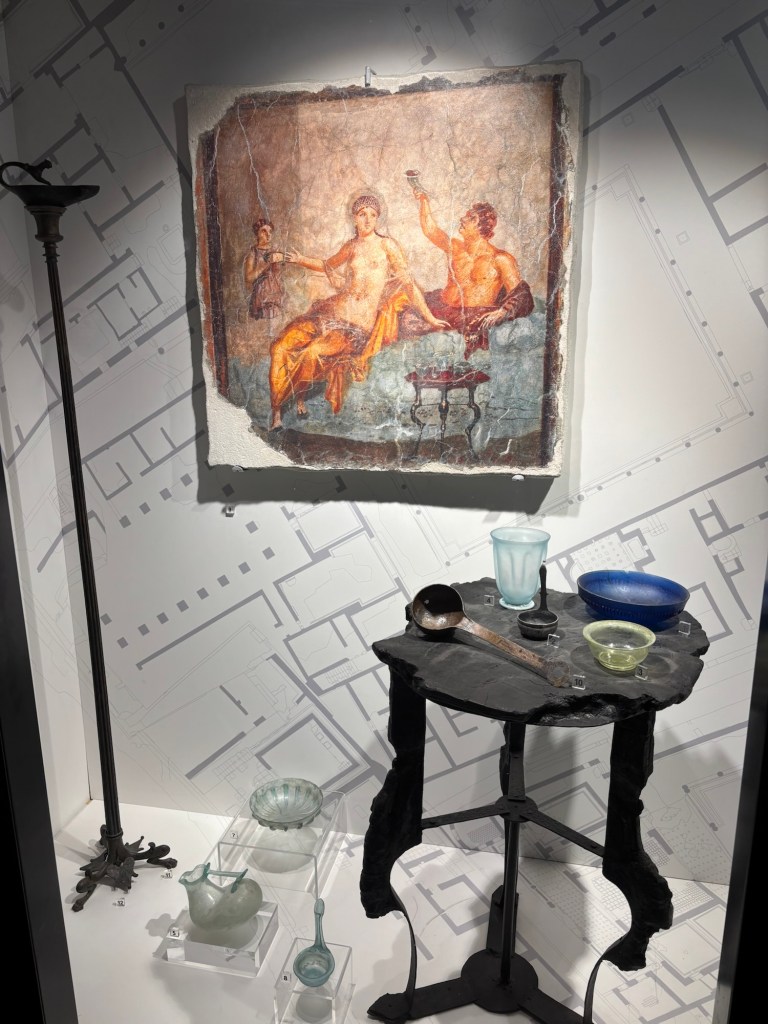
This, finally, was my last activity for the day so I retraced my steps back uphill, to the train station, back to Naples, on crowded trains. (I am using contactless payments on all of these trains and it’s much more convenient than buying tickets at the window, but I am 80% certain that the tapping out is not registering on any of my trips and I will be paying max fare.)
My closing statement is that Pompeii and Herculaneum are both must-sees in any trip to Naples and, unlike what every online resource I checked says, perfectly doable in one day; for me it took too long because of the train detour and the pressure from the early closing time, but if you come after March when both sites close late, you can visit both with a nice break in the middle.
I cannot take another step so it’s time to plan for tomorrow!

 This Is A Lake