
You know the figure of speech, the unmovable object and the unstoppable force? That’s my exhaustion from traveling at full force for two weeks versus my desire of doing a million different things in Tokyo.
To start a scorchingly sunny, 20°C day on a cultural note, I went straight to Rikugien gardens, an 18th century daimyo garden in northern Tokyo that’s famous for its fall colors. What I encountered was not very fall-themed, but wonderful nonetheless.
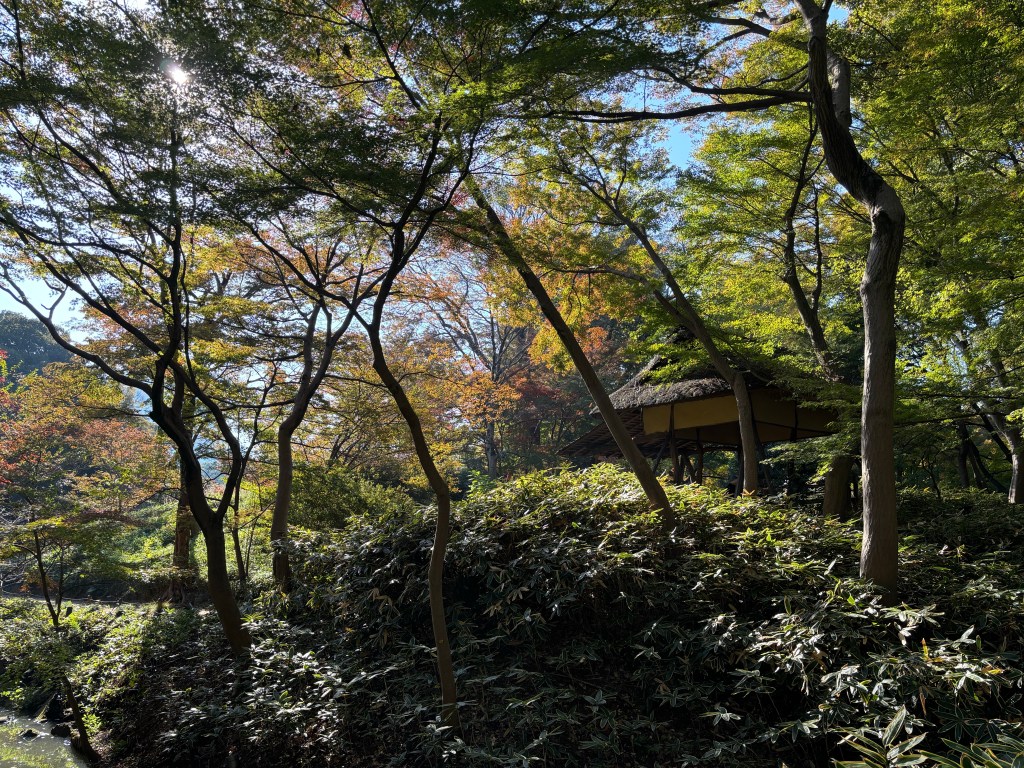
From the map, I had the preconception that Rikugien was a small garden, but once inside I thought it was huge: there are densely forested paths that made me feel like I was at a mountain retreat instead of inside one of the world’s largest metropolis. It feels a lot wilder than typical Japanese gardens, which are manicured and tidy: a lot of the trees and bushes gave the feeling of being overgrown, but note that I say they “give the feeling” because it is very clearly deliberate and the garden is meticulously tended (there were multiple gardeners pruning trees as I walked by).
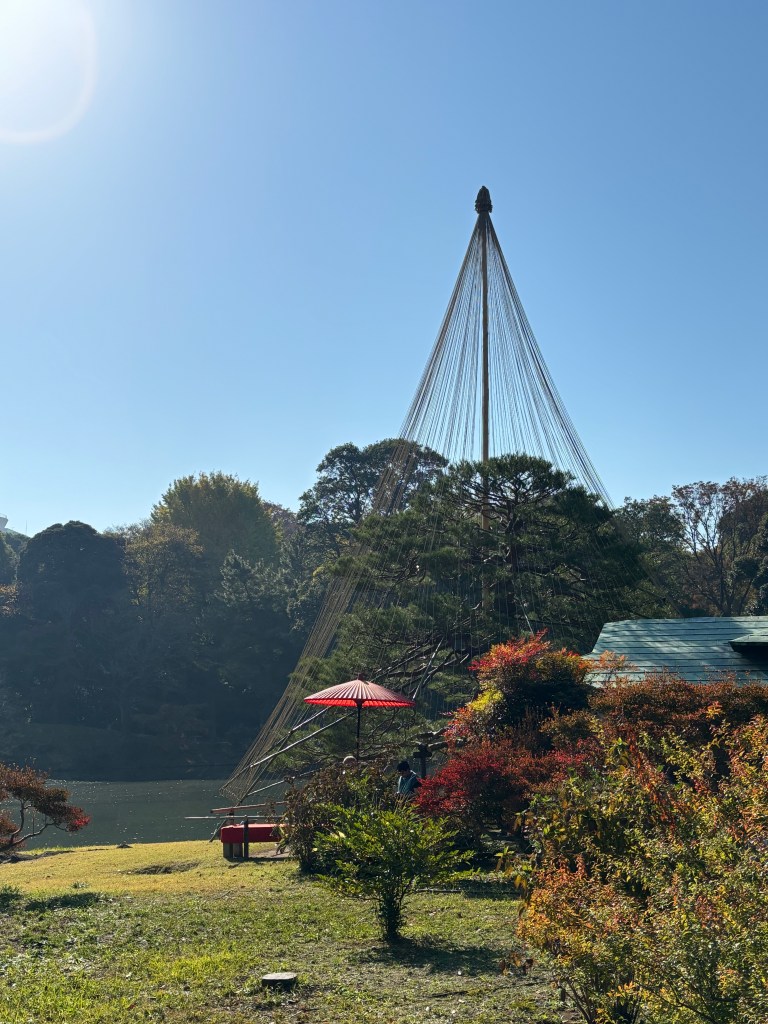
Besides the little areas covered in thick masses of trees, there’s also a stunning central pond, surrounded by all sorts of different plants and trees that make the sights change as you walk around the shore. There are also several pavilions and an operating tea house.

There were several red maples, but on the whole I think Japan has had the same kind of irregular fall as Korea: most trees are green, some are transitioning, some have already lost their leaves. By contrast, when I came in 2016 on pretty much these exact dates, autumn was in full force and maple trees were all burning red.

Eventually I made my way around the garden and moved on to my next destination, the Imperial Palace. Worth noting is that public transport is pretty annoying right now: usually I would get a Pasmo or Suica card to move around, but turns out they’re not selling them anymore due to lack of manufacturing supplies (!!) so I have to buy individual tickets every time I want to take the subway. At 180 yen (€1.12) per ticket, it’s by no means expensive, but it’s a hassle to find a ticket machine, queue, then fish for change every single time. Like in Korea, you cannot buy tickets or even recharge your transport card with a credit card; I have to assume it’s deliberate to combat laundering or fraud or something, because I’ve been merrily paying by card literally everywhere else.
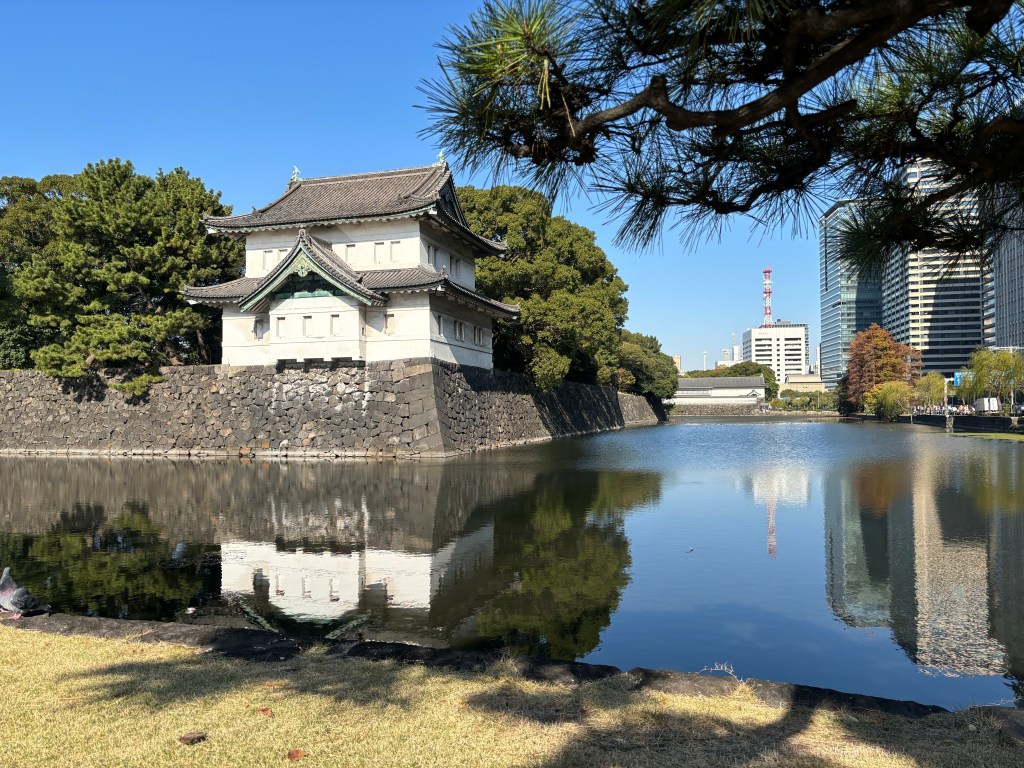
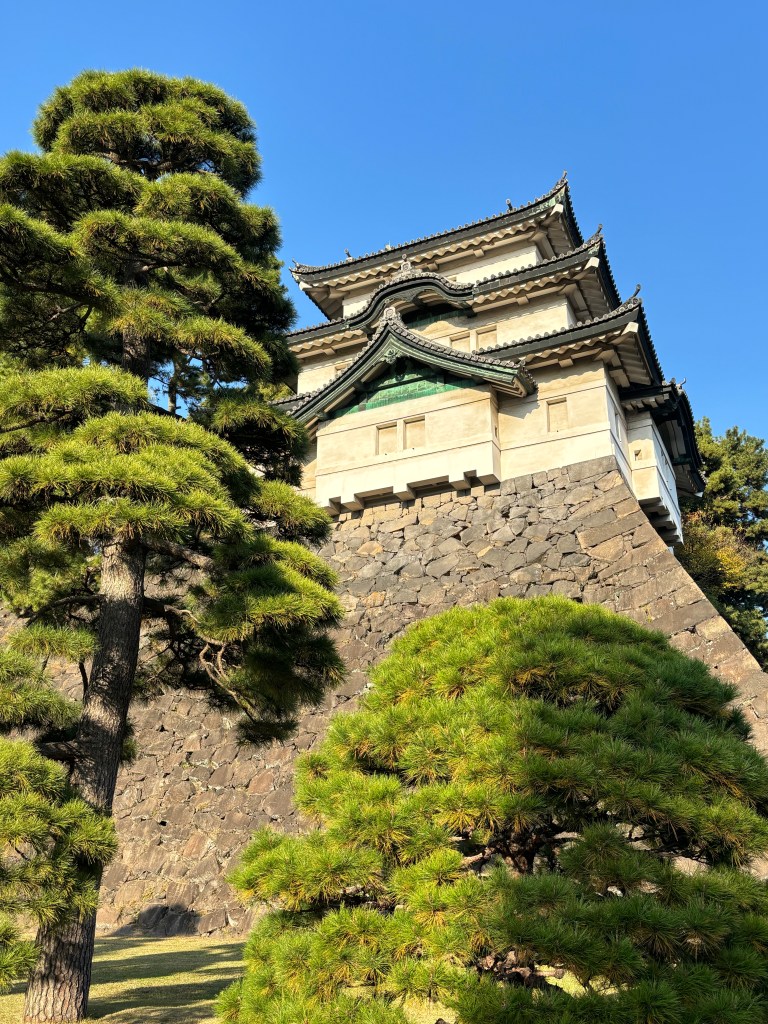
Anyway, the Imperial Palace: I felt I had to see it after having been to Tokyo three times before, although as soon as I started looking into it I remembered why I hadn’t done it before. You can reserve tickets online, but they get claimed within seconds, so realistically you have to go in person and line up in the hopes of getting one of relatively few day tickets. There are only two tours a day, and only some days a week (the palace is a working imperial residence, so they have official events constantly). I think they only allow a hundred-odd people per tour; I was visitor #109 in the application form that they handed to me, and #78 on the visitor pass I was given once inside, so I got in just in time by the looks of it.
(Weirdly, there were several couples in their wedding outfits taking pictures on the palace bridge. What they were speaking sounded like Thai to me.)
They make you wait outside the gate, under the blistering sun with not a single shade anywhere in the vicinity. I thought I was going to have to leave when I remembered I always carry an umbrella with me -a tiny Japanese techno-umbrella, in fact, which only weighs 70 grams!- so I popped that open and sat down. It was still hot, but at least I didn’t get sunburn! After a 30 minute wait, when they handed us application forms to fill in, I offered my pen to the Japanese family waiting after me (hot travel tip: always carry a pen in your bag, useful especially on planes to fill in immigration forms). When she learned that I spoke Japanese, the lady excitedly showed me all her vacation pictures from Nikko, telling me that I must visit. I’ve thought about it! Would that I had more time! We both talked about our favorite places in Japan, and agreed Koyasan is a wonderful place. The two Australian sisters who were ahead of me, by the way, were FLOORED that I was having this conversation and kept smiling at us. Queue bonding!
So, at 13:00 we eventually left the line to enter into a big tent where they gave us an introduction to the palace. It’s not very well organized, I thought, because they have a tiny souvenir shop with exclusive imperial items that you can’t get anywhere else, but you only have like ten minutes to compete with everyone else to buy anything before the tour starts, and they don’t let you go back to it after.
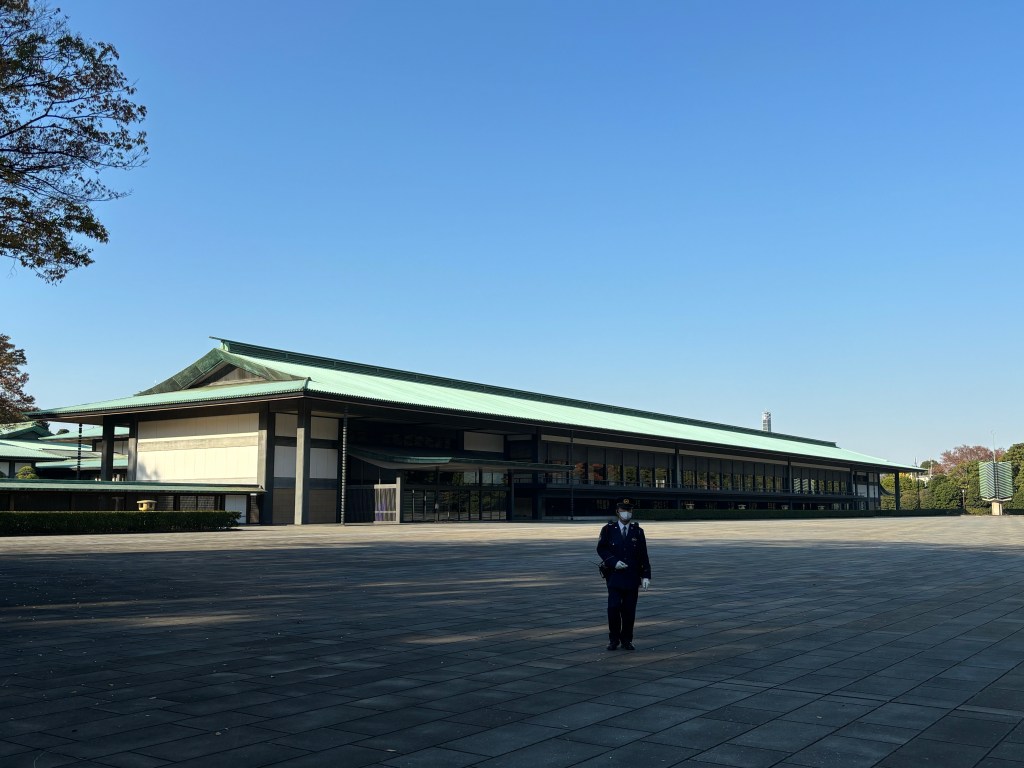
The tour is available in six languages, each with its own guide. I joined the English one, because the Spanish guide’s Spanish was dreadful, bless her heart. I enjoyed the tour, but I will say it definitely feels like a “first time in Japan” activity to do, because the grounds are beautiful for sure but not more so than any of the gorgeous gardens you can find up and down Japan as you travel.
It is interesting to learn a little bit about the history of the palace (some of its walls are ancient, while some buildings are from 1968) and imperial customs, like the fact that the empress cares for a coccoonery where they keep silk worms (apparently this imperial silk is uniquely high-quality and is used for the restoration of historical artefacts!).
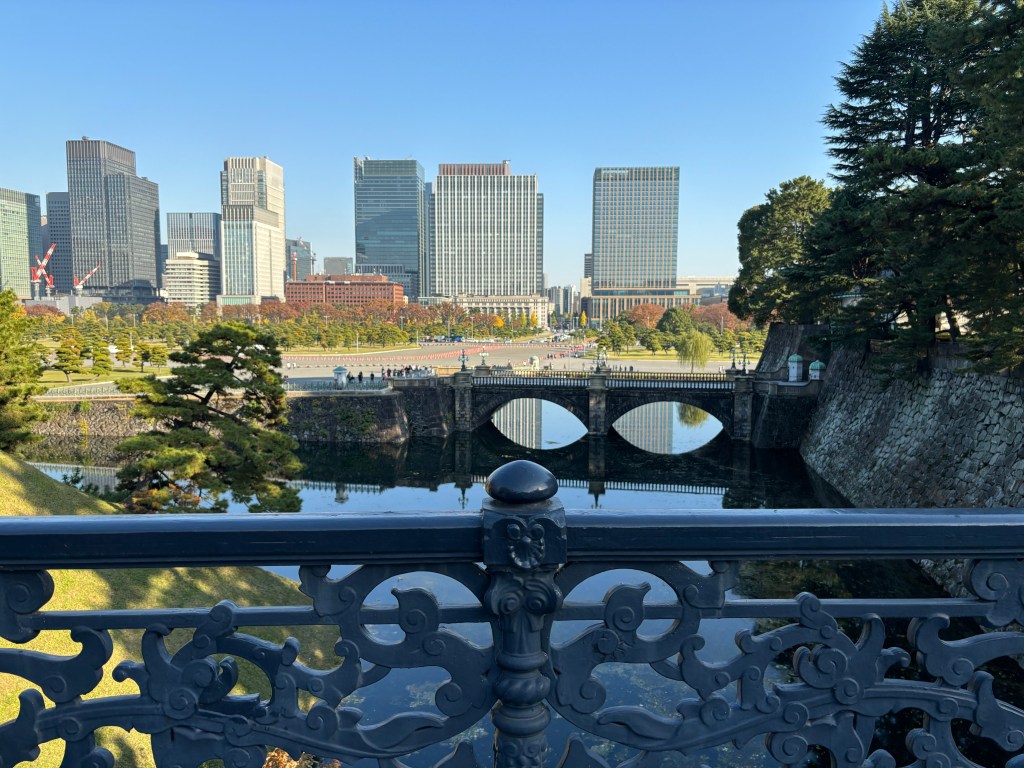
The tour finished at 14:45, and since I joined the line at 12:00, that’s my lunchtime gone. Honestly I wasn’t that hungry, but more than anything I was really upset about missing the opportunity to have a delicious Japanese meal! I didn’t have time to dally, because I was meeting a friend across town in Shinjuku, where I got to see the day turn to night from a high-rise. “Night”, by the way, here means 16:50: I noticed during the tour that it was one o’clock at noon and the shadows were long, the sunlight golden, that atmosphere where you can sense the day is coming to an end. At noon!
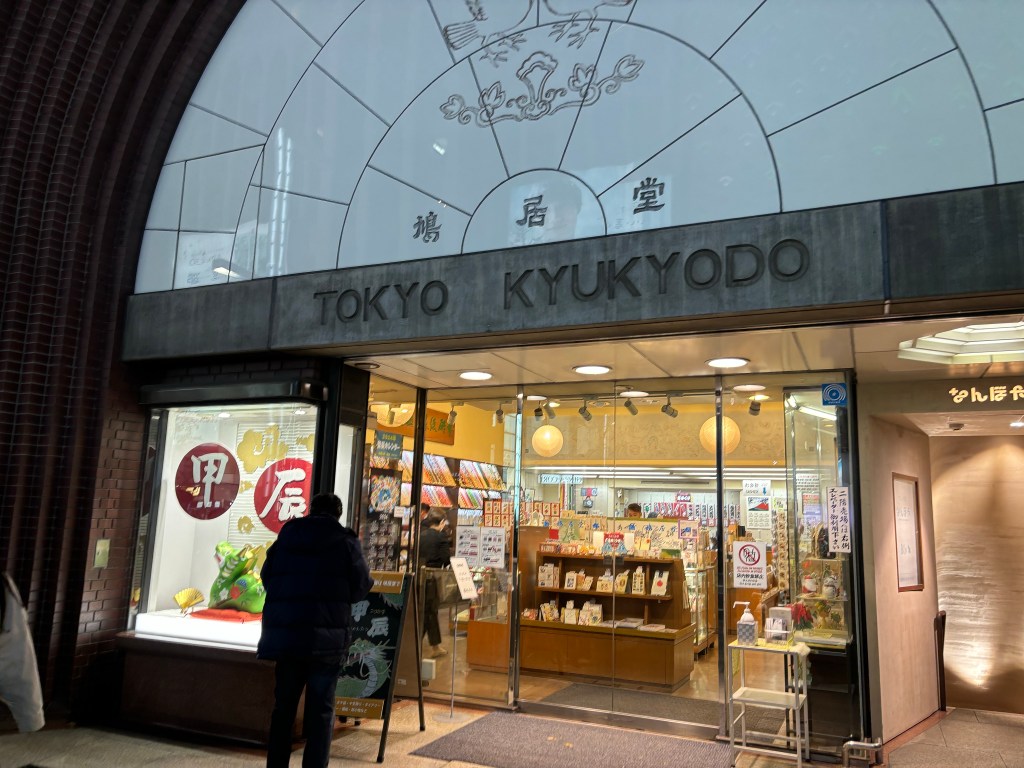
I wasn’t done with my days, but the other gardens and places I wanted to see were closing right then at 17:00, so I took another subway to go to Ginza. One of my favorite places in Tokyo is Kyukyodo, the stationery shop, but this time I went to a different one first: Haibara, which occupies an elegant small building that looks like a black present box in the middle of all the high-street high-rise buildings. Well, let me tell you it’s just as cool as Kyukyodo, if not more: all sorts of beautiful, impossibly tasteful postcards, enveloped, notepads, small decorative handicrafts… I don’t know how long I spent browsing the small store, there were so many things to see. The staff were so nice, too: at one point I asked (in Japanese) about fabric ornaments they had on display and the lady went to the backroom and brought out a box of a newly arrived shipment, so I had more to choose from.

I got some nice stuff there, but afterwards I still made my way to Kyukyodo. In addition to paper, postcards, stamps and the like, here they also have non-stationery-related traditional Japanese crafts. I was looking for a couple of things specifically: incense (they have lovely flower-scented incense here that doesn’t smell as heavy) and coasters (they make some with very elegant prints).
The choice of Kyukyodo as my last stop for the day was not accidental, as I’m sure you can guess by now: it’s right next to Ginza Bairin, the katsu restaurant that I went to the first time I came to Japan in 2013 (you can read about it in this blog too). It is impossible to find unless you know exactly what you’re looking for: on the street level it is just one narrow, unassuming wooden door between two massive buildings, and when you open it you just see a descending spiral staircase.
After a bit of a wait (this time around my solo status has not given me preferential seating so far) I eventually sat down and ordered the kurobuta cut, supposedly the best and most expensive one (3,400 yen, a bit steep for what you can find elsewhere, rendered cheaper by the extremely weak yen: €20.82). It can be difficult to order in katsu places, because their menu is all katsu, and what varies is simply the quality of the cut of meat. Something must have gone wrong with my order, because they made me wait a long time while everyone else got theirs immediately, and three different waitresses apologized to me profusely. I watched the cooks work, fascinated, until I was eventually brought my food (my first and only proper meal of the day!).
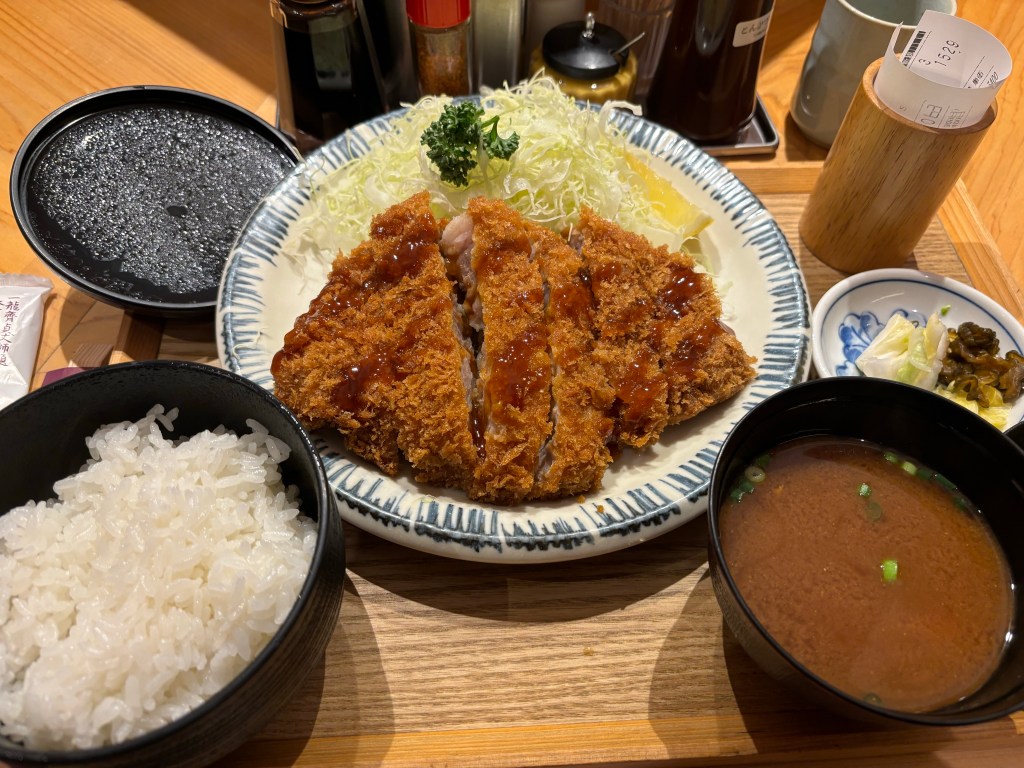
Reader, it was delicious! The breading was crispy, the meat was soft, the sauce flavorful, I ate a lot but didn’t feel bloated. Very much recommended!
And now, yes, that’s another day down! Tomorrow is the last day of this trip, so let’s make it count!

 This Is A Lake