
I took things slow this morning! Partly because there are fewer things to see and do in Gyeongju than in Seoul (I realize that’s true of most places!) so I feel less pressure to get stuff done, but also partly because a damned mosquito kept waking me up all through the night and I wasn’t in the mood for rushing!
As a little bit of housekeeping, I had to do some sleuthing to figure out how to recharge my T-money card. In Seoul I used the machines at the subway, but here I went to the bus terminals and found none, so I had to ask at an information kiosk -where I learned that you can get them recharged at any of the five trillion convenience stores nearby. That’s convenient!
My plan for the morning was to visit Bulguksa, an important Buddhist temple outside of Gyeongju. There are a bunch of regular buses that can take up to fifty minutes to get there, but also “seat” buses -whatever that means- that take just under half an hour. I just do whatever Naver Maps tells me!
When I got to the temple after a very welcome sitdown, I found it overrun with a veritable army of Korean ladies of a certain age. Some of them were in clear groups with tour guides, but not all, so I don’t know what was up with that!
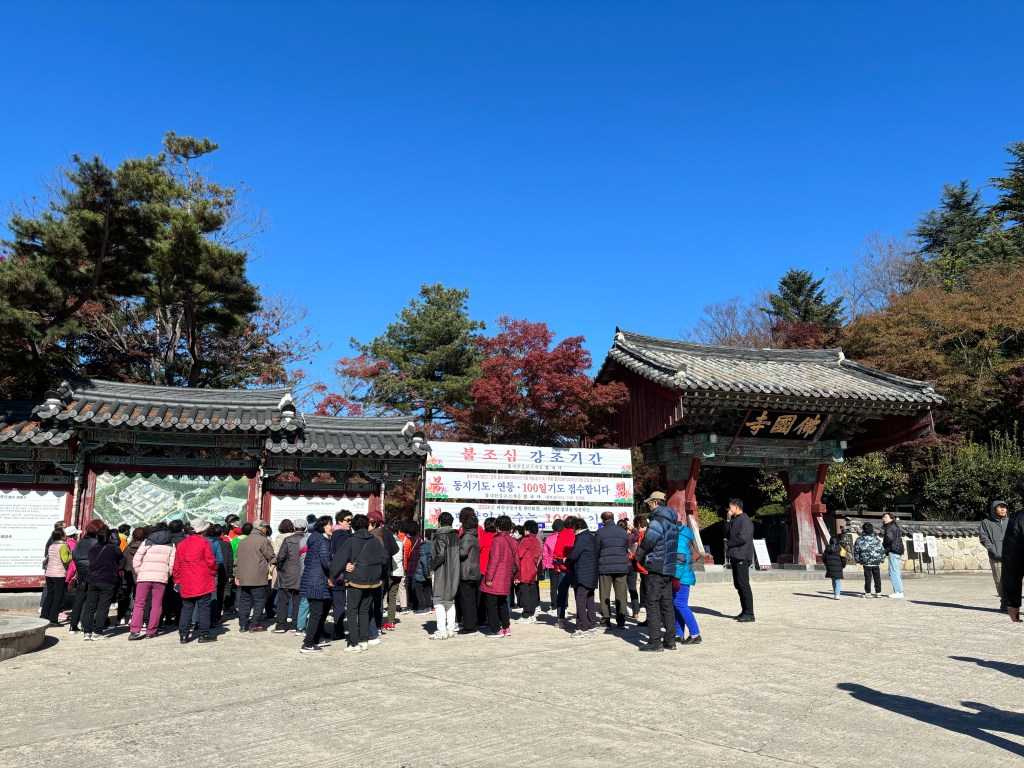
Like many Buddhist temples in Japan and elsewhere in Korea, Bulguksa was founded a long time ago (this one in 750, no less) and then destroyed and rebuilt many times over through history. The stone stairs and foundations are original, while some structures are from the 18th through to the 20th centuries.
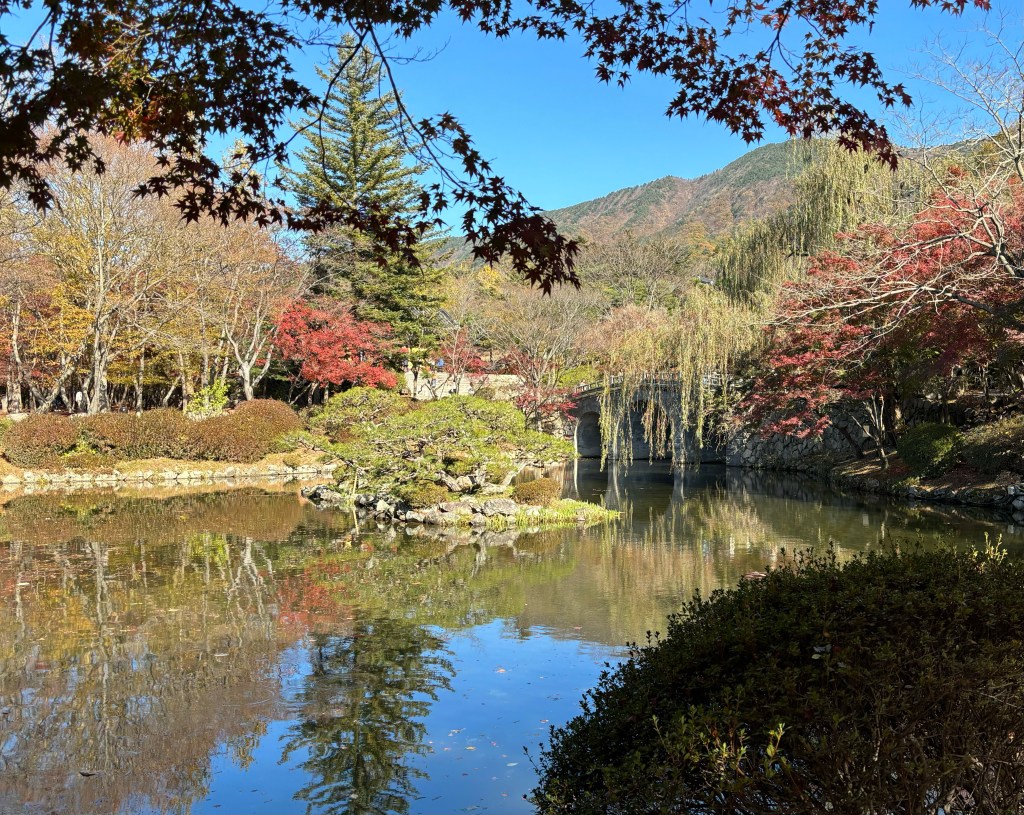
The walk from the road up the hill to the temple includes a gorgeous forested garden, yellowed and dry at the beginning but then giving way to a picture perfect pond with red maples, green willows gently flowing towards the water, and bonsai pine trees on a tiny island in the middle, all framed by a stone bridge. At 10°C, the sun shone warmly but the wind was cutting at times: nonetheless, it was a pleasure to take a moment to drink in the views.
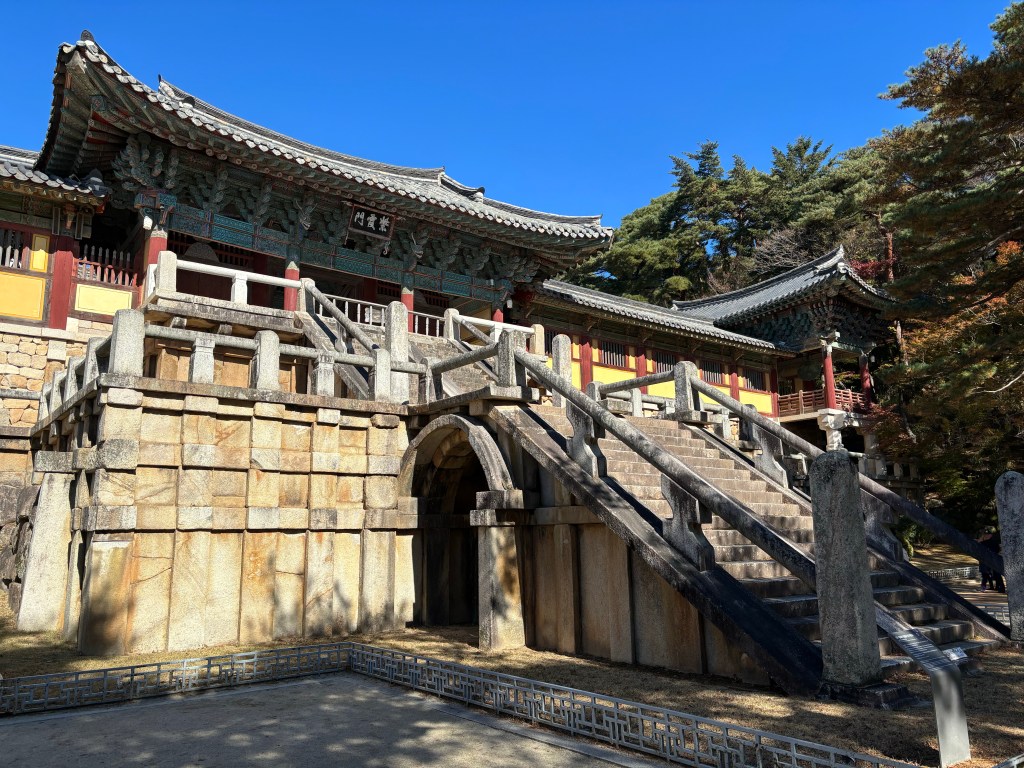
Once at the temple proper, I admired the double-tiered stone stairs, which give a regal, terraced look that most Buddhist temples (often laid out on flat ground) are not known for. I made my way up the slope, trying not to bother the Korean ladies who were having a ball, to enter the temple enclosure.
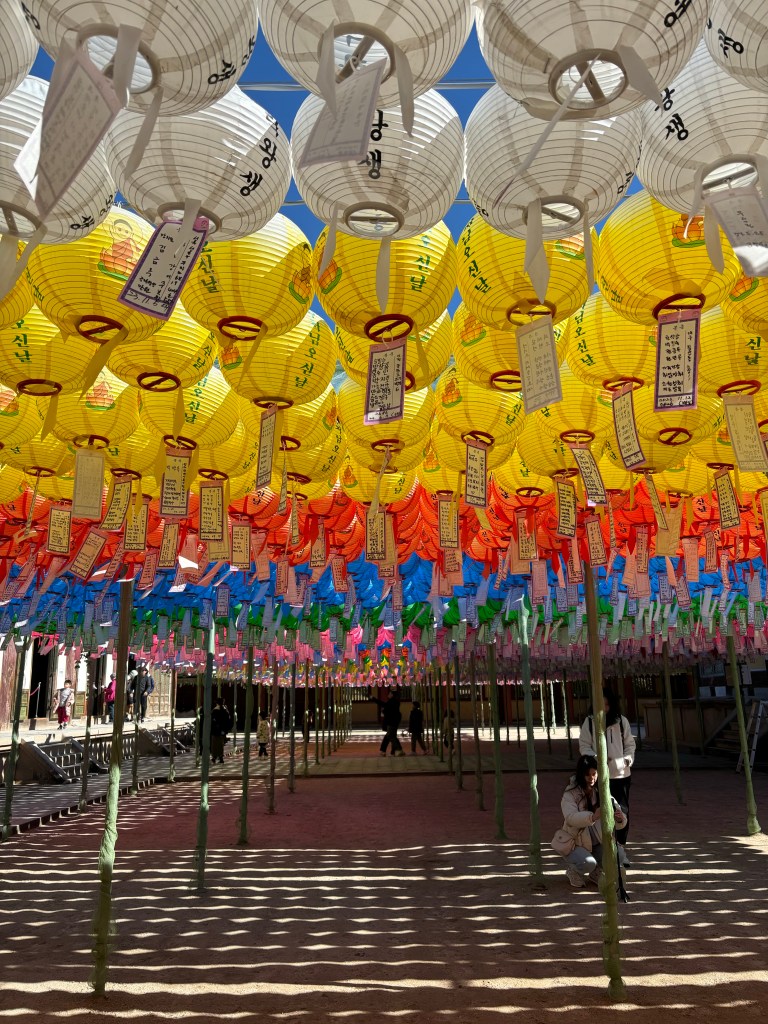
Inside I saw for the first time the array of paper lanterns that Korean temples lay out sometimes; I think the faithful write down their wishes and then tie them from the lanterns, together creating a charming, undulating effect when the wind blows through.
There are several halls and pavilions to visit, up and down stairs, holding several priceless statues and relics of religious and historical significance. The area is not that big (certainly only a fraction of the Seoul palaces) but I was happy to have picked up a map, if only to make sure I checked out all the sections.

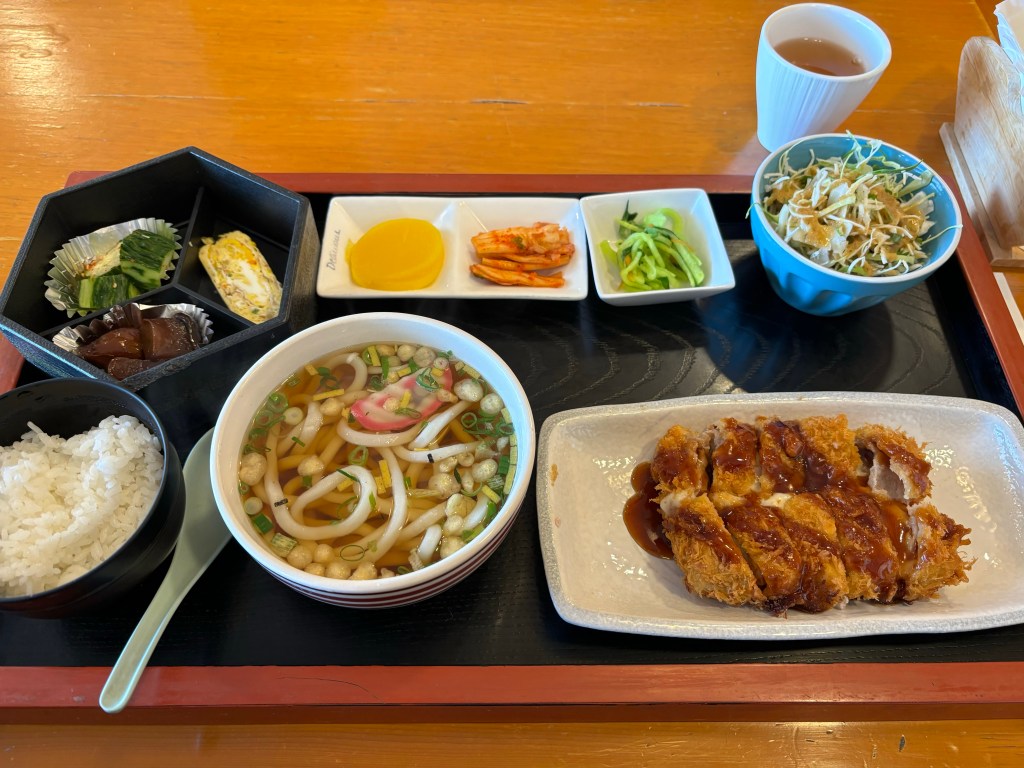
Eventually, I made my way back down the slope, to the road, and onto a bus back to Gyeongju. As packed as the temple was, the road was flanked by eerily empty amusement parks, convention centers and parks, to the point where I couldn’t tell if they were just empty or actually closed. I meant to stop at a restaurant called Sugyeong to eat, but either I missed my stop or the driver did, because when I got off I found myself in the middle of a market, with stalls selling vegetables on the sides of the streets. So instead, I went to Kisoya, a Korean-Japanese restaurant where I ordered a katsu set -which in Japan would include the katsu itself, rice, and miso- and was given a massive tray with all of that plus garnishes and even a bowl of udon out of nowhere. As I’m writing this, hours later, I am still full!
After lunch, I took a brief walk around the area. Yesterday I was wondering: I’ve seen the tourist center of Gyeongju, but where’s the city center? Where do locals go shopping? Today I stumbled onto that downtown area by accident. Because I’m used to city centers having taller and bigger buildings, the building height limit in place here gives the odd impression that every street is the last in town, because you don’t see anything looming over them, just sky. I took the chance to walk into a couple of clothing stores to check out the current styles. I would never say that Korean clothing brands are boring -wouldn’t occur to me to say that Korean clothing brands are SO BORING- but I will say that in my limited observation they are… very sober! The few stores I’ve checked out so far have color palettes that only feature black, gray and beige, not a single pattern or print in sight. I’ve been paying attention and that is indeed the extent of the colors worn by most people (it’s true that it’s winter). In Seoul, the most stylish people all dressed head to toe in black.
After a cursory walk, I took the bus to the National Museum of Gyeongju. Like its Tokyo counterpart, and unlike the National Museum of Seoul, this one is spread out across several buildings instead of occupying one large space.
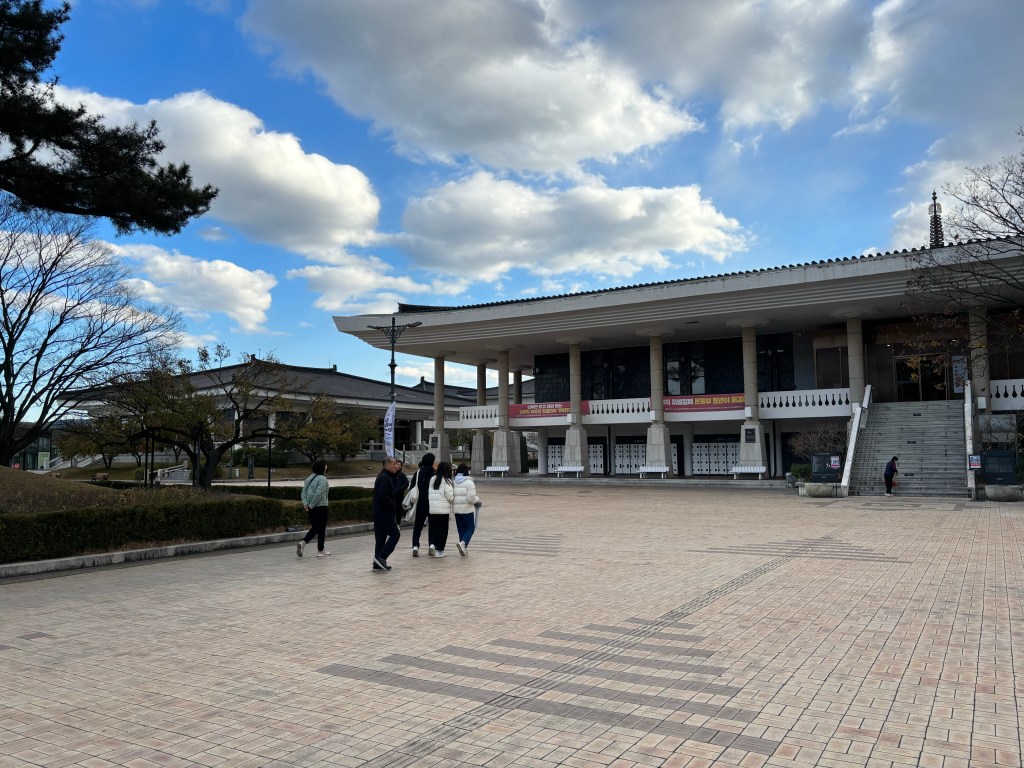
If the Seoul museum contains troves of archeological artifacts from the Joseon dynasty, the one in Gyeongju specializes in the Silla dynasties (57 BCE-935 CE), those responsible for the burial mounds all over the city.
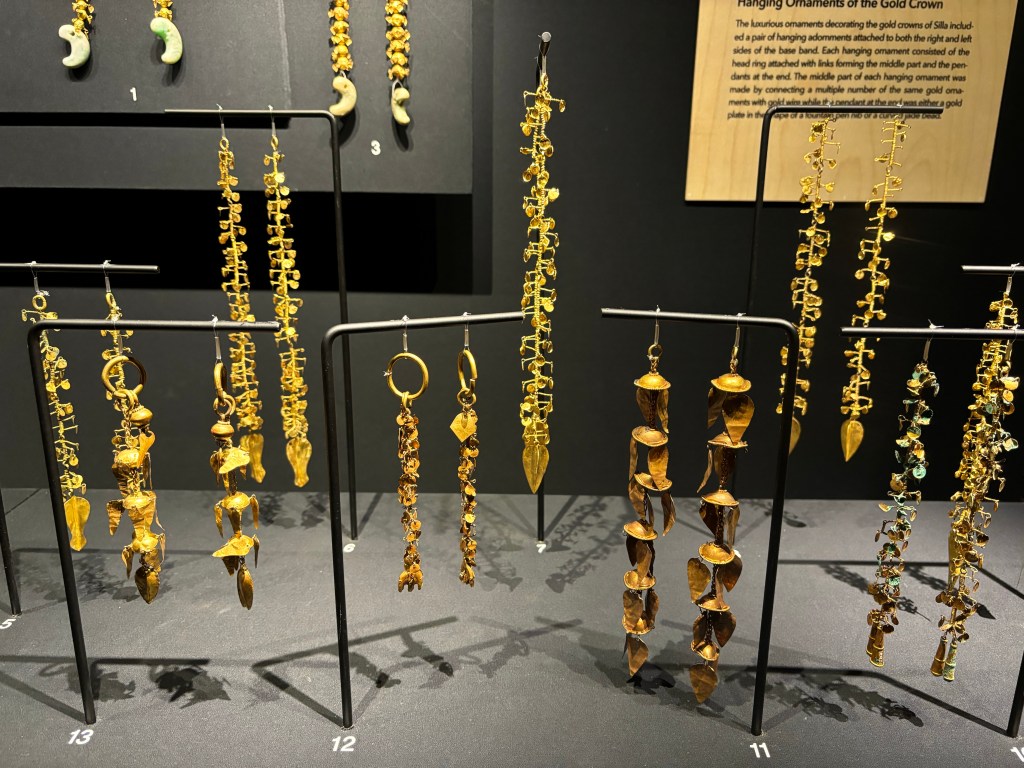
If you consider that we’re talking about objects that are between one thousand and two thousand years old, they truly have amassed an astonishing collection. There are statues, tools, weapons, roof tiles, even a priceless paper with Buddhist prayers written on it, and most importantly, the personal possessions of the kings and queens that were excavated from the tombs I visited yesterday. Look at these exquisitely sculptured ornaments, that would be attached to the sides of crowns like earrings:
The buildings, while pretty timeless in their design, are starting to show their age in the fixtures and materials, but otherwise it’s a great space. Going from one building to another makes the visit go by faster, and the exhibits are all elegantly displayed. What’s more, the museum has the same price of admission as the Bulguksa temple: zero won!

Lastly: I thought I was so smart! I had timed my visit to the museum so that night would fall just as I was leaving, because to cap off the day I wanted to visit Donggung Gwa Wolji, aka Anapji, a beautiful pond surrounding a few reconstructed pavilions.
Several people had already told me that this is a site that you have to see at night, so you can enjoy the lighting, and certainly I got that right, but the timing was a double-edged sword: a pleasant morning had given way to a cool afternoon, and now when I walked out of the museum(…’s cafe) a bone-chilling wind carried a drizzle of rain that made it feel several degrees lower than it already was.
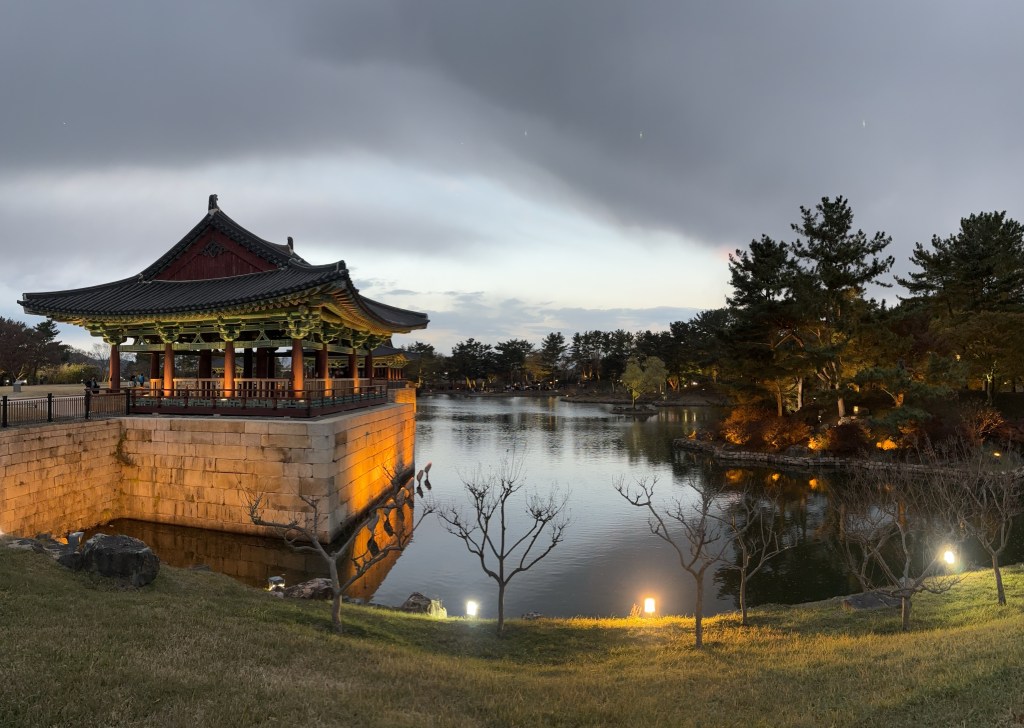
Still, I soldiered on, and crossed the short distance that separated the museum from the pond (this one does require a ticket: 3,000 won, or €2.14). The first thing I noticed is that everyone else had the same plan, as lots of people had already taken their places across the pond and were apparently waiting until it became fully dark to get their pictures going. Me, I decided that the lights being on was good enough for me!
The view of the pond is indeed gorgeous, and the lights make the buildings reflect on the water and the trees stand out in the darkness. Having seen a model inside the museum, I knew that this place was once a much bigger palace, with many interconnected buildings all surrounding the banks of a much bigger lake. Now, only three pavilions have been rebuilt, and they’re more intended to be seen from the opposite shore than explored up close.
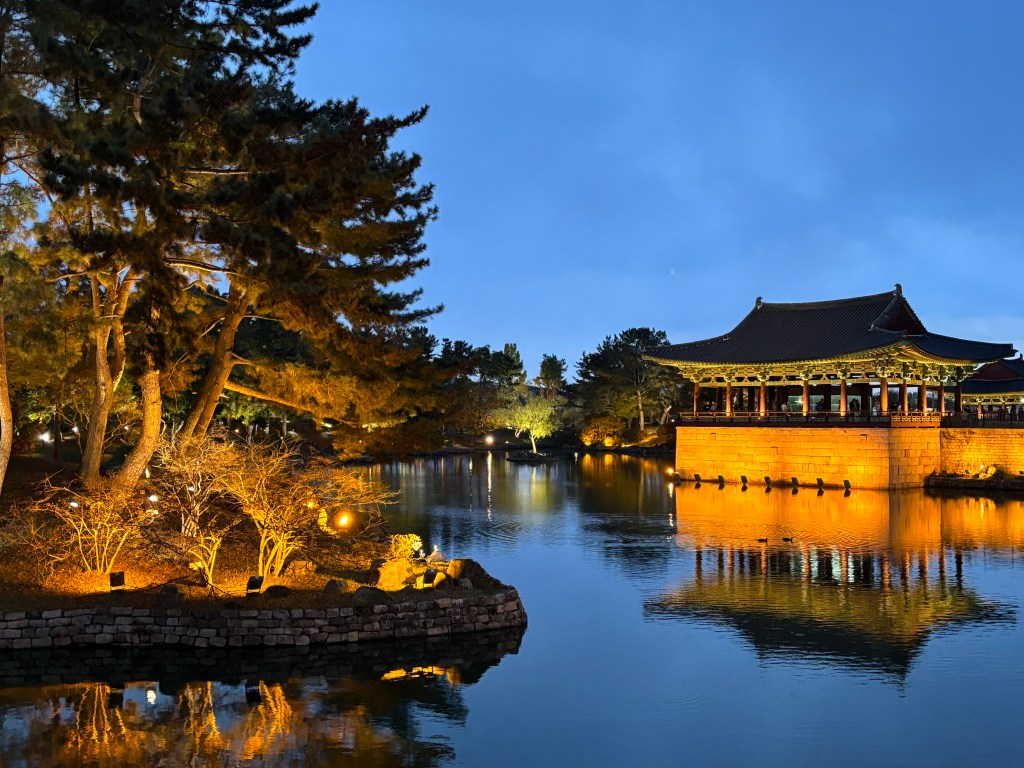
What’s nice is that there’s one clearly delineated route that takes you from the entrance, all the way around the pond, and back out, so that you can find all the good photo angles as you stroll by.
When I finished the tour it was considerably darker and it was starting to rain, so I hopped on a bus back to town with only one mission left for the day: find a konbini to buy dinner and crash at the hotel! I’ve been testing the different convenience stores here and so far I think I prefer CU to GS25 and 7-11.
Now I’m off to rest, have dinner, and prepare my plan for tomorrow!

 This Is A Lake