I’ve been so lucky with the weather so far, if you don’t count the unseasonably cold temperatures: it’s been sunny every day, until this morning, when it was rainy in Seoul just as I was getting ready to leave.
There are a number of ways to cross South Korea, including various regional trains and buses; going cross-country in a bus sounds like a nightmare to me, but then of course I remember that Seoul and Busan are separated by a mere 350 km. South Korea is not a big country! Because I wanted to reduce the time spent in transit, I chose the KTX, Korea’s version of the shinkansen, which covers the distance between Seoul and Gyeongju in just two hours.
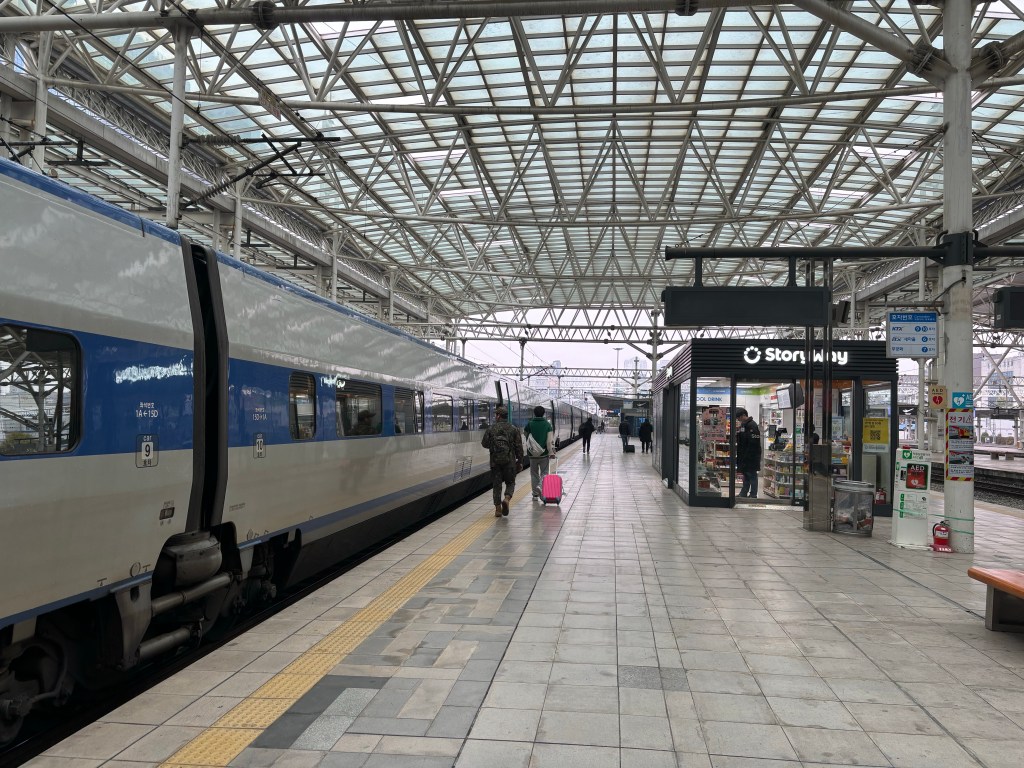
The train ride was uneventful, save for the wifi being really spotty, with long stretches of gray, rainy landscapes of mostly flat land with the occasional solitary mountain. I was dismayed to realize that we were going to arrive late… by a little under ten minutes! Scandal! The shinkansen would never!
The one downside of taking the KTX is that it connects to Singyeongju, a new train station on the outskirts of Gyeongju proper. The commute was fine, though: as soon as I walked out of the train station I spotted the giant bus stop, which had a couple of buses already lining up so I walked straight onto one. After about 20 minutes during which the bus driver drove like he was auditioning for a Fast & Furious movie, I got off literally across the street from my hotel. (Tip for looking for accommodation in Gyeongju: the most central locations are close to the city’s bus terminal).
At the hotel they told me check-in would be at three o’clock, so I dropped off my bag and went off to walk around the main avenue and find somewhere to eat.
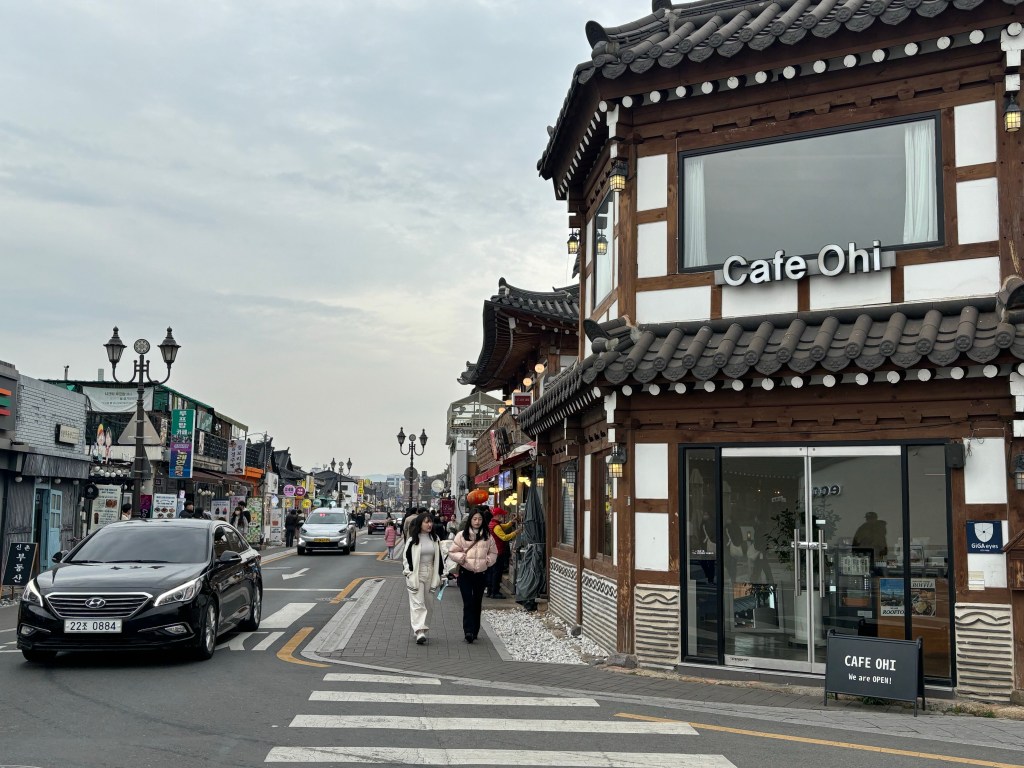
The main tourist street in Gyeongju is Hwangnidangil, and it was easy to spot because it was busy with lots of visitors, mostly Korean and Japanese, with the occasional Westerner here and there. It reminded me of Hoi An: the houses along the streets are all restored or replicated traditional houses, so the town has a picturesque, historic air to it, although the insides of the houses are all occupied by cafes and trinket stores for tourists. I believe there is a strict zoning ordinance in the city that bans constructions above three or four floors, so there isn’t a single high-rise in sight to disrupt the views.
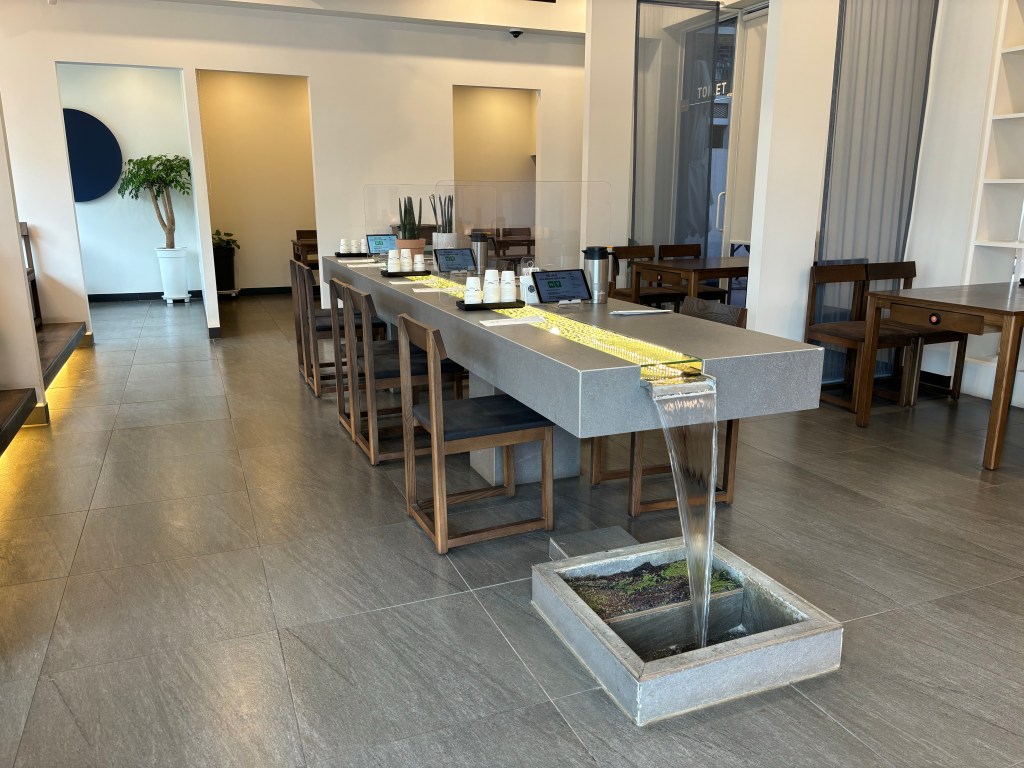
I quickly found what I was looking for: Gaejeung, a restaurant that had been recommended to me. At two o’clock, it was almost empty, probably after the lunch rush. It’s a tastefully decorated modern space, with an eye-catching water feature built into a central table. I was supposed to order through an iPad installed onto the table, but it was only in Korean, so the restaurant lady took pity on me and input my order herself. I had a delicious bibimbap!
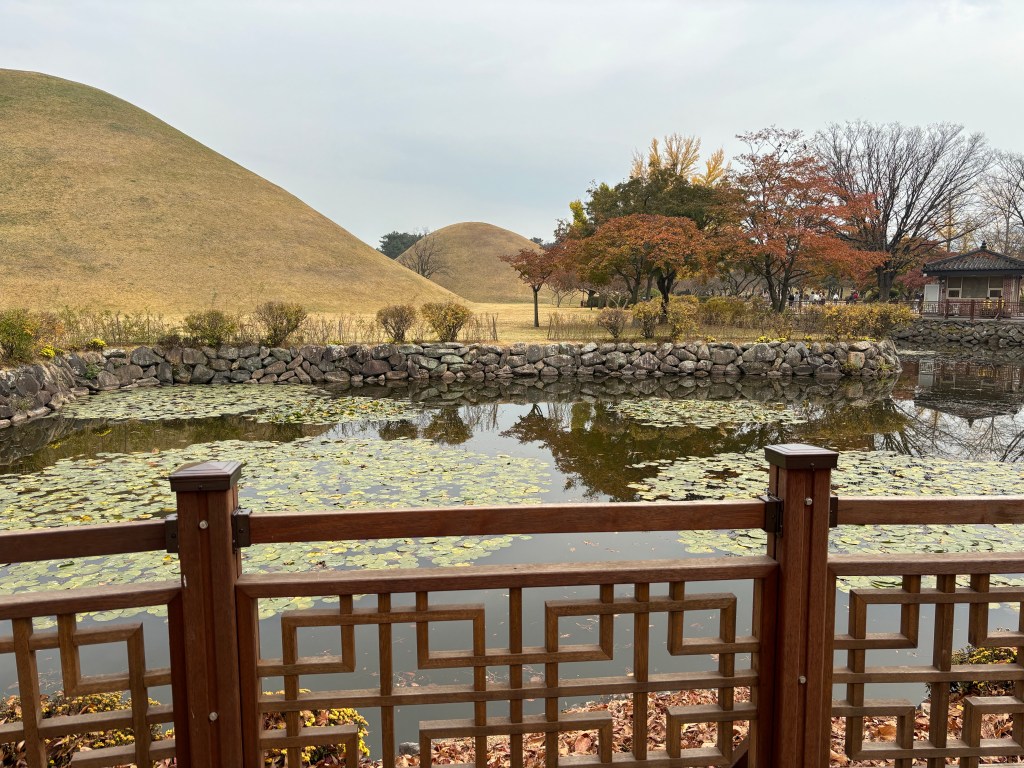
After I finished, it was still not quite three so I went back out and took a walk around Daerengwun Tombs park. Gyeongju is a city with an ancient history, much of it enshrined in its archeological remains. It was the seat of the Silla dynasty, which ruled Korea approximately from the years 5 through 950 CE. During a certain period of this time, the Silla kings and queens were buried in tumuli, wood and stone tombs that were then covered in soil to create mounds that have either remained to these days or been restored.
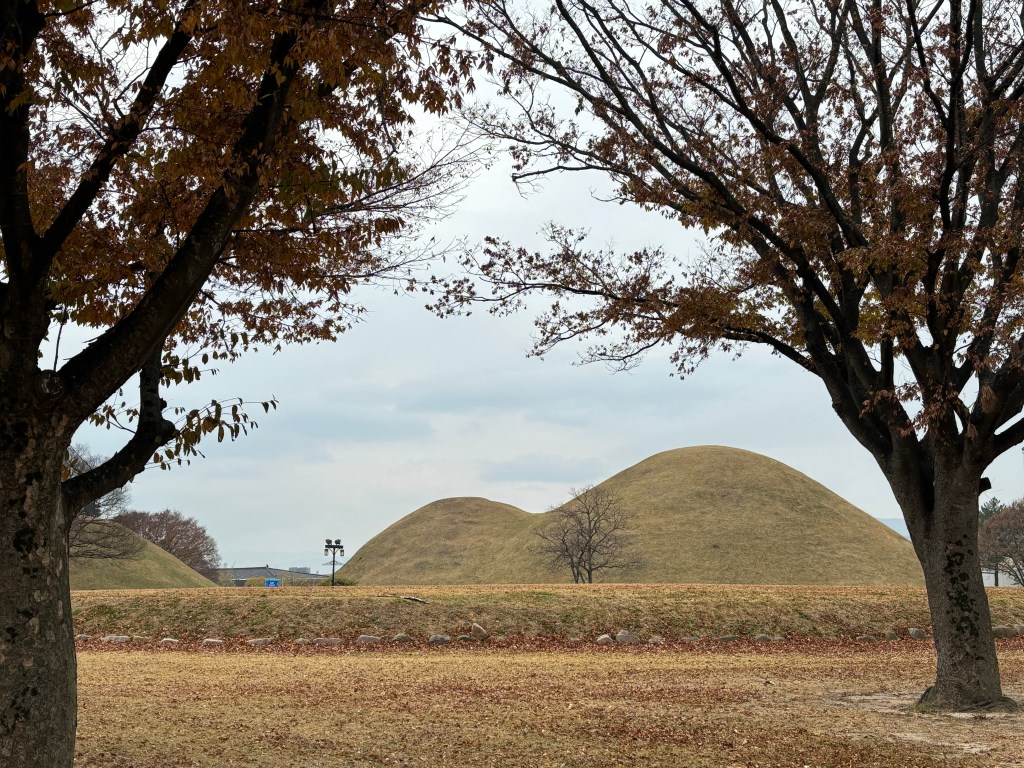
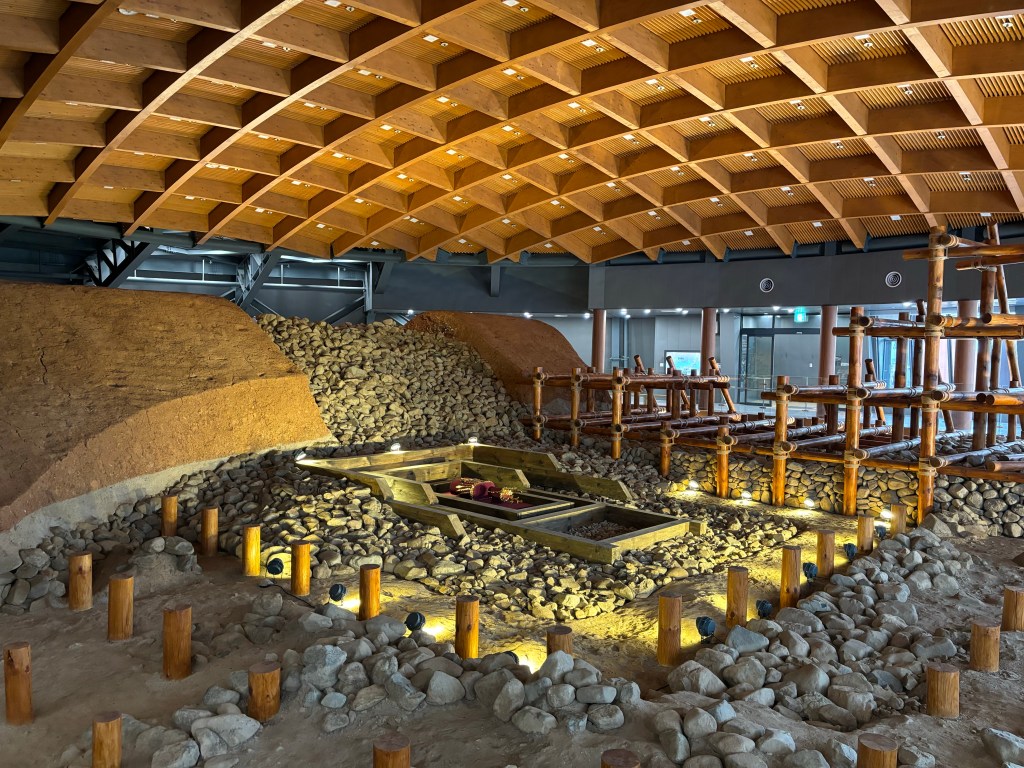
There are some that rise like hills above the ground, but there are hundreds of smaller ones all around the city. It is eerie, in a way, to see trees growing over the hilly mounds, walking around an otherwise normal park, knowing that a millennium of history lies beneath. One of the tombs, Geumgwanchong, is open and the interior has been recreated, so that you can get an idea of what the tombs were like inside and the types of objects and riches that the kings were buried with.
Daereungwon Park makes for a wonderful stroll, especially today: the air was cool but not cold, the sky was overcast but not yet rainy. A lot of tourists walking around, but nobody was too noisy and there were no guided groups blocking the way. The manicured paths wind around tumuli, trees, and ponds, with the occasional sign to explain the history that I just relayed to you. There are even a couple of “Photo Zones”, where people queue politely to take pictures with a beautiful backdrop without strangers in frame.
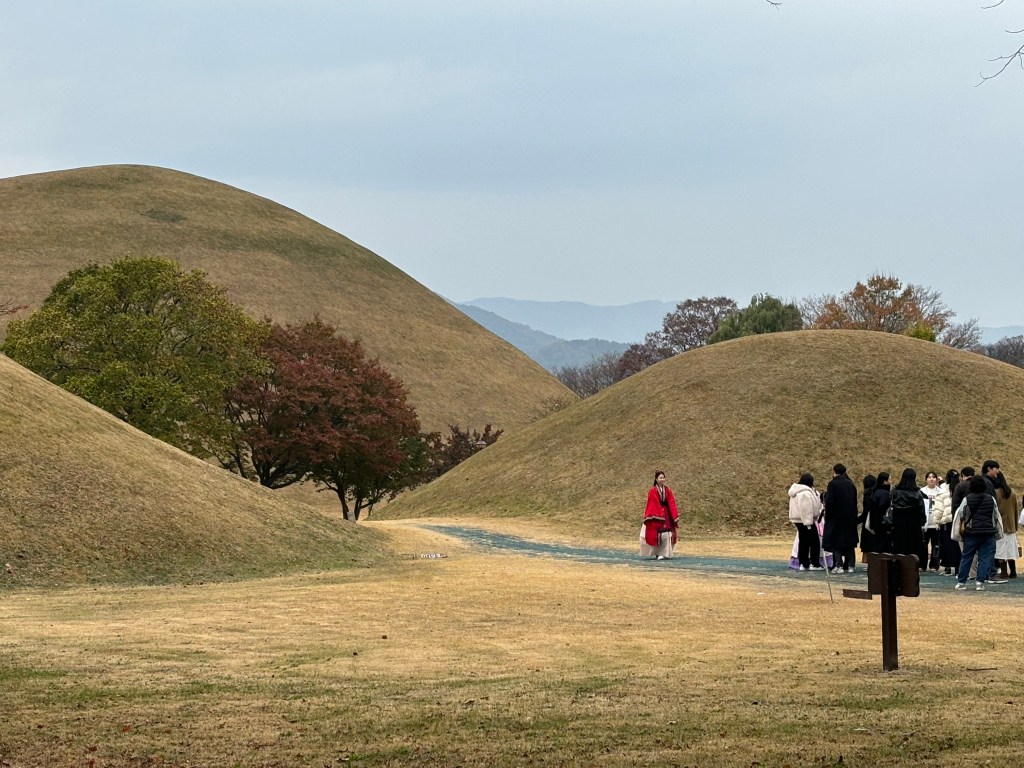
Autumn seems to be all over the place in Gyeongju. The gingko remain yellow, while some maples are green, some light or deep red, and some already dry. Many other trees have already lost their leaves, giving the park a predominantly yellow color palette.
After a good tour of the park, I was tired and ready to go back to my hotel. This is when it pays off to find central accommodation, because I only had to walk ten minutes to get there… and it started to rain right as I was crossing the last street! Perfect timing!
So that’s it for today: I’m going to put my feet up and leave only to eat something nearby. I’ll have plenty of time tomorrow to sightsee more!

 This Is A Lake