After a long, restful sleep, I was fully ready to take on Seoul by storm… but first I had to clear a couple of side quests!
You see, in order to take the subway, first I needed a T-money card, but to charge it I needed cash, because you cannot top it up with a credit card, so off I went to look for ATMs. Again a difficult task, because the ones that show up on the map might be in a different floor inside a building, but eventually I was able to find one and finally have some won bills. Step two! I had to look for a convenience store to buy the T-money card. Thankfully this one is easy because anywhere in Seoul there’s always a konbini in sight. Step three! Once I had the card and the cash, I was able to go to the nearest subway station to load up the card and finally go on my merry way. The metro, by the way, is as easy to use as in Tokyo: everything is signaled in English, Chinese and Japanese in addition to Korean, from machines to station names and direction signs.

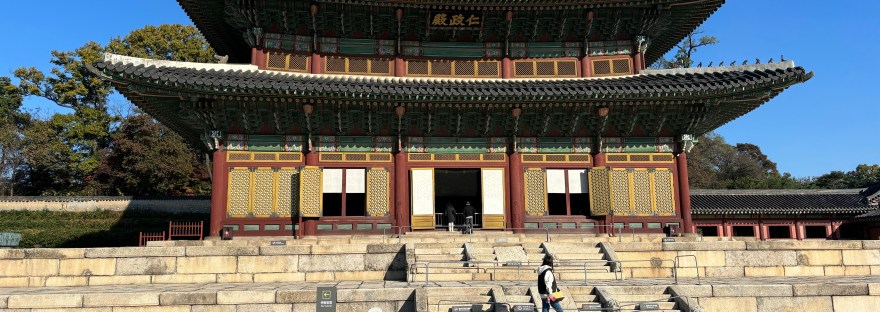
My first stop was Changdeokgung Palace, one of several magnificent palaces in Seoul. I wanted to start with this one because it is home to the Secret Garden, so-called because only the royal family and their favorites used to be able to visit. Now it’s the Secret Garden because only a limited amount of people can visit on any given day, as part of a guided tour, the tickets only go on sale the week before, and they sell out in minutes. I’d been unable to get a ticket, so by getting there bright and early I hoped to get one of a number of places that they release on the day. Good news: I got it! It cost 5,000 won (€3.55), plus 3,000 for the main ticket (€2.10) that you have to get anyway. It was about 9:45 (the subway ride took surprisingly long -Seoul is huge!) and my Secret Garden ticket was for 10:30, so it lined up perfectly to visit the palace itself right beforehand!
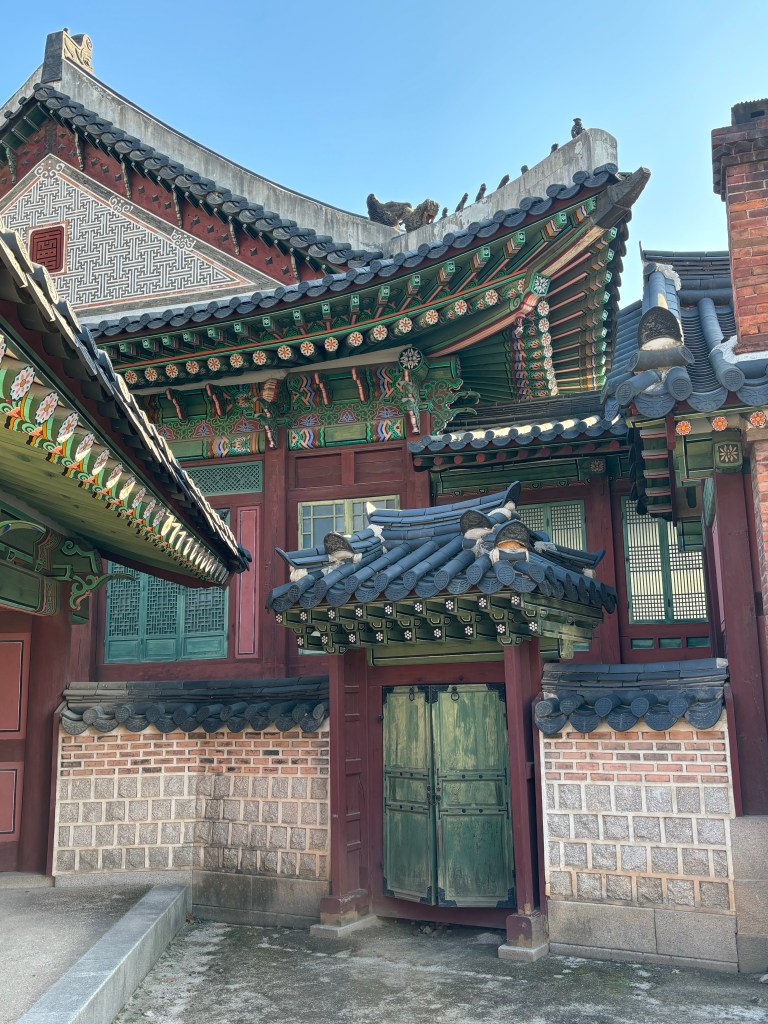
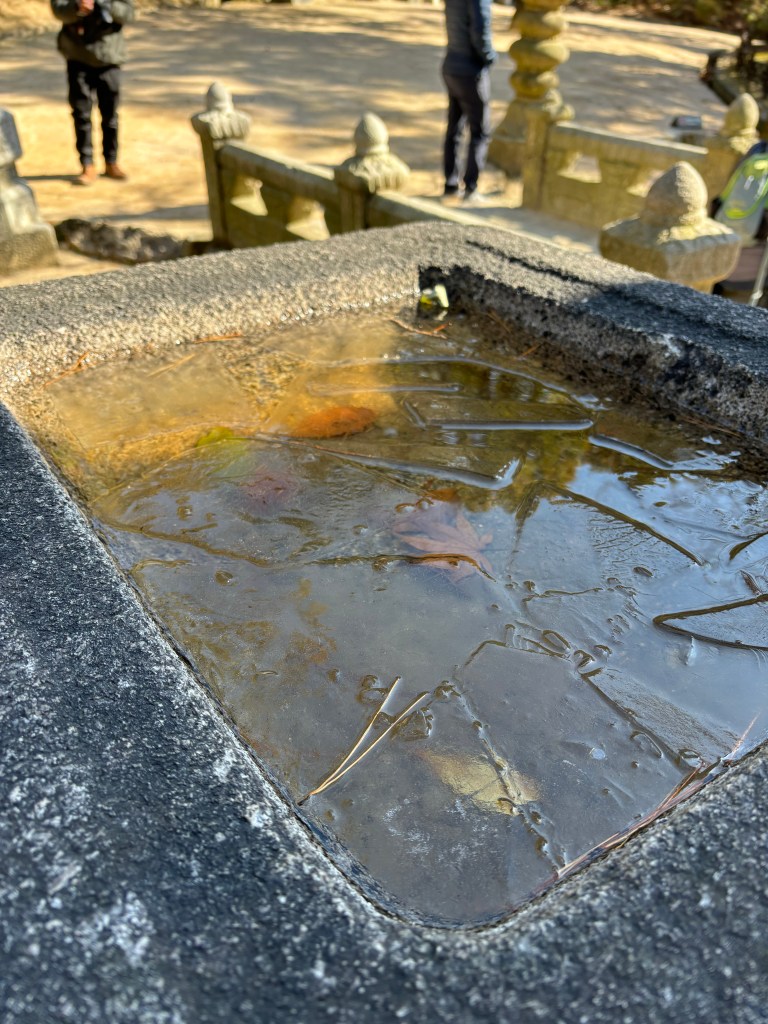
Built in the 15th and 16th centuries as a royal residence for the long and famous Joseon dynasty, Changdeokgung comprises many gates, homes, offices, pavilions, and shrines. It was not too crowded, and although the sun shone with not a single cloud in the sky, it was freezing cold. The average at this time of year is 10-15°C; today it’s been a single 1°C all day!! Thankfully I packed a thermal jacket that was originally meant for Iceland, but my hands and nose still got chilly!
Unlike other citadels that I’ve seen, in this one all the buildings have one cohesive architectural style, even if they were built hundreds of years apart. The first thing that sets traditional Korean buildings from Japanese or Chinese ones is the characteristic green paintings of the tiles and beams under the roofs, sometimes intricately detailed with motifs of fire or dragons. If the buildings are red and green, the walls, on the other hand, are a sober black and white.

I walked all around the palace grounds, using the map as a reference point but getting lost here and there, until it became time to join the Secret Garden tour. This was the very first time all day that I ran into other Western tourists (plenty of Chinese and Japanese tourists earlier!). Our English-language guide surprised us by letting us know that between September and November, the requirement to be part of a tour had been lifted, so we were free to roam of our own if we wanted. I decided to stick to the tour, since I’d read that the grounds were quite extensive and I wanted to make sure I’d see everything.
I quickly understood why Huwon, the secret garden, is so coveted a sight. It is not a Japanese garden, so there’s no one unifying view of it; rather, it’s made of many different zones within the natural valleys of the hills around Changdeokgung. There’s a gorgeous square pond with a round island in the middle, which our guide explained reflected the belief that the earth was square and the heavens were round. The stairs lead up to the Royal Library; like in the Temple of Literature in Hanoi, scholars would come to this library to take exams in front of the king.
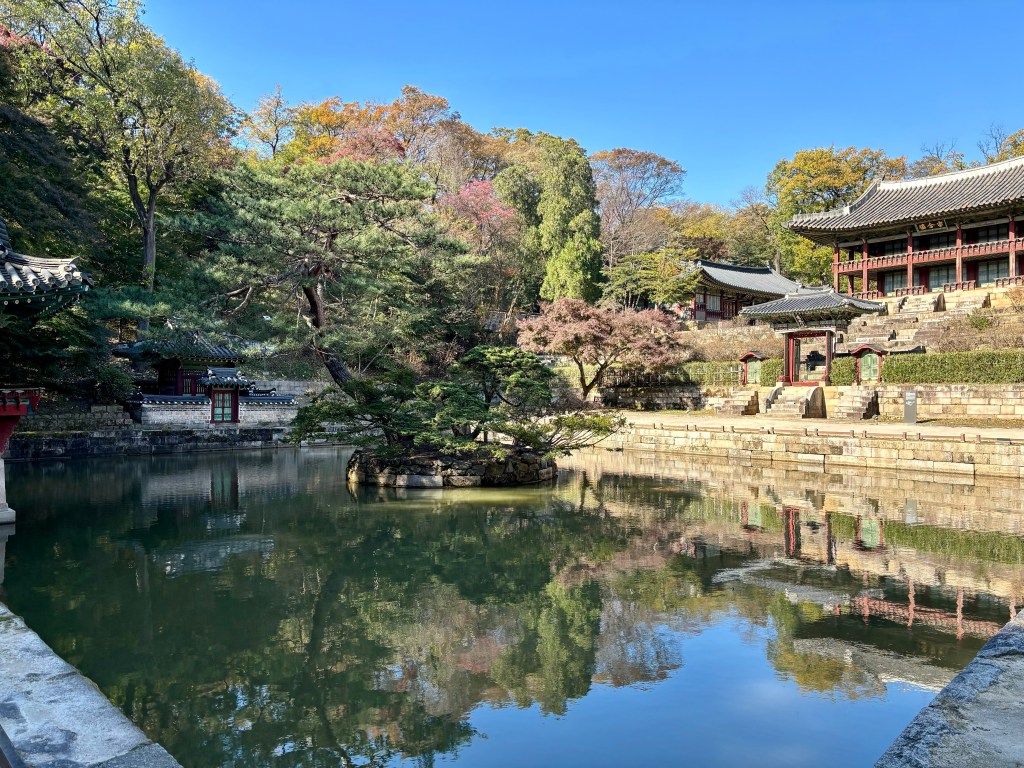
There was another pavilion next to an enormous, 350-year-old gingko tree, its bright yellow leaves raining down below. Although the fall foliage forecasts (you see now how obsessively I plan my trips) indicated that by this date fall colors would be draining, in fact Korean maple trees remain mostly green, with only a few here and there slowly turning red. The guide explained that maple trees are a relatively new addition, because the Joseon dynasty preferred perennial trees, as their evergreen leaves symbolize loyalty and stability.
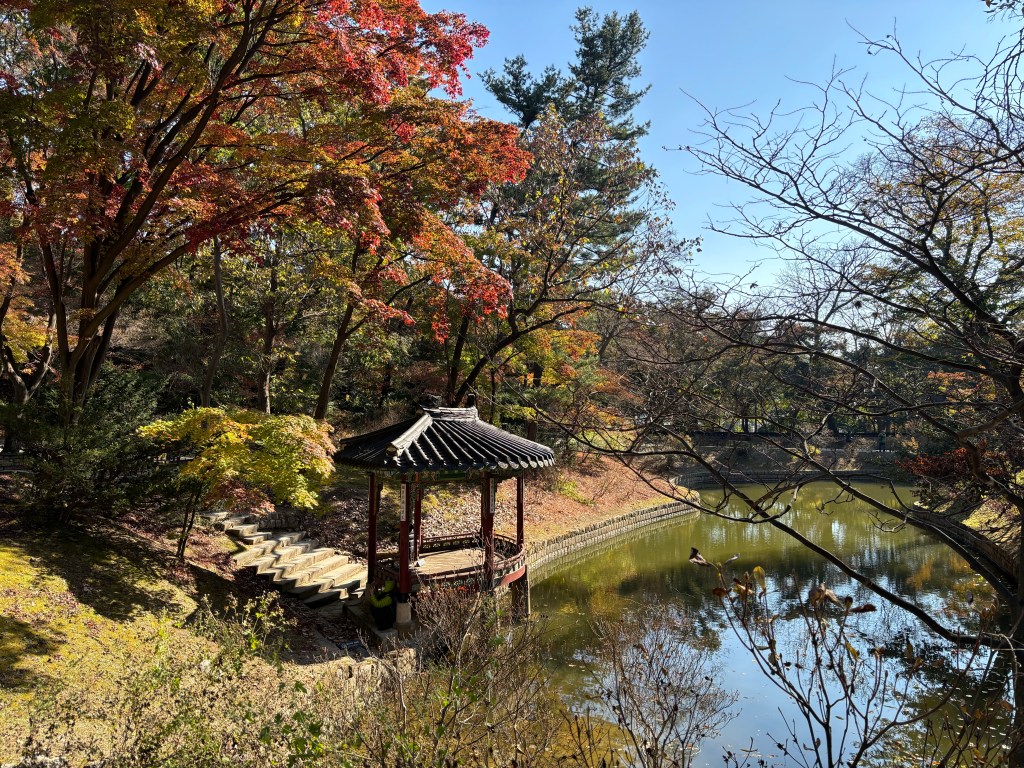
The guide’s explanations were interesting and pertinent, but it was so cold that at times it was difficult to stand still listening to her. A few times I was tempted to carry on by myself, but then she’d move on to the next place and so I followed suit.
Eventually, after a full hour, we’d exhausted the various sections of the garden, including the king’s private residence, and I practically ran out of the palace to try and get some feeling back into my feet, all the while holding up the map to shield my face from the sun. The weather’s weird!
Right next to the palace I walked on to Bukchon, a hanok village, hanok being traditional Korean houses. I started with the easternmost side, which I found oddly empty, but as soon as I crossed onto the western side I realized it was because all the tourists were cramped here instead.
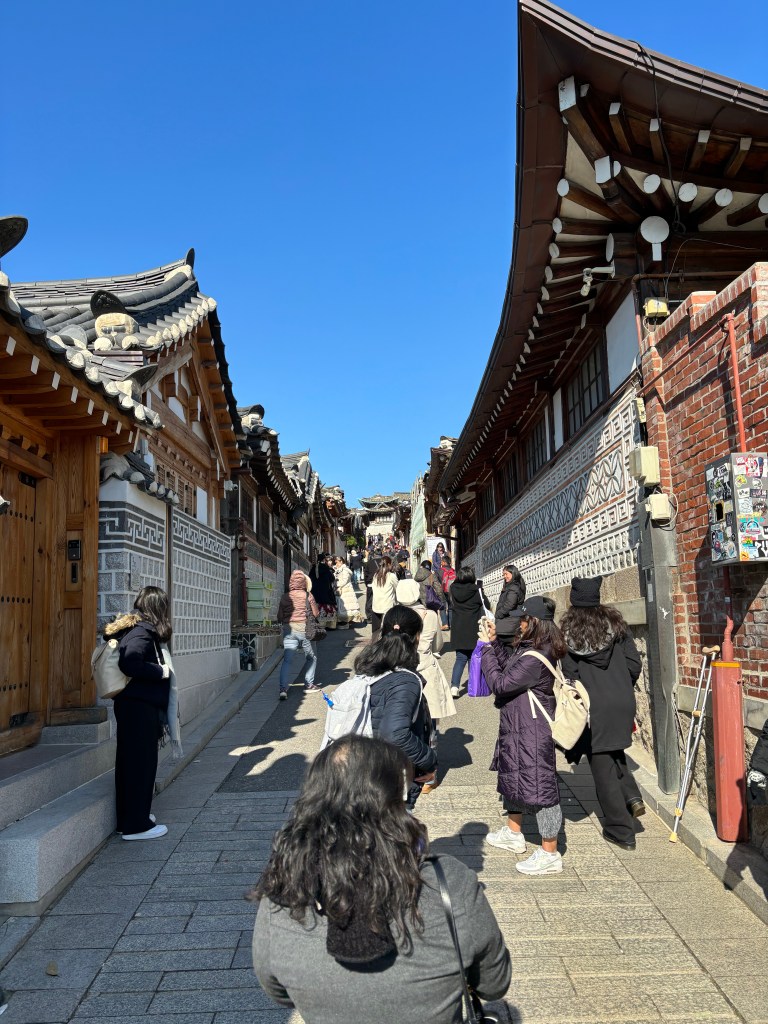
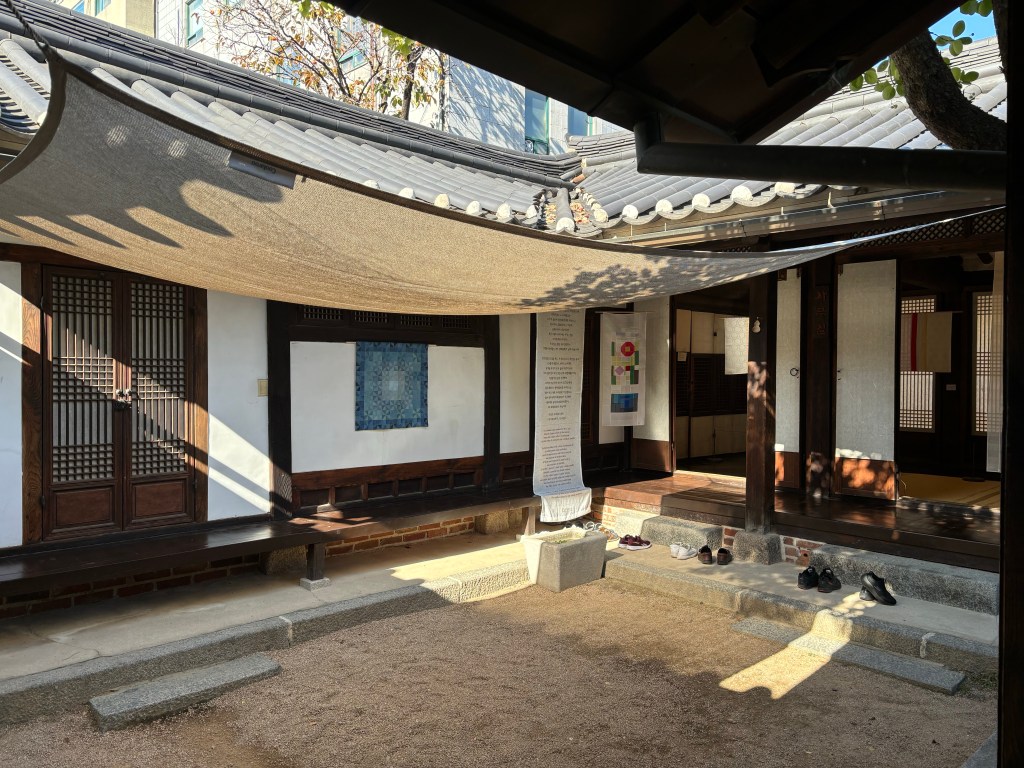
I did most of the walking tour suggested by my Lonely Planet guide, but quickly, and even cut it short. The narrow streets were packed with tourists, and while the tiled roofs do make for a picturesque sight, it quickly becomes repetitive and only a few small hanok are open to visitors. At the same time, seeing one or two is enough, as in the end they are one or two-room houses all built in the same manner.
Of note, many of these hanoks have been restored and can now be rented as apartments. I saw them on Airbnb, and some of them are gorgeously decorated, but having been to the place I now realize it must be a nightmare to be surrounded by throngs of visitors constantly. Every business is a cafe, often one next to another -how many people are having so much coffee?!
When I came out on the other side it was about noon, and I decided to push through and also visit Gyeongbokgung Palace, another royal palace across from Changdeokgung, with Bukchon in the middle. It was only after I’d bought the ticket and got a mal that I realized with a sinking feeling that the grounds of this palace looked enormous, with vast extensions of huge buildings on all sides. It was also way more crowded; whether because it’s more popular or because it was later in the day, I don’t know.
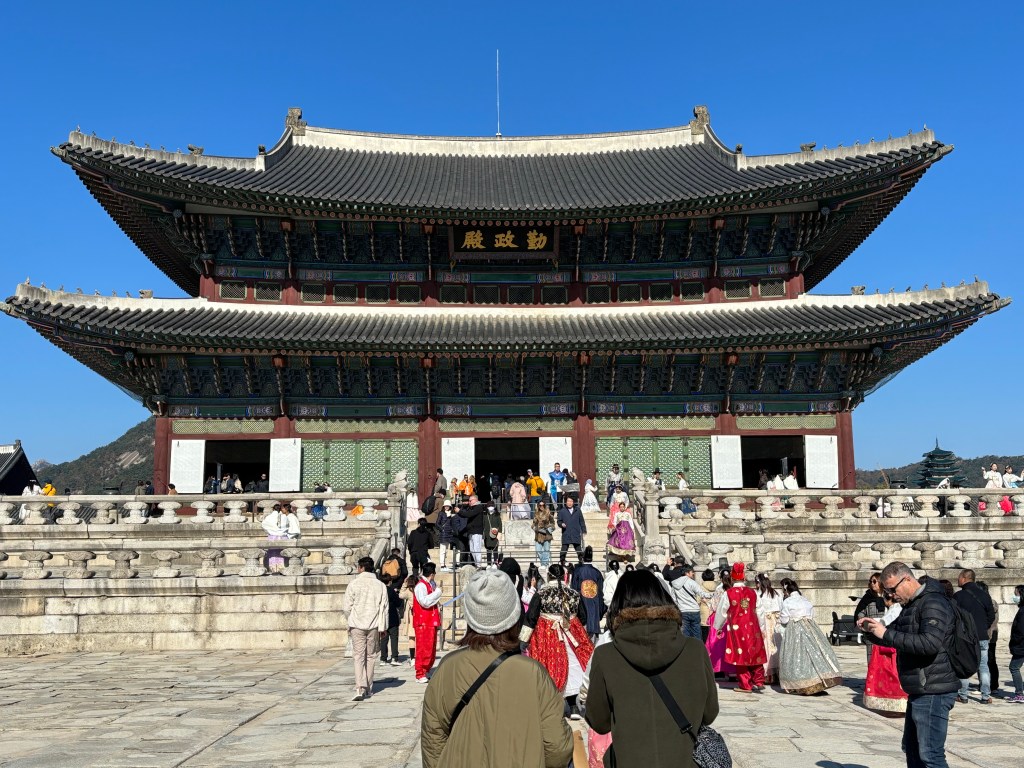
I power-walked from one end of the palace to the other, not spending much time in each section. I was already getting tired and hungry, and many buildings looked alike, so mostly I looked out for picturesque corners or outstanding sights, like the occasional pavilion overlooking a pond. Lots of tourists here wore hanbok, the national Korean dress, or rather the gaudiest, gold-threaded versions of them. Here and in other palaces admission is free if you’re wearing hanok, if you feel like trying!

After I’d made it all the way to the back of the palace -worth it, to see the pavilion at the end- and then back to the entrance, I was lucky enough to run face first into the changing of the guard, where the royal guards (all in historical garb, including fake beards) are replaced with a show of flags. There were so many people that I could barely see anything, but there was an announcer explaining the ceremony through loudspeakers.

By now I was exhausted, freezing, possibly sunburned, and definitely hungry, so I headed to the area of Insa-dong and ducked into a stylish mall-like building to eat at pretty much the first Korean restaurant that I saw. I had a nice bulgogi, my first proper meal in Korea, and sure enough they brought it out with kimchi and other garnishes.
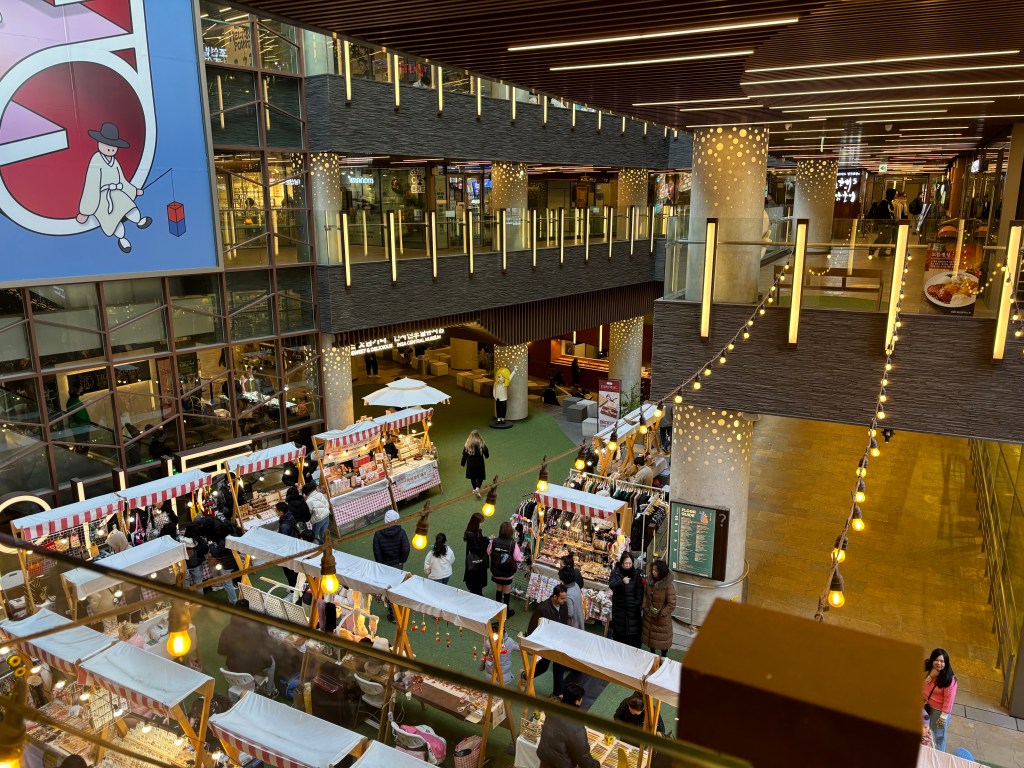
After lunch, better rested, I took a casual stroll down the main shopping street in Insa-dong, which looked pretty touristy, with lots of souvenir shops, admittedly with some variety. There are a couple of places recommended by the guide that have independent handcraft boutiques, but think more “Etsy Secret Santa” than anything else, so I didn’t linger.
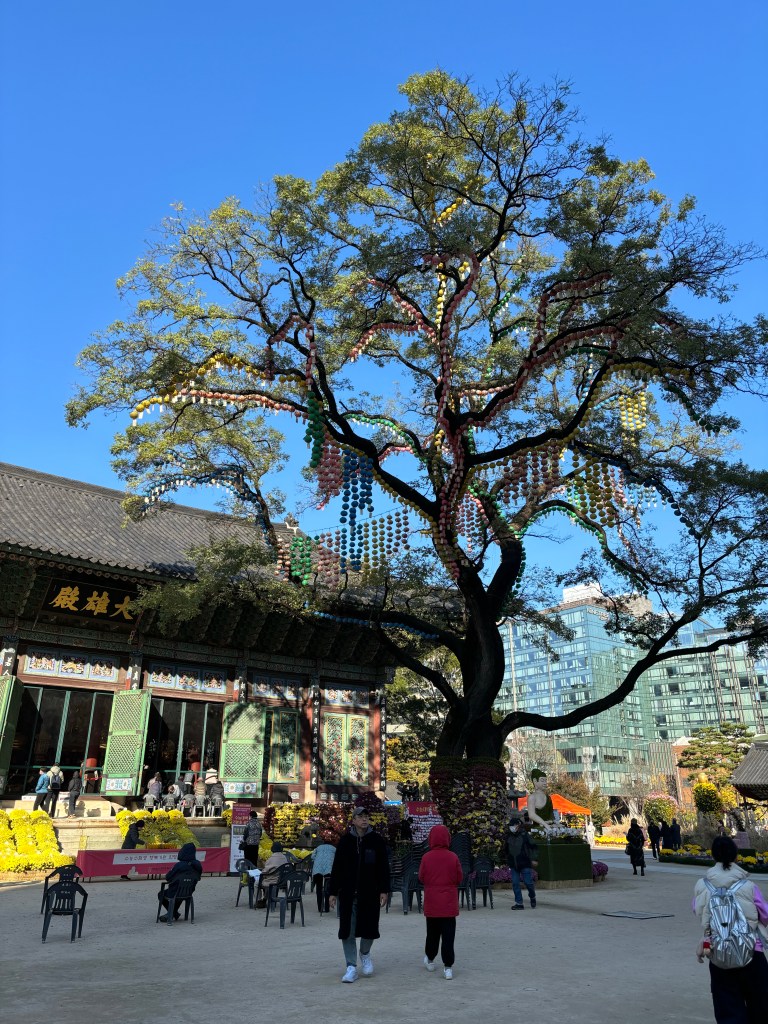
And then, because again it was right there, I also checked out Jogyess temple, the main Buddhist temple in Seoul. I hear sometimes it’s decorated with paper lanterns; today it was full of colorful flower arrangements, some in whimsical shapes. The temple itself was closed for a prayer service, but they played the priest’s chants to the outside as well, so I was able to enjoy the rhythmic sutras while I walked around the enclosure.
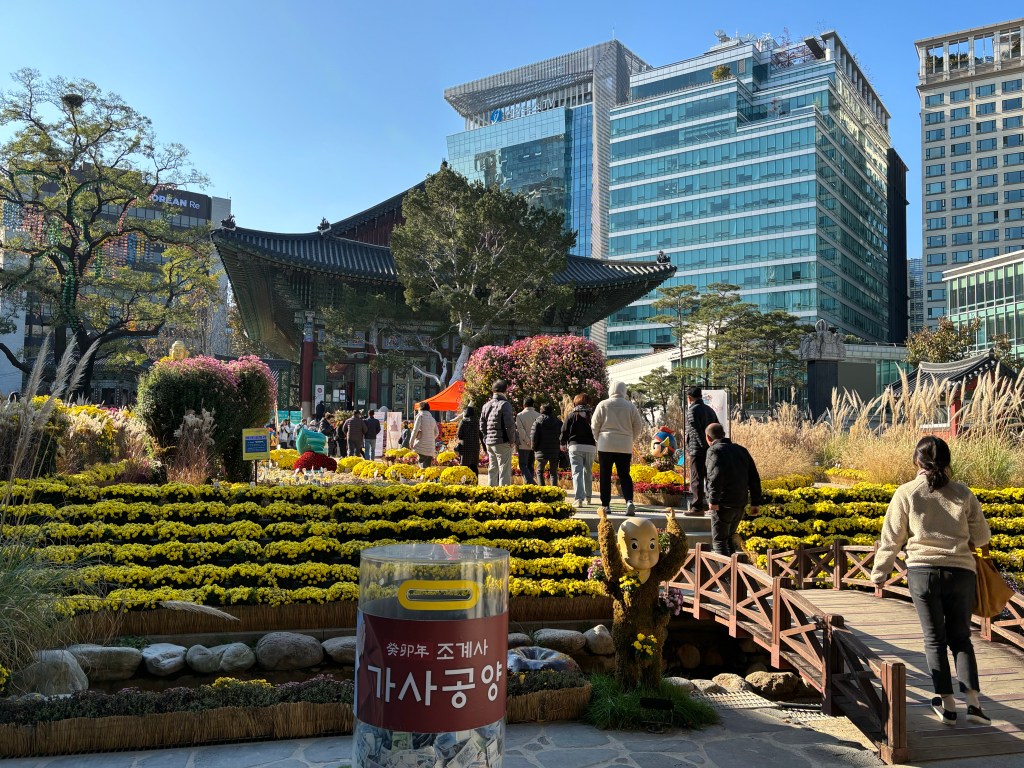
And that, finally, was all I’d set out to see within the area, so I took another subway ride to the apartment to get some rest and write this post. I will emerge again to check out nearby Hongdae… or maybe just to grab something to eat if my feet don’t respond!

 This Is A Lake